Croatia or Italy for Your 2027 Charter? Value Coast vs Glamour Coast
Croatia vs Italy for your 2027 charter: short hops and value against Amalfi glamour and 22% VAT, with real cost deltas.
Read more
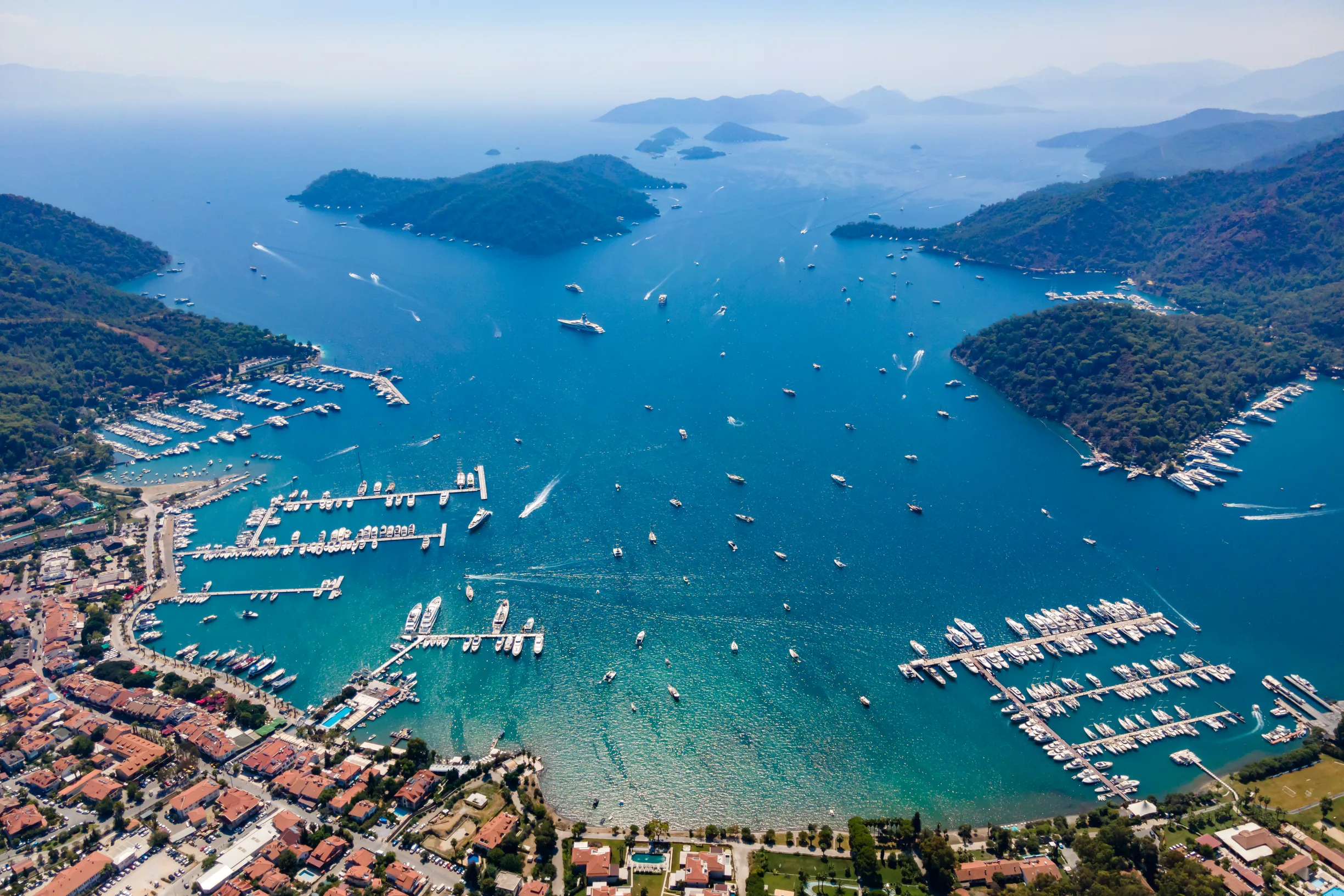
Yes — you can absolutely still swim and sail in Türkiye in October, and frankly it’s one of the best-kept secrets in Mediterranean chartering. While the rest of the Med is reaching for fleeces, the Turquoise Coast around Göcek and Fethiye keeps the sea at 23–25°C and the bays nearly empty.
This is the one coastline where Turkey sailing in October doesn’t mean compromise. Sheltered, pine-ringed anchorages, half-price gulets, and water warm enough to swim before breakfast — here’s what the month actually delivers, and how to plan around it. If you’ve been weighing late-season options, this picks up where our October Mediterranean roundup left off.
It comes down to geography. The southwestern Turkish coast sits at a low latitude, tucked against a warm landmass, with deep, sheltered gulfs that hold their summer heat. The sea here lags the air temperature by weeks, so even as October mornings turn crisp, the water stays a genuine 23–25°C — warmer than Greece a few hundred miles west, and warmer than it sounds on paper. By comparison, the Greek Cyclades have usually cooled to 22–23°C by mid-October, as our guide to the best charter period in Greece notes.
Air temperatures sit comfortably in the mid-20s°C through most of October, dipping into pleasant 18–20°C evenings. The infamous summer heat that pushes the coast past 35°C in August is long gone. What you get instead is t-shirt-and-shorts sailing by day and a light layer for dinner on deck — close to ideal cruising weather. The pine forests that ring the bays also cut the wind, so even when an autumn breeze gets up offshore, the anchorages stay calm.
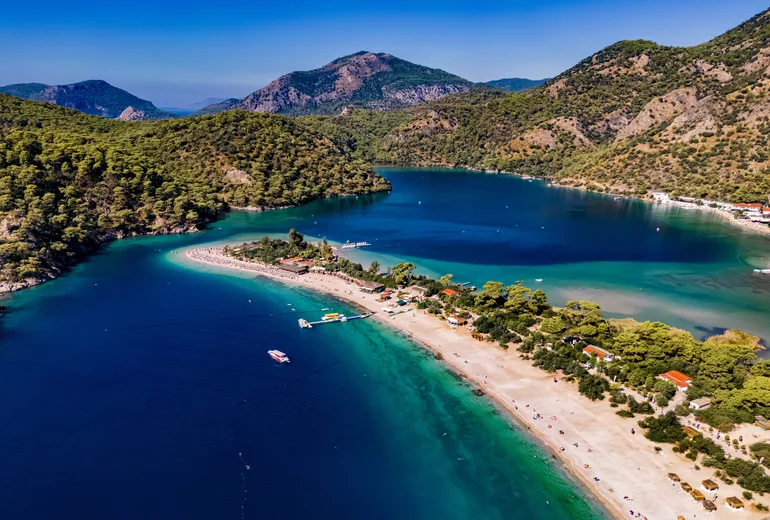
Göcek is the heart of it. The gulf is dotted with a dozen sheltered anchorages — Wall Bay, Tomb Bay, Sarsala, the Yassıca islets with their swimmable sandbar — all within easy reach of one another. In August these fill by lunchtime; in October you can pick your bay at 4pm and still have a buoy.
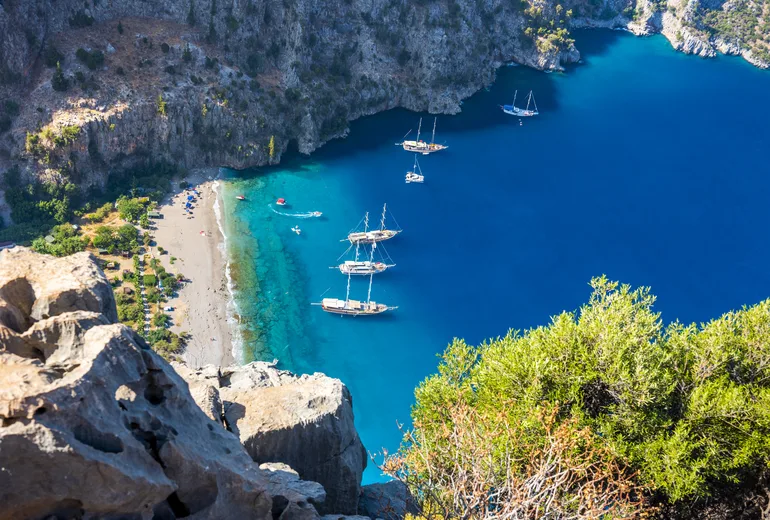
From Göcek, a relaxed week runs out to Fethiye, down to Ölüdeniz and the Butterfly Valley cove beneath its cliffs, with day hops rarely over 15 NM. The water is calm in the mornings, with a light afternoon breeze for a few hours of gentle sailing. It’s a cruising ground built for swimming, anchoring and shore lunches rather than hard passage-making — much gentler than the open Aegean crossings you’d plan further west in our September Mediterranean roundup.
The food matters here too. Fethiye’s covered fish market lets you buy the catch and have a neighbouring restaurant grill it for a small fee — a genuinely good lunch for very little. Out in the bays, small jetty restaurants at spots like Boynuz Bükü and Kapı Creek will take your lines and serve mezze, fresh bream and Turkish wine right where you anchor. Provisioning on a crewed gulet is handled by the cook, so you mostly just choose where to stop.
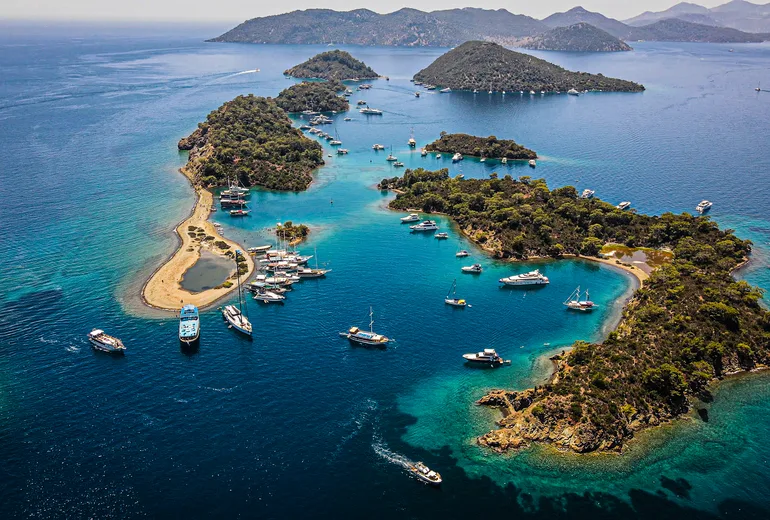
The economics are the other reason to come now. Türkiye’s signature charter is the gulet — a broad, comfortable wooden yacht crewed by a captain and one or two hands, often with a cook aboard. In peak August a crewed gulet for eight can command serious money. By mid-October the same boat frequently lists 30–50% lower.
A typical crewed gulet week includes the boat, fuel for normal cruising, the crew and usually a half-board or full-board food option arranged through the cook — you tell them roughly what you like and they provision and cook aboard. It’s an unusually hands-off way to sail: no need for a licence, no docking stress, just choosing the next bay. For warm-water crews who want comfort over performance, that combination at autumn prices is hard to beat. You can browse current Turkish gulets and yachts through our partner search for Türkiye charters.
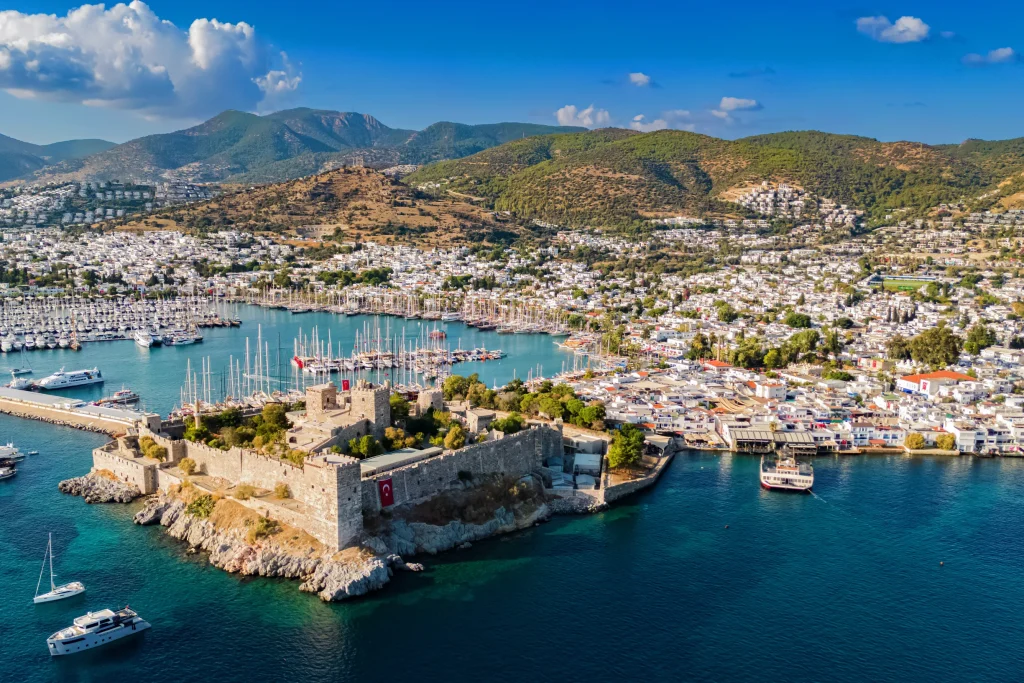
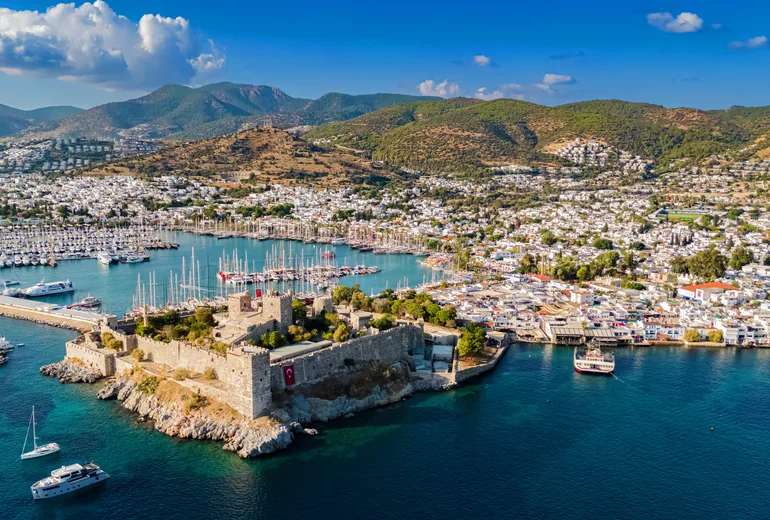
If you want to base further north, Bodrum and the long, fjord-like Gulf of Gökova are a strong alternative. Bodrum’s castle-backed harbour is a lively start point, and the gulf opens onto quiet bays like Sedir Island (with its famous Cleopatra Beach sand), English Harbour and Longoz. The water here cools a touch faster than Göcek but still holds 22–24°C through early October.
Gökova tends to get a steadier afternoon breeze than the Göcek gulf, so it suits crews who want a bit more actual sailing alongside the swimming. Both regions sit close to international airports — Dalaman for Göcek and Fethiye, Bodrum-Milas for the Gulf of Gökova — which keeps the travel day short.
Bodrum itself is worth a night before or after the cruise. Out of the August crush, the whitewashed lanes behind the harbour, the castle-museum and the waterfront fish restaurants are far more enjoyable, and an October evening on the marina with a plate of grilled levrek (sea bass) and a glass of Turkish white is a fine way to bookend a week afloat. From here the run west toward Datça and the bays of the Hisarönü gulf adds another quiet, pine-fringed cruising ground if you want to extend.
Part of what makes a Turkish October so easy is that you don’t run the boat. Unlike a bareboat week in Croatia or Greece, where you skipper yourself and need a recognised licence, the standard Turkish charter is fully crewed. If you’re weighing the two models, our explainer on the difference between bareboat and crewed charter lays out the trade-offs — but on this coast, crewed is simply the norm.
That changes the rhythm of the week. Mornings are unhurried, the captain handles the forecast and the anchoring, and the cook keeps the galley running, so a late-season trip becomes pure leisure rather than a logistics exercise. It suits families across generations, friend groups and couples equally — nobody has to be the skipper.
Two things to plan around. First, daylight: by late October the sun sets before 6pm, so plan your final passage of the day for early afternoon and settle into your anchorage with light to spare. Second, the season has an end — most gulet operators wrap up between late October and mid-November, so the latest weeks need confirming carefully and may have reduced shore facilities.
There’s also the occasional autumn front, though the Turkish gulfs are so sheltered that a windy day usually just means staying put in a snug bay rather than abandoning the cruise. Pack a light jacket for evenings, bring a couple of long-sleeve layers, and you’re set. Flights are straightforward too — Dalaman airport serves Göcek and Fethiye, with Bodrum-Milas covering the northern gulfs, both a short transfer from the marinas.
Yes — the sea around Göcek and Fethiye holds 23–25°C through October, the warmest water anywhere in the Mediterranean that late. Most crews swim daily, often before breakfast, well into the month.
Considerably. Crewed gulet weeks commonly drop 30–50% below August peak rates by mid-October, making it the best-value warm-water charter in the Med at that time of year.
Not for a crewed gulet, which is the most common Turkish charter — the captain and crew handle everything. A licence is only needed if you bareboat a yacht yourself, which is far less common on this coast.
Most gulet and yacht operators run to late October, with a number continuing into mid-November. If you’re booking the final weeks, confirm your specific boat and base are still operating for your dates.
The first two weeks of October are the safest blend of warm water, warm evenings and full shore facilities. The back half is cheaper and quieter still, with slightly cooler nights and a few operators winding down — perfect if you prize empty bays over guaranteed amenities.
However you weigh it, Türkiye in autumn is a rare thing: summer-warm sailing at off-season prices. Have a look at our wider charter destinations to see how the Turquoise Coast stacks up against the rest of the Med for a late-year week.