Croatia or Italy for Your 2027 Charter? Value Coast vs Glamour Coast
Croatia vs Italy for your 2027 charter: short hops and value against Amalfi glamour and 22% VAT, with real cost deltas.
Read more
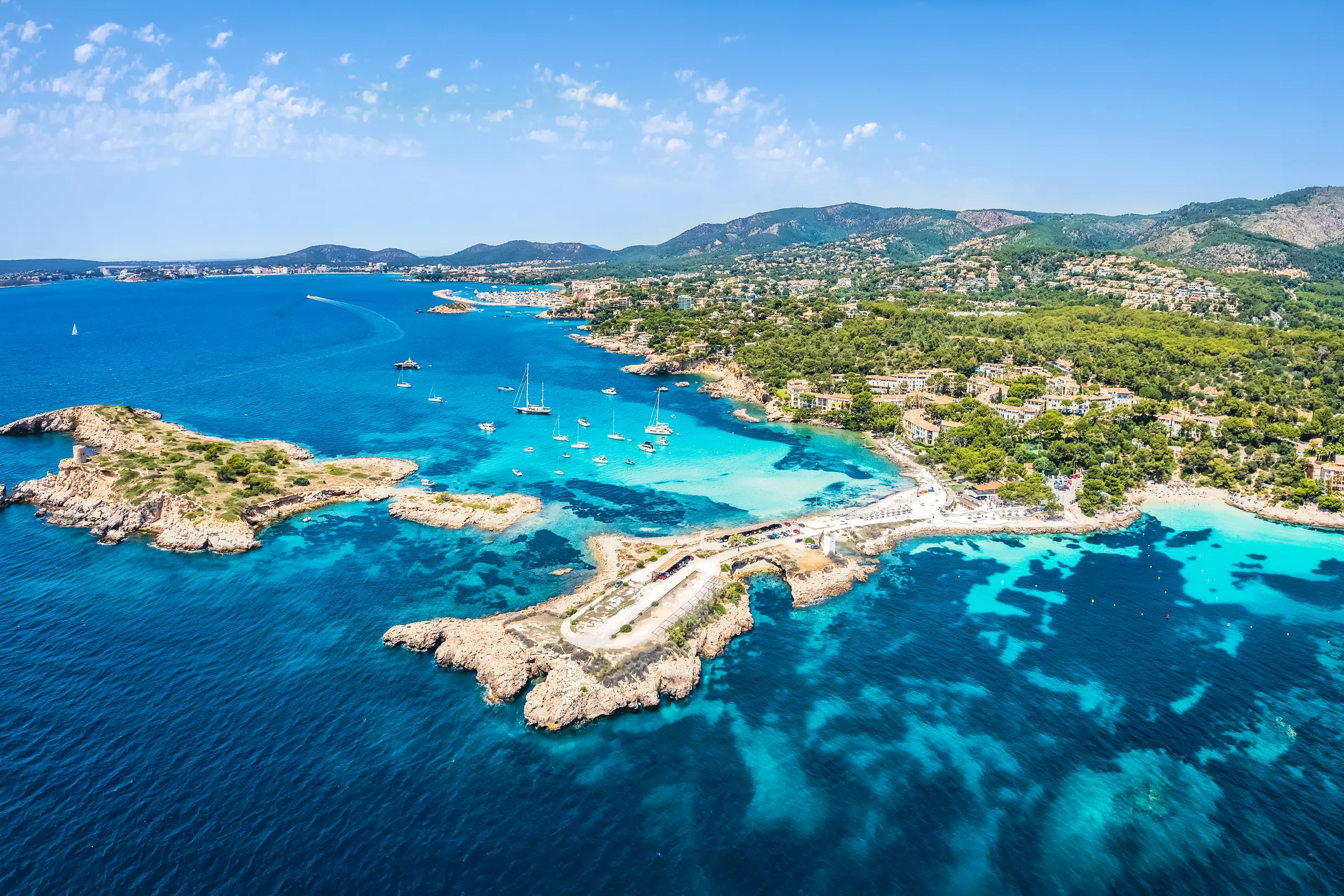
September is the week most experienced crews quietly book before anyone else does. The sea has soaked up a whole summer of heat, the meltemi and mistral have softened, and the August armada has gone home — so the question of where to sail in September Mediterranean waters comes down to matching a region to what you actually want from the week.
Below are six regions worth your time this September, with honest notes on sea temperature, how busy the anchorages really are, and how much you save against the August peak. We run charters across all of them, so these are the numbers we quote, not brochure copy.
The headline is water temperature. The Mediterranean is slow to warm and slow to cool, so by early September the surface sits at its annual high — typically 24–26°C across the central and eastern basins, still 22–24°C by month’s end. Swimming off the swim platform at 8am feels warmer than it did in June.
The second draw is wind that has calmed down. The Aegean meltemi, which can pin you in harbour for days in July and August, usually eases into more workable 10–18 knot afternoons. The Adriatic loses its midday maestral edge. You get sailing that’s lively without being a fight.
And then there’s price. Charter weeks in September commonly run 15–30% below the August list rate, with the back half of the month cheaper than the first. If you have any flexibility on dates, the third and fourth weeks are where the value sits — and they tend to be the weeks the regular crews quietly book a year out.
There’s a fourth, quieter advantage: provisioning gets easier. Island bakeries, fishmongers and produce markets that were rammed in August have their stock back and their queues gone, so topping up fresh bread, tomatoes and the morning’s catch becomes a pleasure rather than a scrum. The same goes for restaurant tables — you can usually walk into the harbour taverna you wanted instead of booking days ahead.
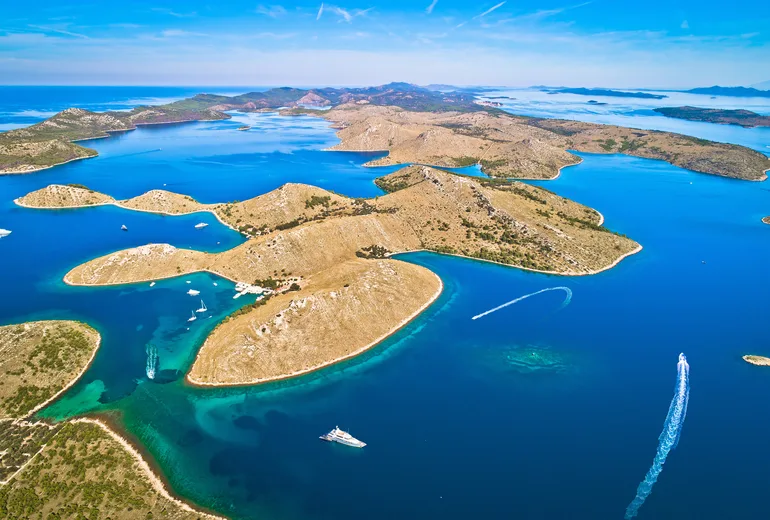
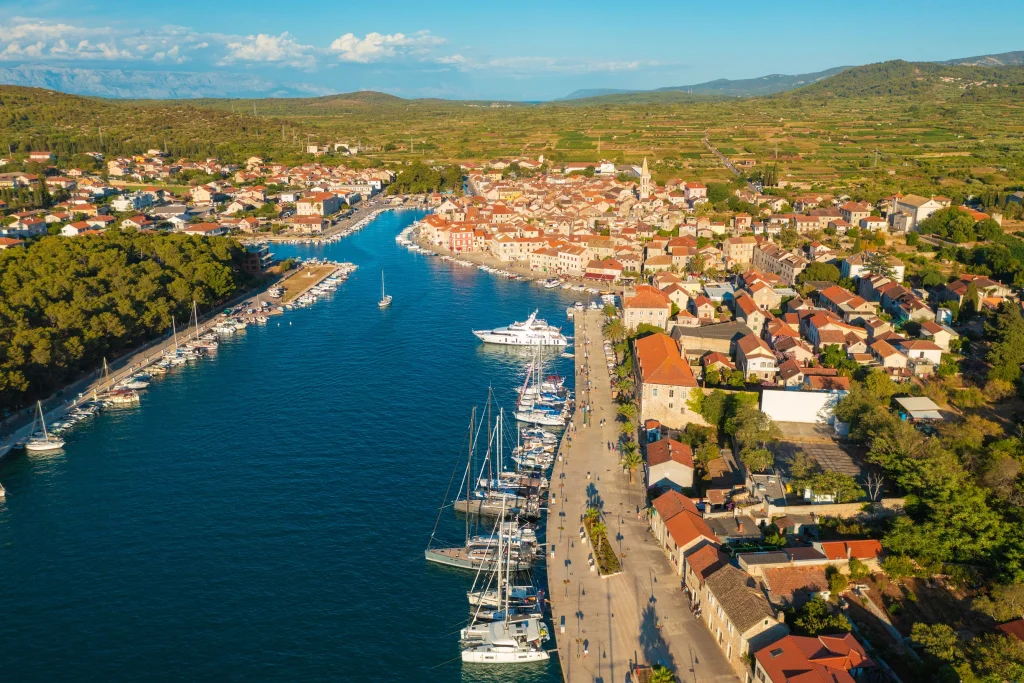
Croatia in September means the Kornati archipelago and the Pakleni islands off Hvar without the wall-to-wall hulls of high summer. Sea temperature holds around 24°C, the maestral wind gives reliable afternoon sailing of 12–16 knots, and the long lunch stops at Palmižana or in the Telašćica bay actually have free buoys again.
A typical route from Split down through Brač, Hvar and Vis covers comfortable 15–25 NM hops, three to four hours of sailing a day, with plenty of swim stops. Expect a mid-size monohull or catamaran to land roughly 20–25% below its August figure. For the detail on conditions month by month, our guide to the best period to sail in Croatia breaks down each part of the season.
The eating is part of the appeal here. Anchor at Vis and you’re a short walk from a proper peka — meat or octopus slow-cooked under an iron bell — paired with a glass of the island’s Vugava white. The Pelješac peninsula nearby grows the Adriatic’s best reds, Plavac Mali among them, and most konobas are still serving the day-boat catch. One practical note: ACI marinas stay fully open and staffed through September, so if you like a secure berth and shore power every couple of nights, the infrastructure is all still running.
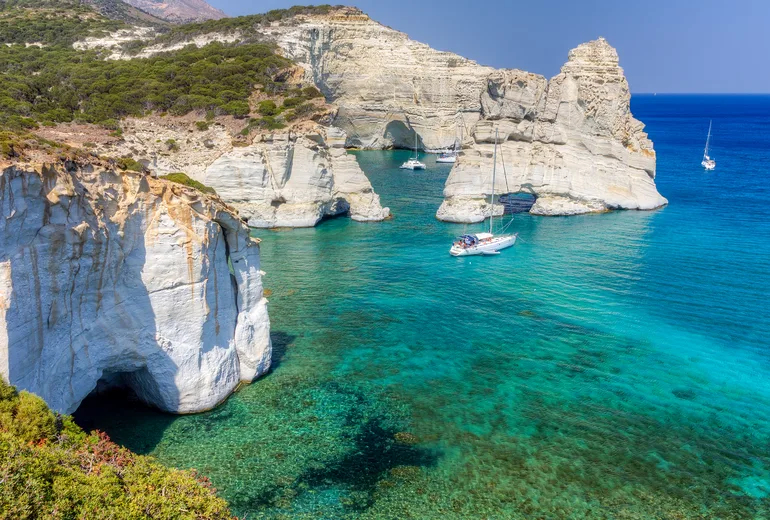
Greece is arguably the strongest single answer to where to sail in September. The Cyclades — Paros, Naxos, Milos, the Small Cyclades — shed the worst of the meltemi as the month goes on, and the sea stays a genuine 24–25°C. Anchorages like Kleftiko on Milos or the sandbar at Kolona on Kythnos, packed in August, open up.
If you want flatter water and shorter passages, the Saronic and the Ionian are gentler still. Lefkada, Meganisi and the Ithaca channel give you 8–15 NM days, taverna-lined harbours and almost no swell. Our breakdown of the best time to charter in Greece is worth a read before you lock dates, and the deeper seasonal sailing guide for Greece covers the wind patterns region by region.
A word on the meltemi, since it shapes any September plan: this north wind can still blow hard in the central Aegean during the first week or so of the month, occasionally touching 25–30 knots in the channels around Mykonos and Paros. By the third week it’s usually faded to a manageable afternoon breeze. If you’re set on the Cyclades and have a mixed crew, weight your dates toward late September; if you want guaranteed calm earlier, lean to the Ionian.
Pricing-wise, Greek charter weeks in September typically come in 15–25% under August, and one-way routes (say Athens out to the Cyclades and back) are easier to arrange because base availability loosens. Athens makes a particularly easy start point — the marinas at Alimos and Lavrio sit close to the airport, so the travel day is short and you’re at anchor by evening.
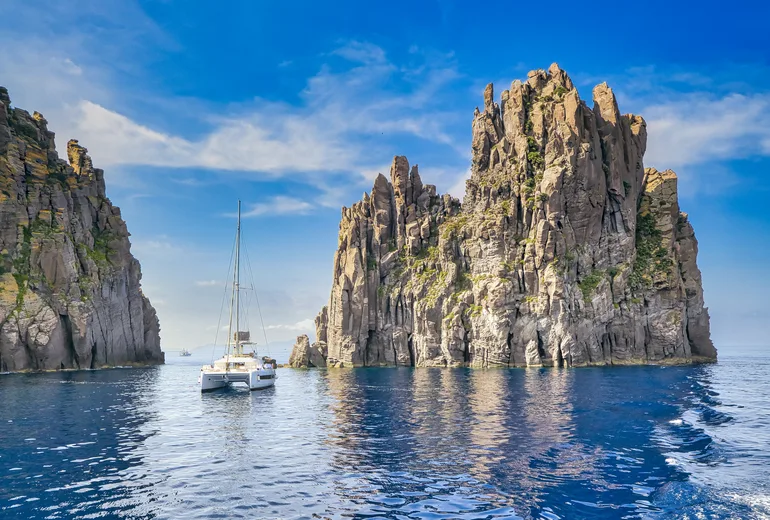
Italy splits into two very different September experiences. The Aeolian Islands off Sicily — Lipari, Salina, Vulcano, Panarea and the smoking cone of Stromboli — are at their best now: water around 25°C, the worst of the August day-tripper traffic gone, and the evening light off Stromboli’s eruptions genuinely something to plan a passage around. The Malvasia dessert wine from Salina and a plate of Aeolian capers make the case for eating ashore at least a couple of nights.
North Sardinia and the Maddalena archipelago are the other strong pick. The granite coves of Caprera and Budelli, the turquoise of Cala Coticcio, sit quieter once the Italian holiday season ends in early September. Reckon on 12–20 NM hops between islands and a real drop in mooring competition compared to August. Do check the Maddalena park permit rules before you go — the marine park charges a daily navigation fee and restricts anchoring in the most sensitive coves, which your charter base will sort but you should budget for. Both regions feature in our roundup of the top yacht charter destinations in Europe for 2026.
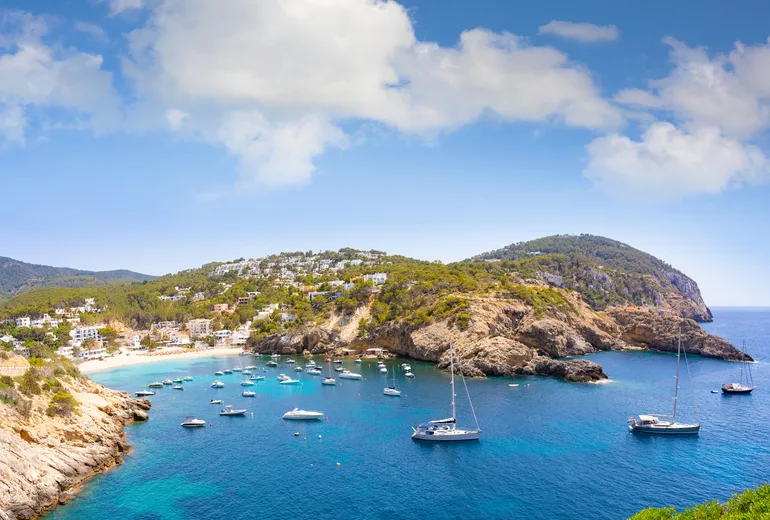
The Balearics — Mallorca, Menorca, Ibiza and Formentera — stay warm and sociable through September. Sea temperatures hold around 24–25°C, and the calas (coves) of Mallorca’s east coast, the Cala d’Hort anchorage under Es Vedrà on Ibiza, and the long white beaches of Menorca’s Cala Galdana become navigable again once the August charter fleet thins.
It’s worth being honest about wind here: the Balearics can be light, so this is more a swim-and-anchor cruising ground than a hard-sailing one, with the occasional brisk tramontana day funnelling down from the north. Charter rates ease 15–20% off peak, and Palma — one of the Med’s biggest charter hubs — has strong late-season availability across both monohulls and catamarans.
The food is reason enough to slow down. Menorca’s caldereta de langosta (spiny-lobster stew), a sobrassada spread on Mallorcan bread, and the local Binissalem reds reward a few harbour nights. If you want lively evenings ashore alongside your anchorages, this is the region that delivers both — and Formentera’s beach lunches are an easy day-sail from Ibiza.
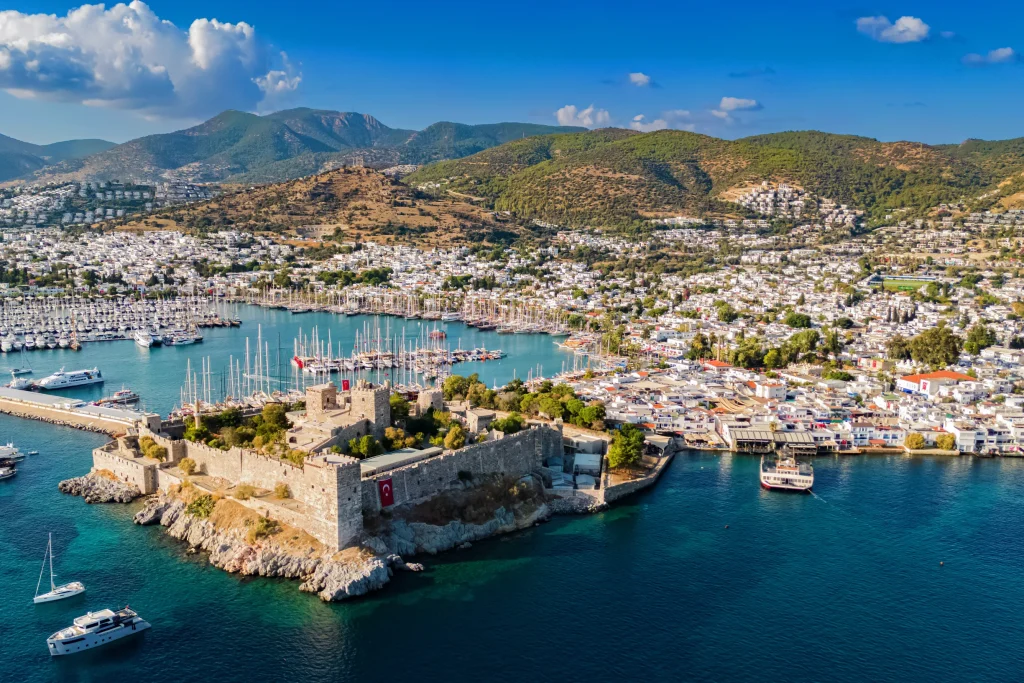
If late-September warmth is the priority, the Turquoise Coast around Göcek, Fethiye and Marmaris is unmatched. The sea here stays 25–26°C well into October, the pine-backed bays of the Göcek gulf are sheltered, and gulet (traditional wooden yacht) prices fall sharply once the European school holidays end. Distances are gentle — most days are under 15 NM — and the cruising leans toward swimming and anchoring rather than passage-making.
This is also the region with the most generous shoulder-season value: crewed gulet weeks that command premium rates in August often drop 30–40% by mid-September. Because nearly every Turkish charter is crewed, there’s no licence requirement and no docking stress — the captain reads the weather and picks the next bay. We cover Türkiye in detail in our late-season pieces — it’s the one coast where you can realistically still be swimming comfortably in November.
A few things make a September week run smoothly. Confirm your charter base stays staffed for your full dates — almost all do in September, but it’s the question that saves headaches. Build one flexible day into a longer route so an early-season meltemi or tramontana blow doesn’t force a rushed passage. And pack a light layer for the evenings: the water stays warm, but once the sun drops in late September, dinner on deck wants a fleece.
If you’re choosing a boat type, September’s calmer conditions favour whatever you’re most comfortable on rather than forcing a decision — catamarans for stability and deck space with a larger group, monohulls for livelier sailing in the Adriatic and Aegean. Either way, the month rewards booking early; the best boats on the best dates go first.
If you want the warmest possible water and the biggest price drop, look east — Türkiye, then the Greek Cyclades. If you want short hops and gentle conditions for a mixed-ability crew, the Ionian or the Saronic. For dramatic scenery and active sailing, Croatia’s Kornati or Italy’s Aeolians. For a swim-and-socialise week, the Balearics.
Whichever way you lean, book the boat well before the diary fills. September availability is the first to disappear precisely because the people who sail every year already know how good it is. If you’re still weighing two regions, our Croatia versus Greece comparison for first charters is a useful tie-breaker.
Yes — September has some of the warmest sea of the whole year because the water has been heating all summer. Expect 24–26°C across most of the Med in early September, easing to 22–24°C by the end. The eastern basin (Greece, Türkiye) stays warmest longest.
Typically 15–30% below the August list rate, depending on region and exact dates. The second half of the month is cheaper than the first, and Türkiye sees the steepest drops of all once the school holidays end.
The Ionian islands (Lefkada, Meganisi) and the Saronic Gulf in Greece, plus the sheltered Göcek gulf in Türkiye, give the flattest water and shortest passages. The Balearics are calm but can be light on wind.
Across Croatia, Greece, Italy and Spain the bases and main marinas run normally through September. A handful of smaller seasonal facilities begin winding down in October, which is why September is the safer late-season month if you want full infrastructure.
Ready to put a week in the diary? Browse our current crewed and bareboat yachts across the Mediterranean and we’ll match a boat to whichever September coast fits your crew best.