Where Will Your 2027 Charter Start? Split, Athens, Palma, Naples and Bodrum Compared
Split, Athens, Palma, Naples and Bodrum compared on flights, fleet depth, first-night logistics and the cruising grounds each home port unlocks.
Read more
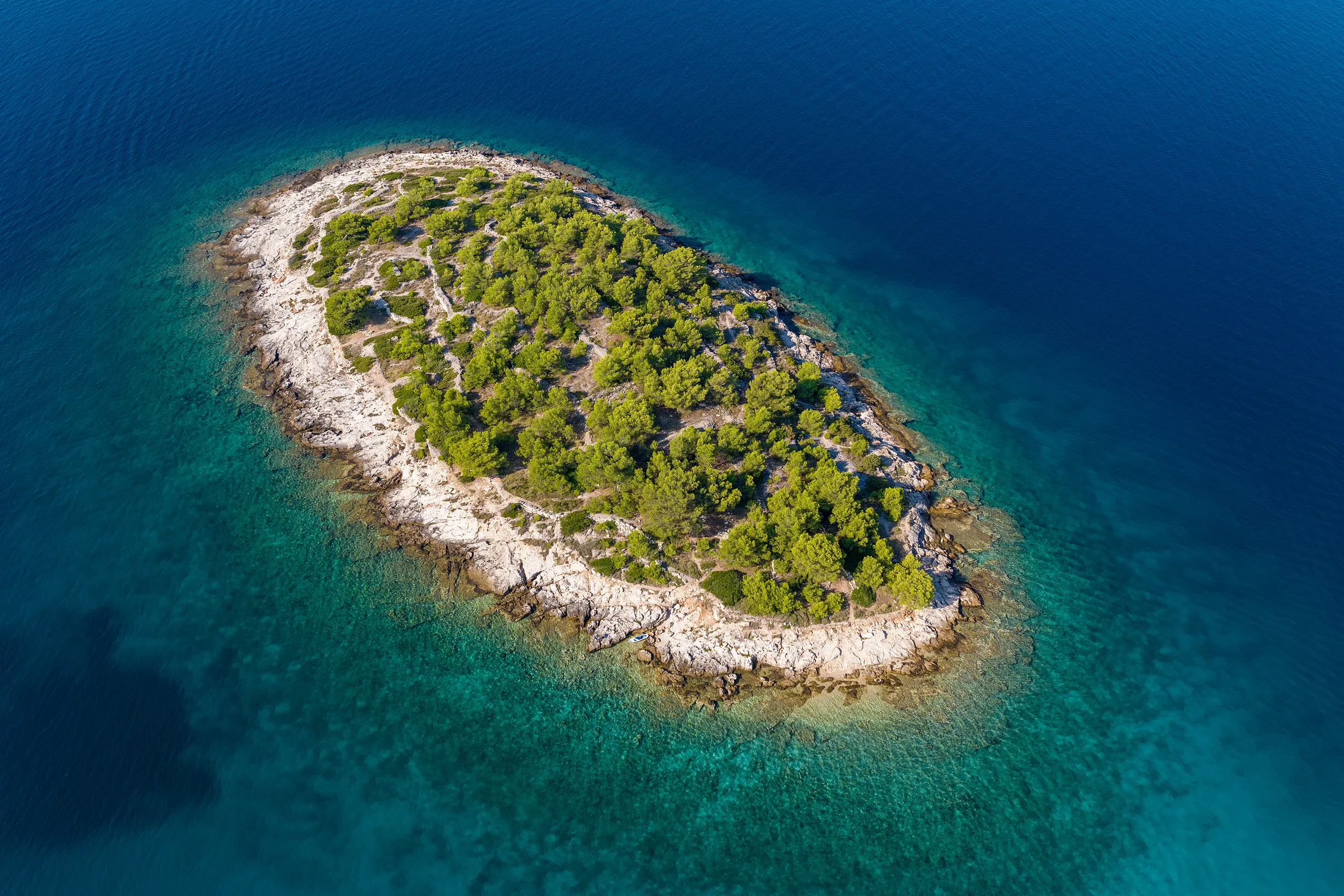
Six of the Mediterranean’s best-protected coastlines sit inside national or marine parks, and almost all of them are reachable on a normal week’s charter. Mediterranean marine parks sailing feels different from a regular bay: the water clarity steps up, the rules tighten, and you usually pay a fee at a ranger boat or buy a permit before you arrive.
This is a cross-border look across Croatia, Italy, Greece and the Balearics — what each park costs, where you can anchor or pick up a buoy, and which ones reward the detour. Single-country guides rarely line them up side by side, so here they are together.
Every park sets its own system, but the pattern repeats. You either pay a daily entry fee per boat (often scaled by length), pick up a paid mooring buoy, or both. Free anchoring on the seabed is frequently restricted to protect seagrass meadows — the Posidonia that keeps the water clear — so dropping the hook anywhere you like is rarely allowed inside the core zones.
A few practical habits travel well across all of them. Carry cash for ranger boats that still take payment on the water, note the buoy field VHF channel from your charter briefing, and assume diving and jet skis are banned in the strictest areas. Speed limits inside the parks are low — often 6 to 8 knots near the coast — and anchoring lights are taken seriously by patrols. If you want the protected-Croatia version in more detail, our guide to visiting Croatia’s national parks by boat covers Kornati and Mljet ticketing closely.
It also pays to think about timing. The same anchorage that feels remote at nine in the morning can hold twenty boats by lunch in August, so the parks reward early starts and overnight stays. Holding ground varies a lot between the chalky bottoms of Greece and the sandy pockets of Sardinia, so set the hook with care and use a trip line where the seabed is rocky.
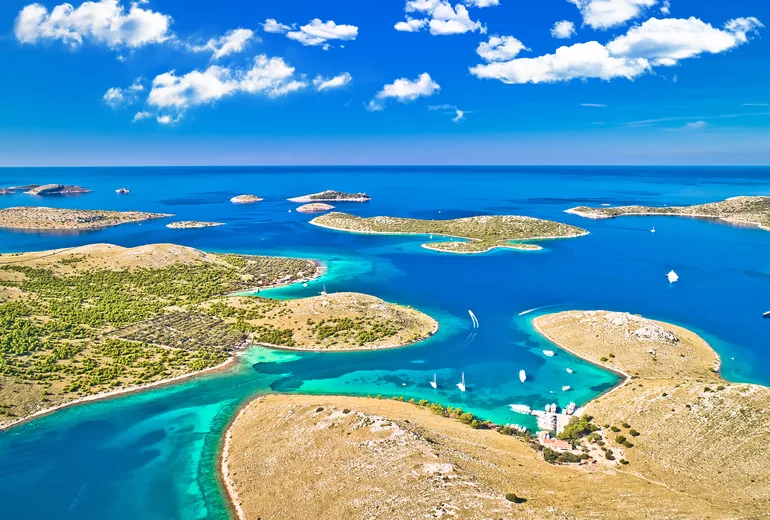
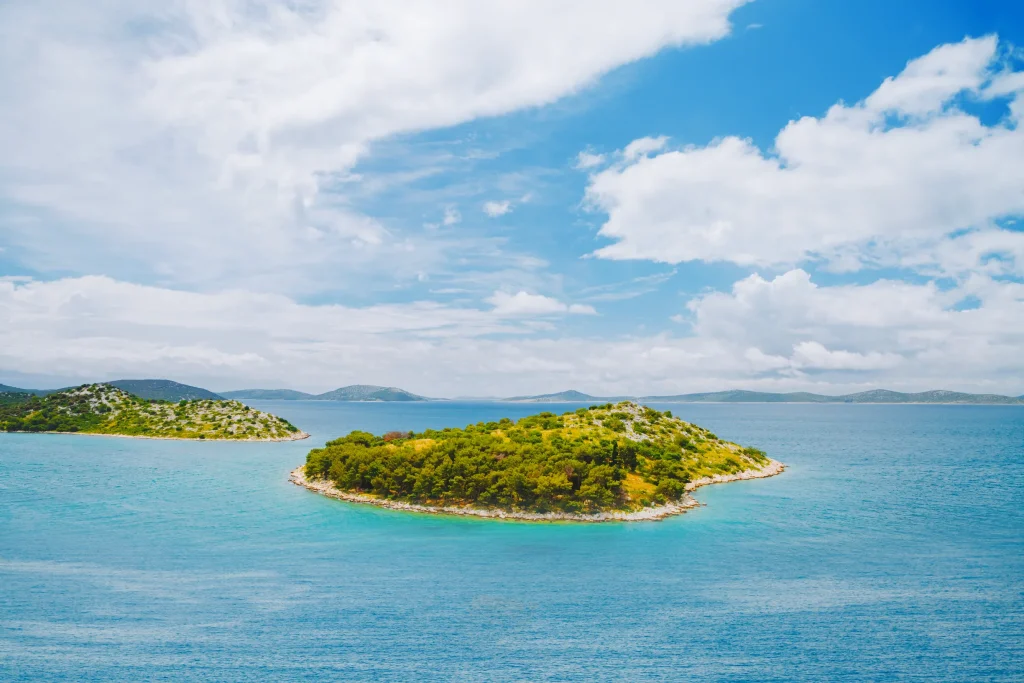
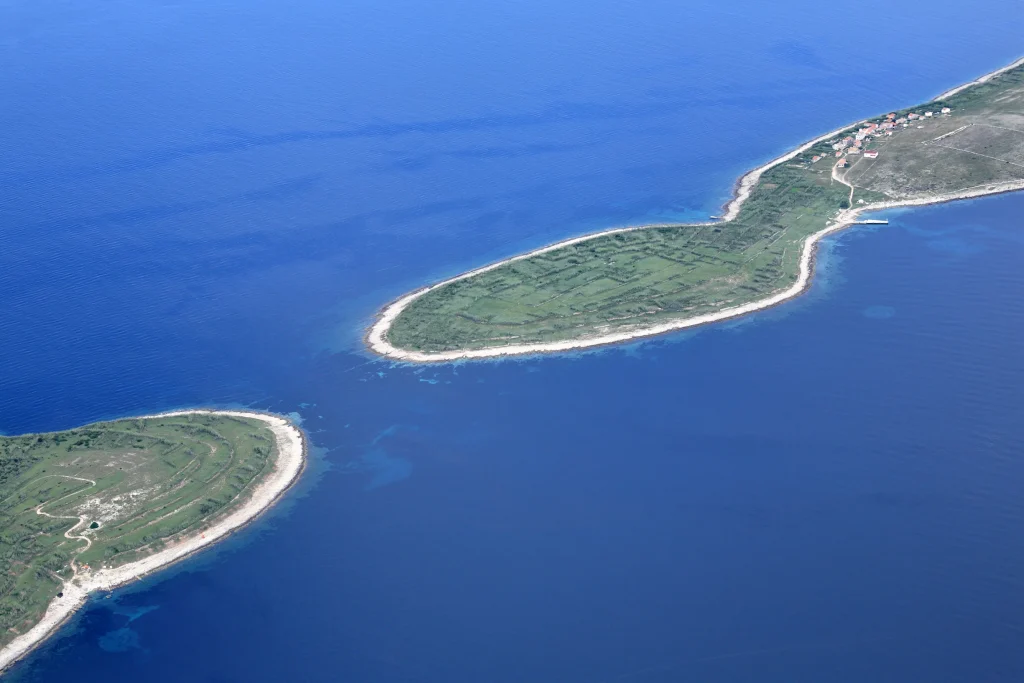
Kornati is roughly 90 bare, drystone-walled islands south of Zadar, and it is the park most charter crews fold into a Dalmatian week. There are no permanent villages and almost no shade — the appeal is the moonscape and the empty anchorages. Entry runs about €30–60 per day for a typical 12–15 m yacht in peak season, cheaper if you buy the ticket in advance at an ACI marina or a partner agency rather than from the ranger boat.
Anchoring is allowed in several designated bays, but the comfortable move is a buoy or a place on a konoba pontoon — many of the family-run taverns at Vrulje, Statival and around Žut and Levrnaka give you a free overnight mooring if you eat dinner aboard their quay. Order the lamb baked under the peka bell and the mooring effectively pays for itself. Telašćica nature park, on the southern tip of Dugi Otok, sits right next door with its own separate ticket and the cliffs and salt lake at Mir.
Plan provisioning before you arrive, because there are no real shops inside the park. Stock up in Murter, Biograd or Zadar, top up the water tanks, and treat the konoba dinners as the social highlight rather than a daily expectation. The sailing itself is straightforward in settled weather, but the open channels funnel the afternoon maestral, so an early passage between islands tends to be calmer than a mid-afternoon one. A typical Kornati day might cover 10 to 15 NM with several swim stops, which is part of why the park works so well as an unhurried two- or three-night loop.
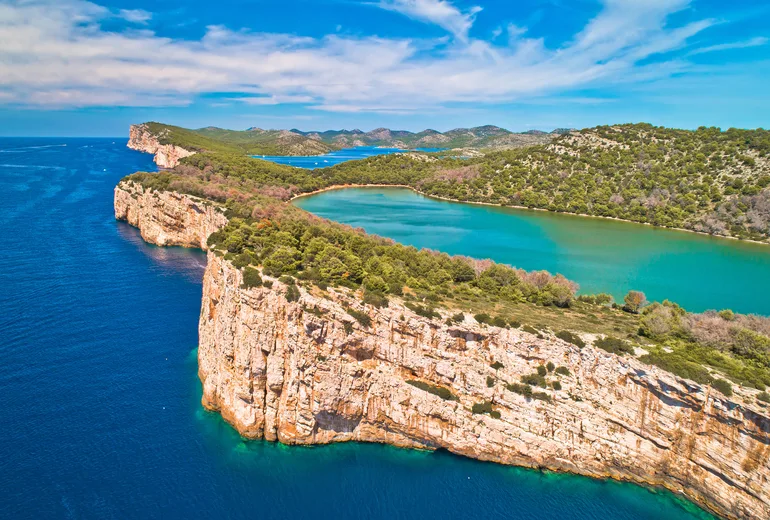
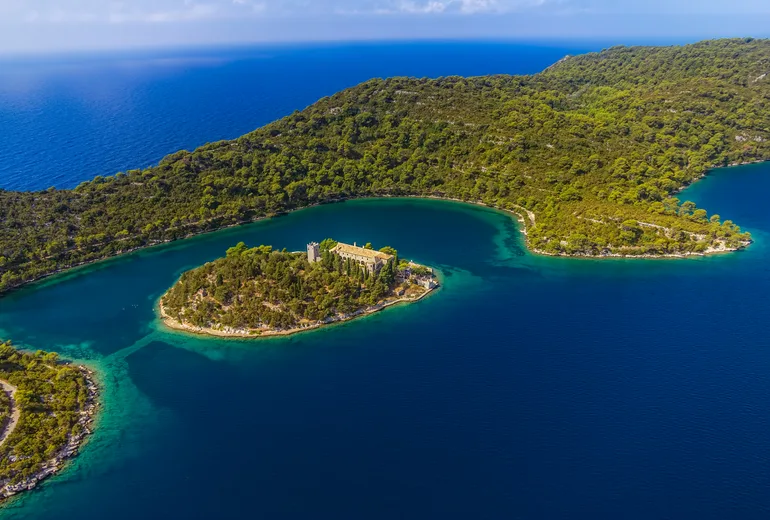
Mljet is the green opposite of Kornati: pine forest, two connected saltwater lakes, and the little monastery islet of St Mary in the middle of the larger lake. The park covers the western third of the island, and you reach it by mooring in Pomena or Polače, both sheltered, both with restaurant quays. From there it’s a short walk or bike to the lakes.
Park admission is roughly €18–25 per person in high season, paid at the entrance, and it includes the small boat shuttle out to the monastery. Polače has a cluster of buoys and free anchoring around the bay; Pomena is tighter and tends to fill by mid-afternoon in July. If you’re plotting a southern-Dalmatia route that ends near Dubrovnik, Mljet is the natural last green stop before the city.
Between northern Sardinia and Corsica, the La Maddalena archipelago is a marine park of pink-granite islands and some of the clearest water in the western Med. Spargi, Budelli and the Caprera coves are the headline anchorages, though Budelli’s famous pink beach is off-limits to landing — you admire it from the water.
The park uses a tiered daily permit by zone and boat length; expect roughly €25–55 per day for a mid-size yacht in summer, bought online or via the app before you enter the core zones. Anchoring is regulated to protect the seagrass, so check the current zone map at your charter base in Palau or Cannigione. The reward is genuine: granite cradling turquoise shallows, with Corsica’s Bonifacio cliffs a 90-minute hop north if you have the time and a settled forecast.
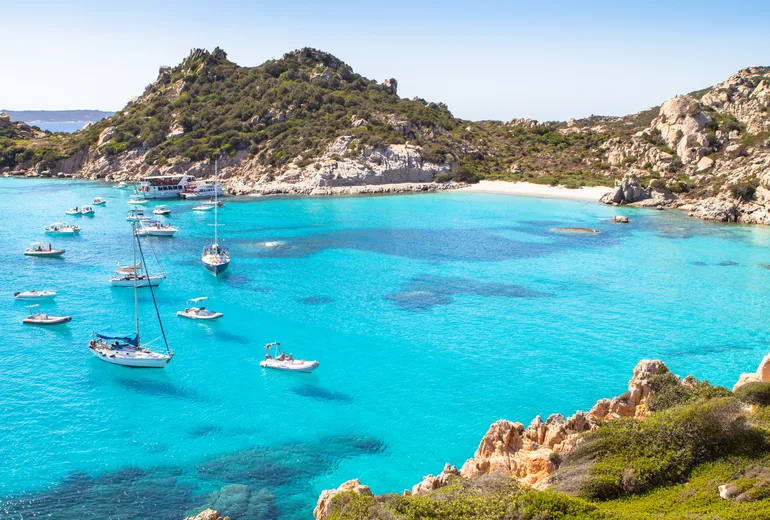
Cabrera lies about 10 NM south of Mallorca and is the most tightly managed park on this list — and the most rewarding for it. The whole archipelago is a maritime-terrestrial national park, so you cannot free-anchor at all. You book one of the limited mooring buoys in advance through the park’s reservation system, and demand far outstrips supply in August, so plan weeks ahead.
A buoy night costs roughly €30–70 depending on boat length, plus a small landing permit if you want to walk up to the 14th-century castle or visit the marine museum. Snorkelling over the protected reefs and the blue grotto (Sa Cova Blava) is the main event. Because numbers are capped, Cabrera stays quiet even in peak week — a rare thing in the Balearics.
Off Sicily’s western tip, the Egadi Islands form the largest marine protected area in the Mediterranean by surface. Favignana is the hub, with Levanzo and remote Marettimo completing the trio. Cala Rossa and Cala Azzurra on Favignana are the standout anchorages — old tuna-fishery coastline with water that glows over white limestone.
The reserve is split into zones A to C with different rules; the strict A zones around Marettimo allow no anchoring or fishing, while much of Favignana’s coast is open to careful anchoring outside the seagrass. There’s a modest mooring-field fee in the managed bays, and the practical base is Marsala or Trapani on the mainland. Provision well — the islands are small, and the best meal is usually the day’s catch grilled at a Favignana trattoria.
Favignana itself is flat and easy to explore by rented bike between swims, and the old tuna processing plant, the Stabilimento Florio, is worth an hour ashore for the history. Crossings from Trapani are short, around 8 to 10 NM, but the channel can kick up when the mistral blows from the northwest, so watch the forecast before committing to Marettimo, the most exposed of the three. Most crews give the Egadi two or three days as part of a wider western-Sicily loop rather than treating it as a destination on its own.
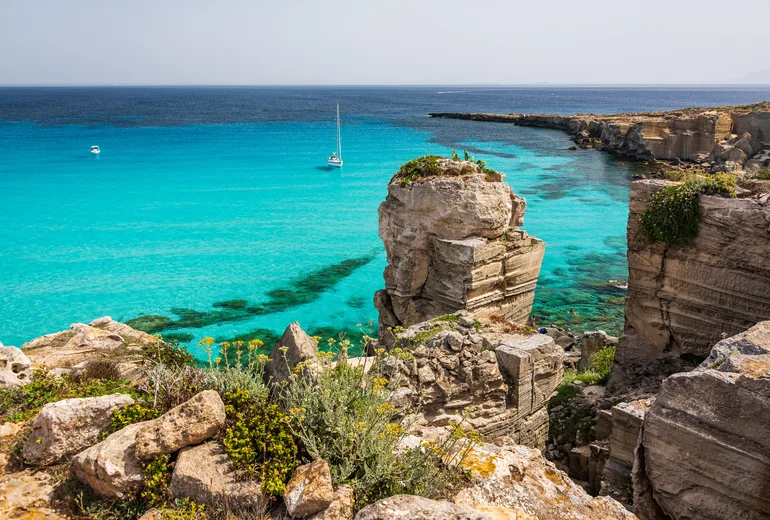
The waters around Alonissos make up the largest marine park in Europe, set up to protect the Mediterranean monk seal. It covers a scatter of uninhabited islets — Peristera, Kyra Panagia, Gioura — east of the main Sporades chain of Skiathos, Skopelos and Alonissos.
There’s no general entry fee for sailing the outer zone, but the inner sanctuary around Piperi is strictly off-limits, and approaching the protected islets is regulated, with several requiring you to stay offshore. Patitiri on Alonissos and the wreck-and-cove anchorages off Peristera are the usual stops. For a fuller Greek-islands plan that pairs naturally with the Sporades, see our rundown of the top islands to visit in Greece.
Protected areas only stay clear because crews respect the rules, and a little care goes a long way. Use holding tanks rather than discharging close to shore, keep the dinghy off the seagrass when you beach it, and give swimmers and snorkellers a wide berth at low speed. Most parks ban any kind of fishing in the core zones, so leave the rod stowed unless you’ve checked the local permit situation.
Noise carries over still water, too. Sound systems that feel normal in a busy marina are jarring in a quiet park anchorage, and rangers in places like Cabrera and La Maddalena will move boats on for it. The reward for playing by the rules is the thing you came for: water you can read the anchor chain through, and a bay that still feels wild after a week of summer traffic.
Costs shift year to year, so treat these as planning figures rather than quotes. As a rough guide for a 12–15 m yacht in high season:
The appeal of Mediterranean marine parks sailing is precisely that no two on this list feel alike — bare Kornati, forested Mljet, granite La Maddalena. If you’d rather string several of these into one cross-country trip, our overview of the most scenic yachting routes in the Mediterranean sketches how the legs connect.
For most parks, yes — either a daily entry fee, a paid mooring buoy, or both. Cabrera goes further and requires an advance buoy reservation with no free anchoring at all. Kornati, La Maddalena and the Egadi sell day permits you can usually buy online or at a marina before you arrive.
Often only in designated bays. Core zones protect seagrass meadows, so dropping the hook on the seabed is frequently banned. Plan to use mooring buoys or restaurant pontoons, and check each park’s current zone map at your charter base.
La Maddalena in Sardinia and the Egadi Islands off Sicily are hard to beat for clarity over white sand and limestone. Kornati’s channels are striking too, though the landscape there is bare rock rather than turquoise lagoons.
It varies. Capped parks like Cabrera stay quiet because numbers are limited, while popular Kornati and Mljet anchorages fill by mid-afternoon in peak week. Arriving early or staying on a quieter konoba quay usually solves it.
Ready to build a park-hopping route of your own? Browse our charter yachts across the Mediterranean and explore the destinations that put Kornati, Mljet, La Maddalena and the rest within an easy week’s sailing.