Türkiye in October: The Med’s Last Warm Sailing Water (23–25°C)
Türkiye keeps the Med’s warmest water into October — 23–25°C seas, half-price gulets and empty Göcek bays. Here’s how to plan it.
Read more
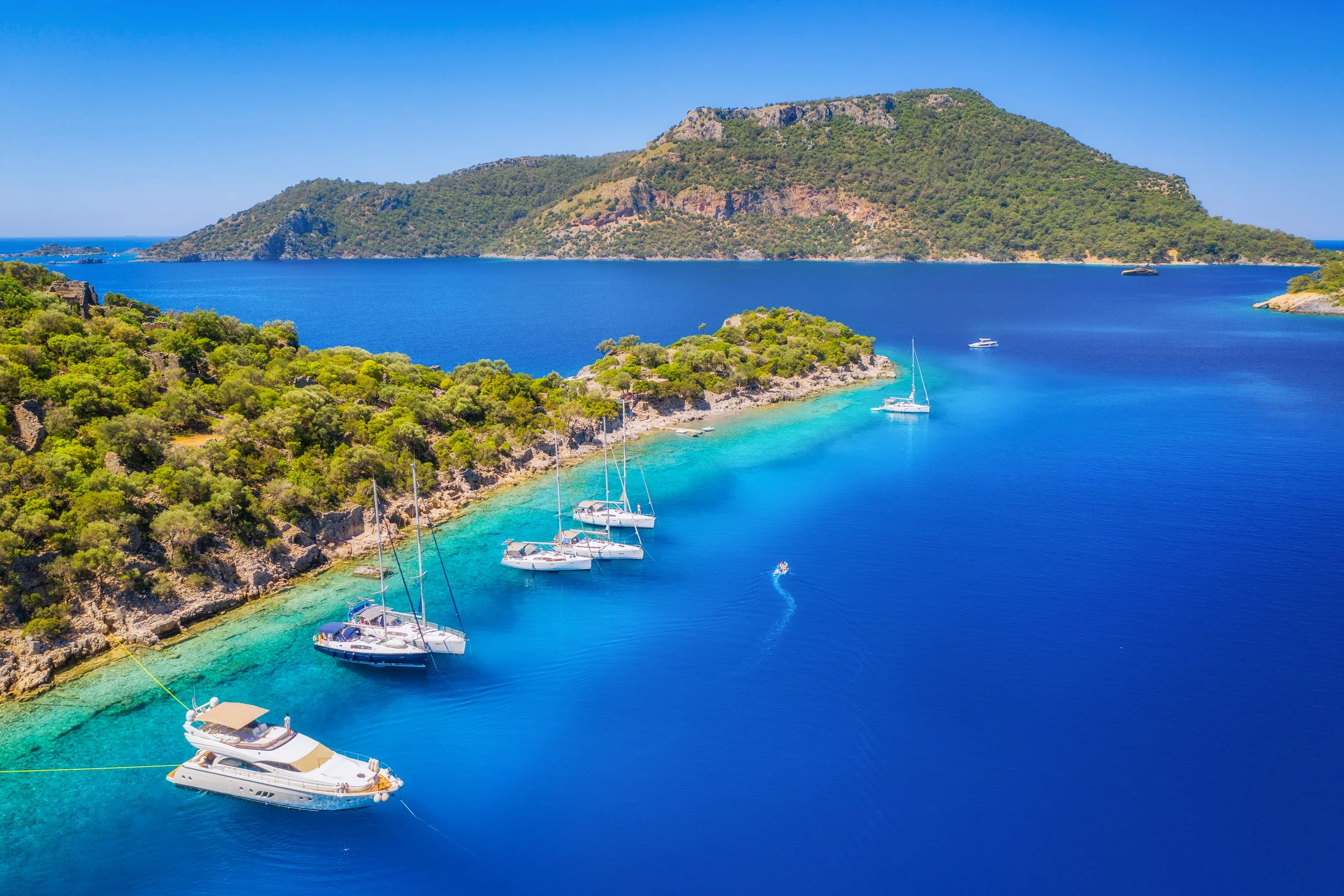
If you’ve researched a Turkish sailing holiday, you’ve run into the phrase “blue cruise” — and probably wondered how it differs from a normal yacht charter. The short answer: a blue cruise is a relaxed, crewed voyage along Türkiye’s Turquoise Coast aboard a traditional gulet, built around swimming, anchoring and shore meals rather than hard sailing.
So what is a blue cruise in practice, who does it suit, and why is the Turkish coast gulet-first when most of the Med is bareboat-first? Here’s a first-timer’s primer from people who book these weeks for a living. If you’ve already read about why Türkiye holds the Med’s last warm water, this fills in how the charter itself works.
The term “mavi yolculuk” — literally “blue voyage” — dates to the mid-20th century, when Turkish writers and artists began chartering local fishing and sponge boats to drift along the southwestern coast. The idea stuck: a slow, crewed cruise that treats the sea and the bays as the destination, not a means of getting somewhere.
In modern terms, a blue cruise is a week (sometimes shorter) aboard a gulet — a broad, wooden, motor-sailing yacht — with a professional crew handling navigation, cooking and the boat itself. You spend your days swimming off the stern, anchoring in pine-backed coves, and stepping ashore for meals in fishing villages. It’s closer to a floating boutique hotel than to a sailing course.
The pace is the whole point. A blue cruise rarely covers more than 10–15 nautical miles in a day, often less, and the “schedule” is really just a loose loop of bays the captain adjusts to the weather. Mornings might start with a swim before the coffee’s even brewed; afternoons drift between a shaded deck, a paddleboard and a shoreside ruin. If you’ve read our piece on why Türkiye keeps the Med’s last warm water, the gulet is the vessel that lets you make the most of that long, gentle season.
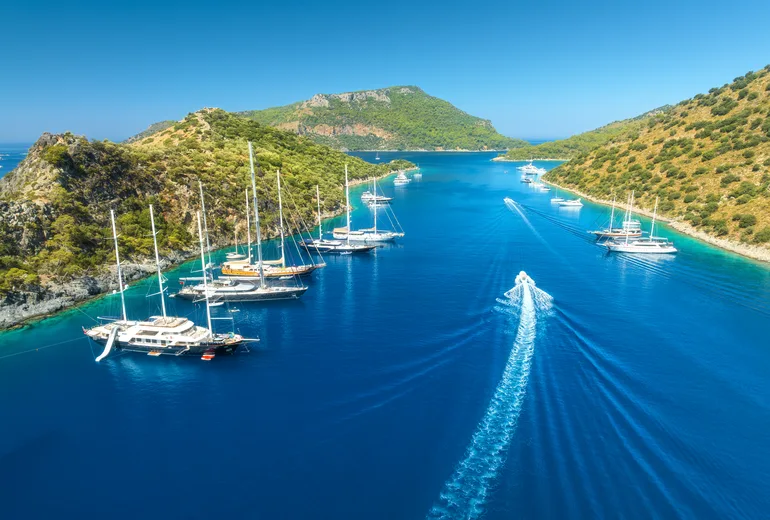
The gulet is the heart of the experience and the reason the coast cruises differently from the rest of the Med. These are beamy wooden vessels, typically 18–35 metres, with four to twelve guest cabins, broad shaded aft decks for lounging and dining, and a foredeck of sun mattresses. They motor far more than they sail — the rig is real but secondary — which is exactly why they’re so steady and comfortable.
A standard gulet carries a captain plus one to three crew, and most include a cook who provisions and prepares meals aboard. Cabins have ensuite bathrooms and air conditioning (usually run while the generator’s on). Compared with a bareboat monohull or catamaran, a gulet trades sailing performance for space, shade and service.
Sizes and styles vary more than people expect. At the simpler end, a traditional gulet for six to eight guests offers comfortable cabins, hearty home cooking and a relaxed crew — excellent value, especially off-peak. At the top end, modern “deluxe” and “luxury” gulets rival small superyachts: master suites, jacuzzis on the aft deck, water toys like seabobs and inflatable slides, and a dedicated chef. Knowing which tier you’re booking matters, because the word “gulet” covers a wide price range — from roughly €1,000 per person per week on a modest boat in the shoulder season to several times that on a luxury vessel in peak August.
The contrast with a typical Croatian or Greek charter is sharp, and worth understanding before you book.
In Croatia or Greece you choose between bareboat (you skipper) and crewed. On the Turquoise Coast, crewed is the norm — the overwhelming majority of charters are gulets with a full crew. You don’t need a sailing licence, and you never touch the helm unless you want to. For the wider distinction, our guide on the difference between bareboat and crewed charter sets out both models.
Rather than a fixed marina-to-marina plan, the captain reads the weather and suggests the next bay each morning. You’ll cover modest distances — often under 15 NM a day — with the route shaped around swimming spots and sheltered overnight anchorages rather than ticking off ports.
On a bareboat you shop and cook. On a gulet the cook handles it: typically breakfast and one main meal aboard each day, with the option to eat ashore. You tell the crew your preferences at the start, and the galley does the rest. Expect Turkish home cooking at its best — mezze plates, grilled fish, stuffed vegetables, fresh bread and seasonal fruit — with the cook flexing for vegetarian, vegan or gluten-free crews if you flag it in advance.
There’s no rigid timetable, but a representative day runs something like this. Breakfast is laid out on the aft deck around 8:30, often as the gulet motors gently to the morning’s first swim spot. By late morning you’re anchored somewhere quiet — a paddle, a swim, a snooze in the shade. Lunch aboard is a long, mezze-style spread eaten over a couple of hours.
In the afternoon the captain moves to the overnight bay, perhaps with the sails up for an hour if the breeze cooperates. You go ashore to explore a village or a ruin, swim again, then gather on deck for sunset drinks before dinner — sometimes aboard, sometimes at a jetty restaurant the crew rows you to. It’s unhurried by design, and the lack of a fixed plan is exactly what regulars love about it.
Blue cruises are ideal for groups who want time together without anyone working the boat — families across generations, friend groups, couples celebrating something. Because there’s no licence requirement and no docking stress, they suit people with zero sailing experience as readily as old hands who fancy a week off the helm.
They’re less suited to crews who want to actually sail hard, learn navigation, or cover long distances. If your idea of a charter is trimming sails on a brisk reach, a bareboat in Croatia or the Cyclades fits better. If your idea is anchoring somewhere quiet, swimming before breakfast and letting someone else cook, the gulet is purpose-built for it. It’s no accident that Türkiye features in our roundup of Europe’s top charter destinations for 2026 as the comfort-and-warmth option.
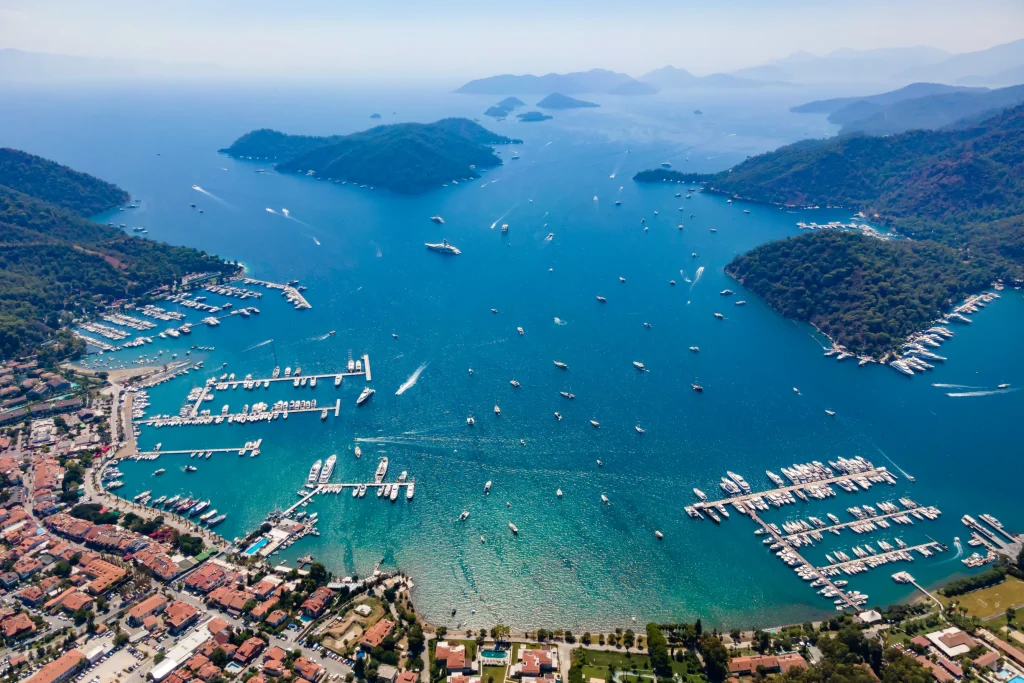
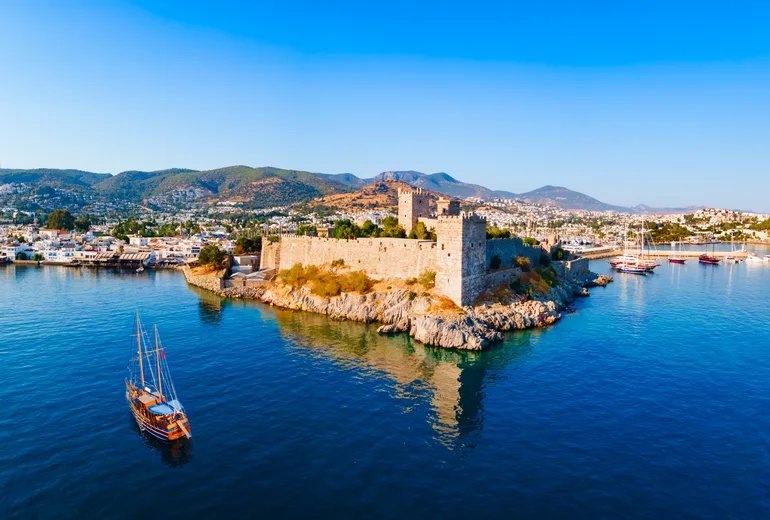
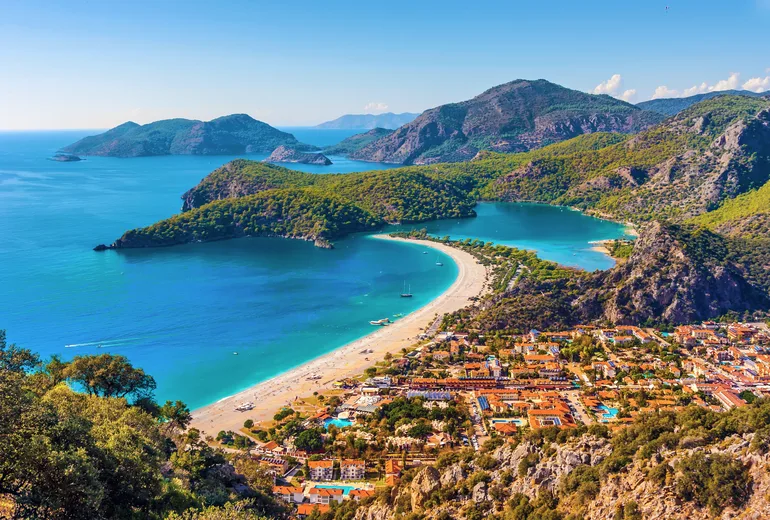
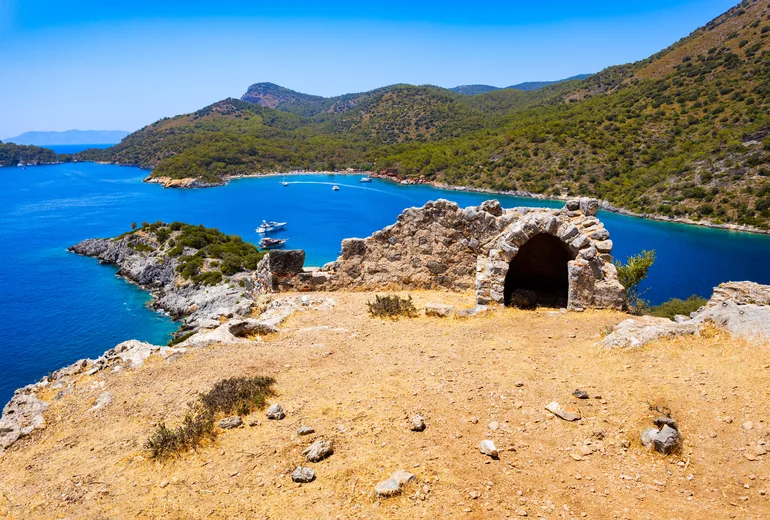
Blue cruises run along a string of distinct sections. Around Bodrum and the Gulf of Gökova you get lively start points and sheltered bays like Cleopatra’s Beach on Sedir Island. The Göcek–Fethiye gulf, with its dozen anchorages and the Yassıca islets, is the most popular cruising ground. Further east toward Kaş, Kekova and Antalya, the coast turns more dramatic, with sunken Lycian ruins visible beneath the water at Kekova.
Most weeks are out-and-back loops from Göcek, Fethiye, Bodrum or Marmaris, with airports at Dalaman and Bodrum-Milas keeping transfers short. Distances are gentle, the bays are close together, and the warm season stretches from May into late October — longer than almost anywhere in the Med.
One more choice shapes the experience. A private (whole-boat) charter gives your group exclusive use of the gulet — you set the pace, the menu and the route within the captain’s weather calls. It’s the natural pick for a family or a group of friends who fill most of the cabins.
A cabin charter, by contrast, sells individual cabins on a shared gulet to unrelated guests, usually on a fixed route. It’s cheaper and sociable, ideal for couples or solo travellers happy to share with others, but you give up control of the itinerary and the privacy of the boat. For most groups of four or more, a private charter works out better value per person than it first appears, and the flexibility is worth a lot.
A few things smooth the planning. Tipping the crew is customary — budget roughly 5–10% of the charter fee, handed over at the end of the week. Provisioning (food and drink) is usually arranged with the cook for a transparent per-person daily cost rather than bundled into the headline price, so ask exactly what’s included. Bring soft-sided luggage that stows easily, reef-safe sunscreen, and water shoes for the rockier coves.
Türkiye sits just outside the EU, so check visa requirements for your nationality (many travellers use the simple online e-Visa) and factor a little extra for the airport transfer. None of it is complicated — a good charter broker handles the boat side — but knowing the shape of the trip in advance makes the first day on board pure pleasure rather than a learning curve. It’s one reason Türkiye keeps earning a place in our roundup of the top yacht charter destinations in Europe for 2026.
A blue cruise is a relaxed, crewed holiday aboard a traditional Turkish gulet along the Turquoise Coast, built around swimming, anchoring in coves and eating aboard rather than active sailing.
None at all. The gulet is fully crewed — a captain and hands run the boat and a cook handles meals — so it’s open to complete beginners as well as experienced sailors who want a week off the helm.
Gulets are broad wooden motor-sailers built for comfort and shade, always crewed, and they motor more than they sail. Greek and Croatian charters are more often performance monohulls or catamarans, frequently bareboat, with sailing as the main activity.
Most run seven nights as an out-and-back loop from Göcek, Fethiye, Bodrum or Marmaris, though three- and four-night cabin charters exist. The season runs from May into late October.
Curious whether a gulet week fits your group? Take a look at our Mediterranean charter destinations to compare a Turkish blue cruise with a more conventional sailing week elsewhere in the Med.