
Yacht charter Spain
by Europe Yachts.
Yacht charter Spain — Mallorca, Ibiza, Menorca, Formentera, Costa Brava. Bareboat, crewed, gulet. Transparent pricing, expert local marinas, 72h free cancellation.
Yachts we charter in Spain
A sample of the fleet available for charter in Spain — sailing yachts, catamarans and motor yachts. Open any boat for photos, layout, specifications and live availability.
- Yatlant 24MocaMonte Real Club de Yates de Baiona | Baiona
- Beneteau Flyer 8 SUNdeckBitelchusPort Olímpic de Barcelona
- Elan 31Sailway TresReal Club Nautico de Vigo | Vigo
- Sun Odyssey 52.2SlowMarina d'Empuriabrava
- Sun Odyssey 440La BaavcaMarina Naviera Balear | Palma de Mallorca
- MotorboatMariaMarina Palamós | Palamós
- Zar 59 SLBOLLICHINASant Antoni de Portmany Port | Sant Antoni de Portmany
- Dufour 382 Grand LargePremiumPort Roses | Roses
- Maxus 35Angelmiles 2Real Club Nàutic de València | València
- Sun Odyssey 380FontalbaClub Nàutic Costa Brava | Palamós
- Cap Camarat 7.5 DCCap CamaratPort d'Aiguadolç | Sitges - Barcelona
- Sun Odyssey 379ErinTenerife, San Miguel Marina
- Bavaria Cruiser 33CallistoArenal/Playa de Palma
- Sun Odyssey 349CastorMallorca, Porto Colom
- Bavaria C42Playa BlancaPalma de Mallorca, La Lonja
- Saxdor 200 SportMistralMarina Botafoch | Ibiza
- Oceanis 38MOINReial Club Nàutic Port de Pollença | Port de Pollença
- Oceanis 43Alboran XXX Cubalibre (Majorca)La Lonja Marina Charter | Palma de Mallorca
- Lagoon 400NusaClub Nautico Ibiza | Ibiza
- Dufour 460 Grand LargeFulham Marina de Dènia | Dènia
- Oceanis 38MoinMallorca, Real Club Nautic Pollenca
- Bavaria 49Julia TercerPort Olimpic | Barcelona
- Vanguard DR-760FogMonte Real Club de Yates de Baiona | Baiona
- Oceanis 30.1Tempus IIPort Olímpic de Barcelona
Sailing routes in Spain
Yacht charter regions in Spain.
Pick the cruising ground that fits the crew. Each region opens the live fleet filtered to that base.

The Balearic Islands: Sun, Fashion, and Quiet Bays
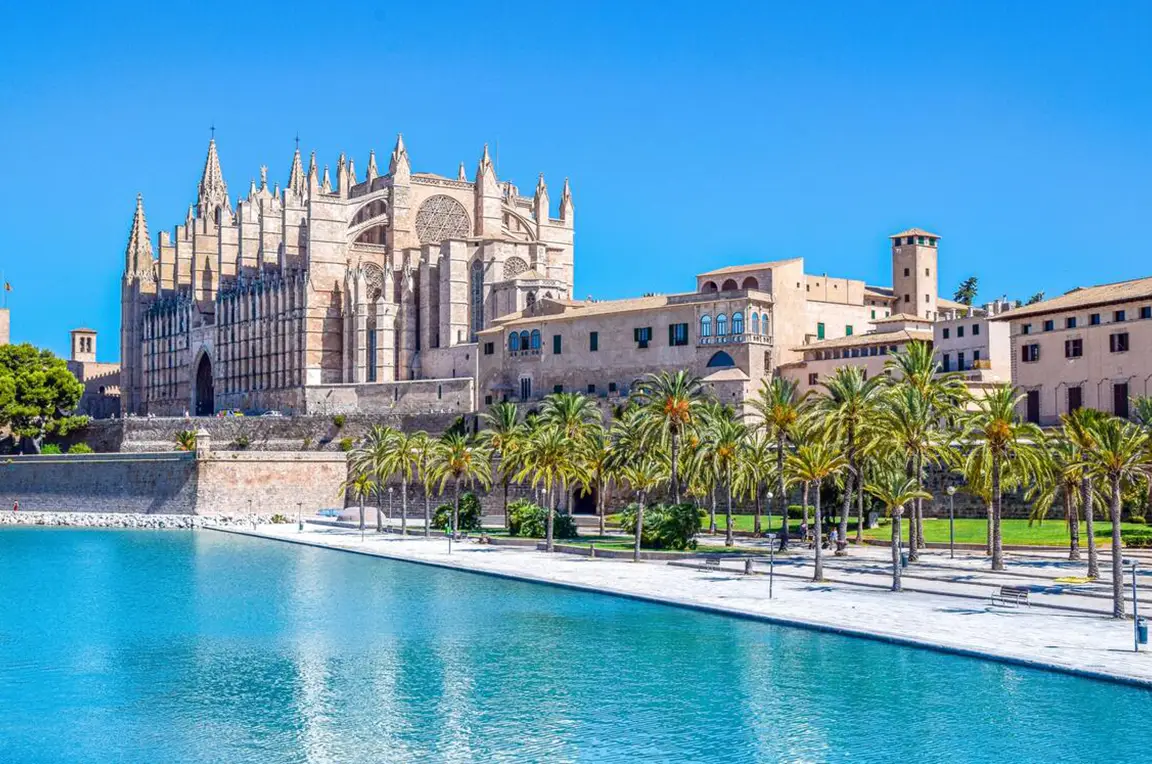
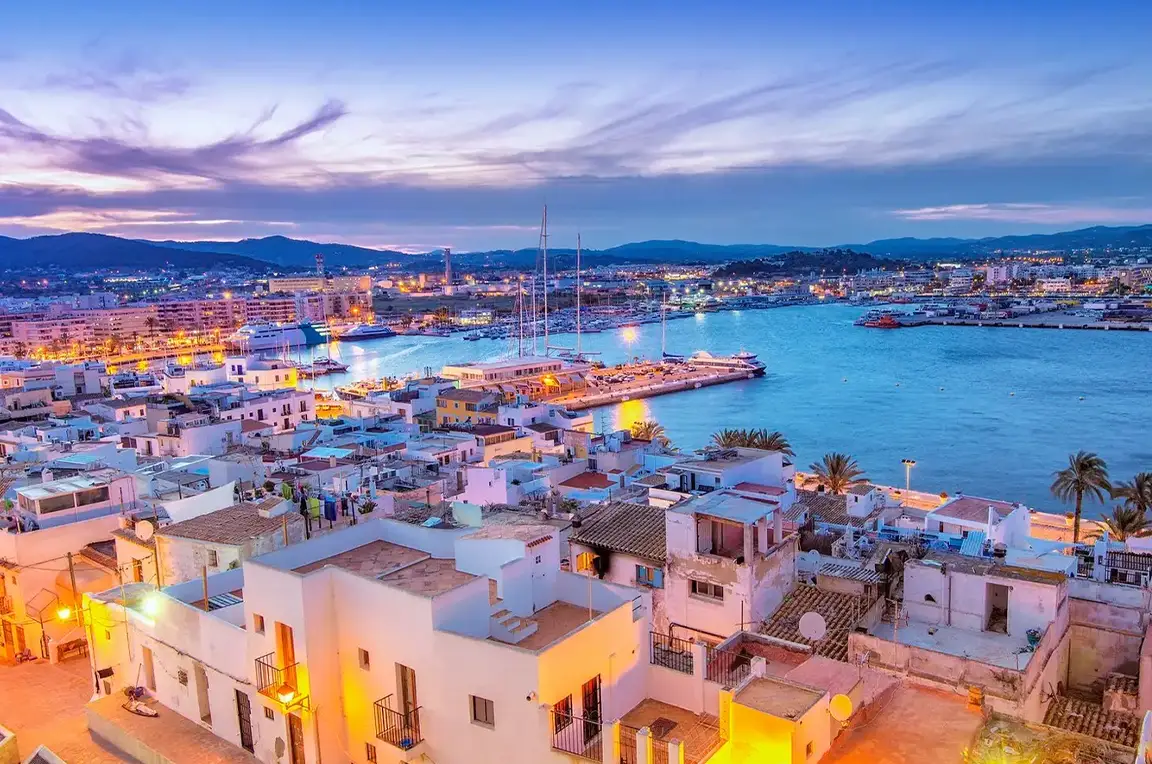
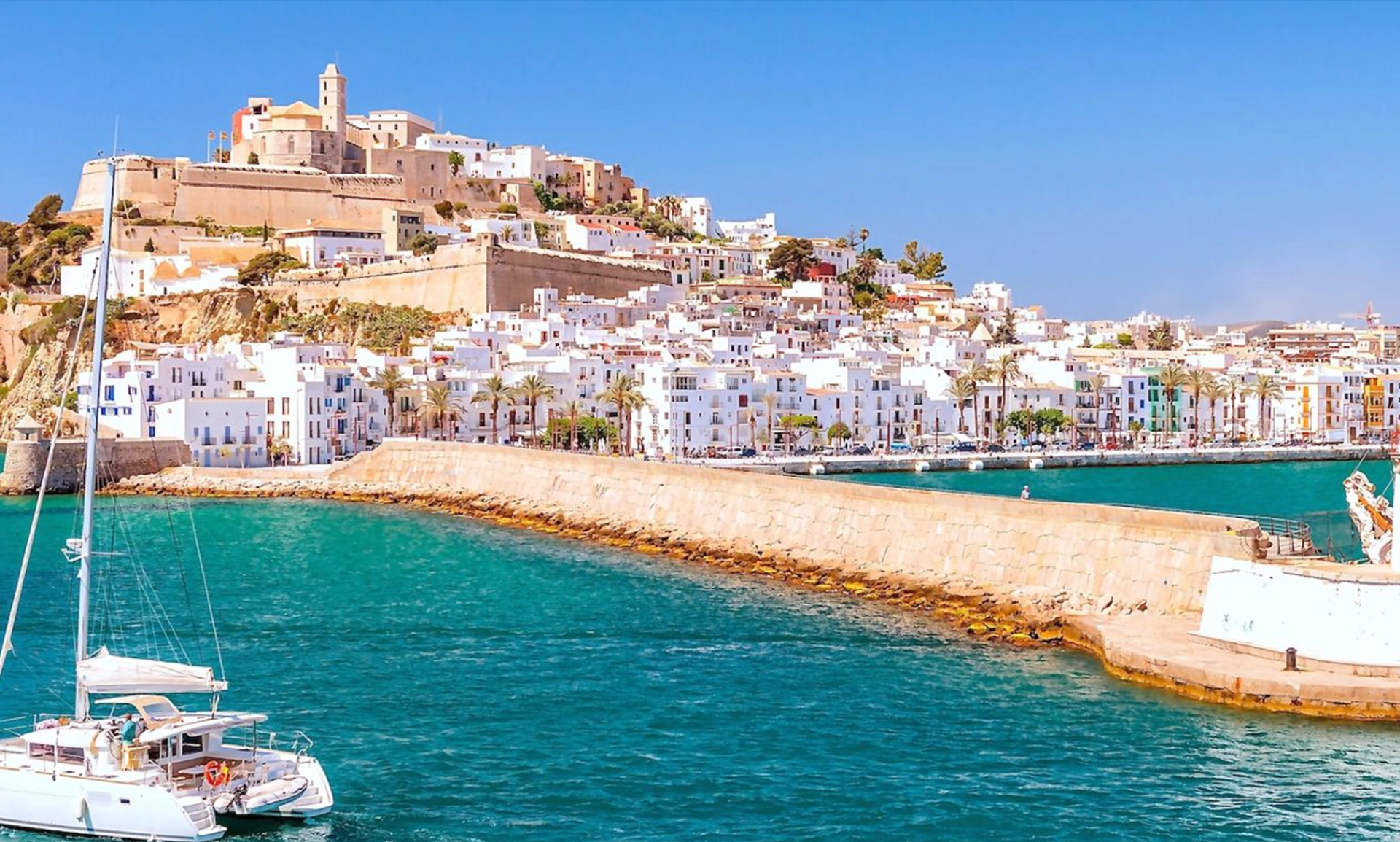
The best places to sail in Spain are Mallorca, Ibiza, Menorca, and Formentera. Mallorca has both sandy beaches and mountain views. Ibiza is known for its nightlife but also has quiet anchorages. Menorca is more laid-back and has unspoiled nature. Formentera is loved for its clear lagoons. The Balearics have something for everyone.
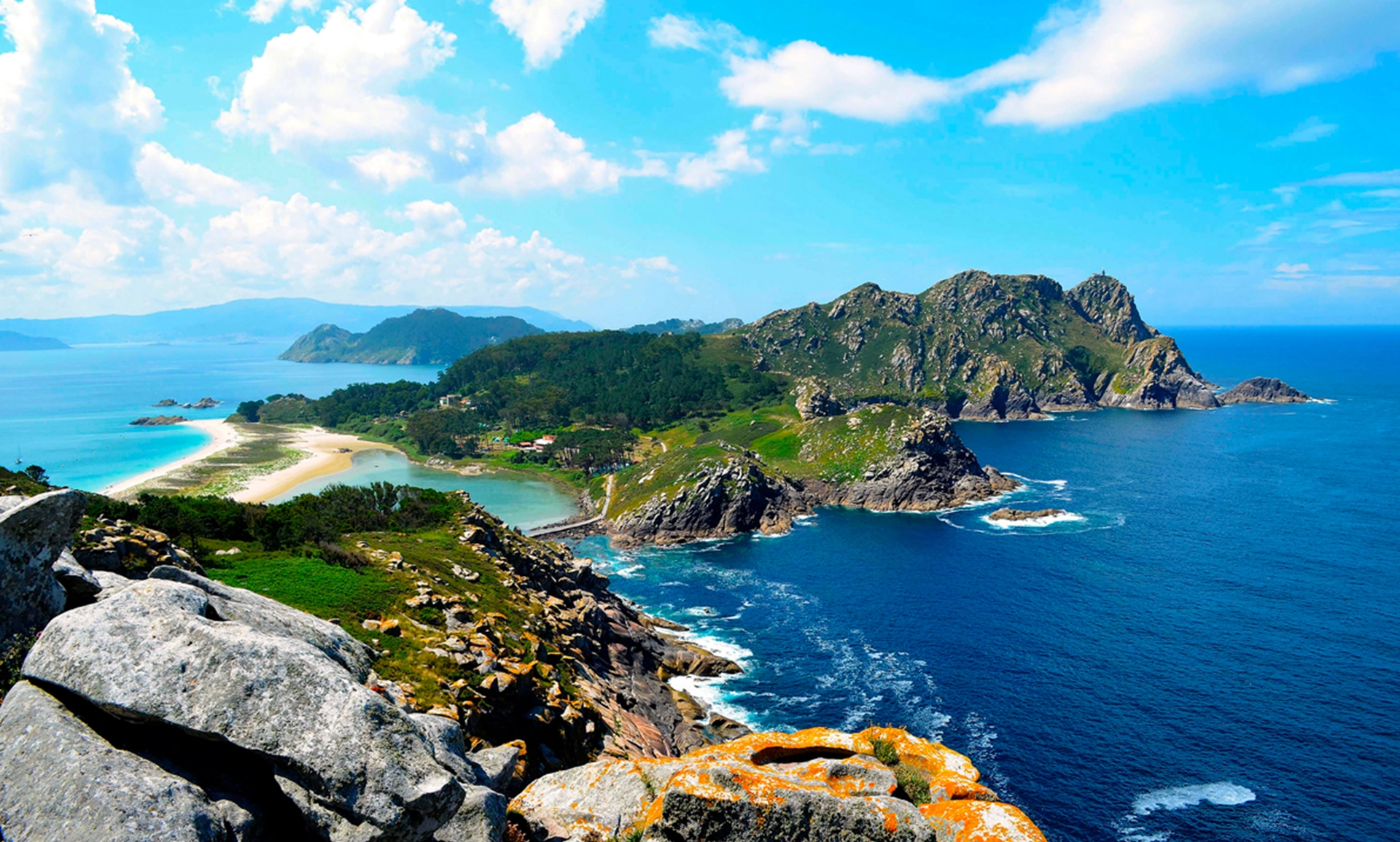
The Canary Islands: Sailing and Adventure All Year Round
The weather in the Canary Islands is nice, therefore they are perfect for winter boat charters. The volcanic landscape in Tenerife is beautiful. Lanzarote features black sand beaches and unique art, while Gran Canaria has a blend of culture and golden beaches. If you prefer a little adventure, the trade winds in the Canaries make sailing easy.
Barcelona and Costa Brava: Coastal Culture
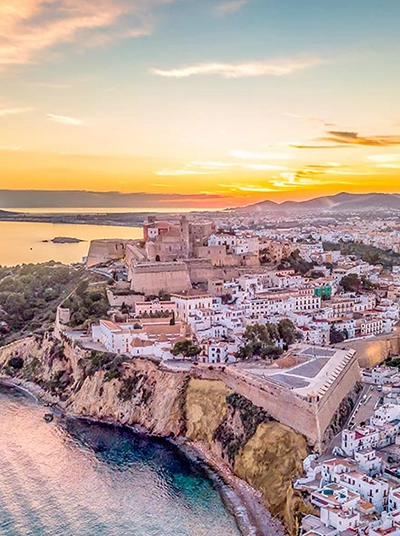
If you want to enjoy both culture and sailing, the Costa Brava is an excellent spot to go. Go to colorful markets, tiny fishing villages, and hidden rocky coves. Barcelona provides an urban edge to your trip to the Catalan coast with its world-class eating, art, and nightlife.
Europe Yachts broker desk — Yacht charter brokers since 2013 · Boat4You Group · Reviewed April 2026 · Last updated May 2026
Yacht charter Spain — Balearic Islands and the Catalan coast
Yacht charter Spain is the second-largest charter market in the western Mediterranean after Croatia, and the Balearic Islands (Mallorca, Menorca, Ibiza, Formentera) carry roughly 90% of that demand. Charter season runs from mid-April through mid-October. The Balearics combine some of the cleanest swimming water in the Mediterranean (the Cabrera National Park measures Posidonia-meadow water clarity at 35+ metres) with a mature charter industry, dense marina coverage and direct flights to Palma, Ibiza and Mahón from every major European city. The Catalan mainland coast — Barcelona out to the Costa Brava and the French border — is the alternative for crews who want shorter daily legs and a different cultural payload.
Browse the full Spanish Europe Yachts fleet (catamarans, monohulls, motor yachts, gulets) or use the charter wizard to filter by group size, region and budget.
Mallorca — the Balearic charter capital
Palma de Mallorca is the largest charter base in the western Mediterranean by berth count. The four main charter clusters — Real Club Náutico de Palma, Marina Port de Mallorca, Club de Mar and STP — between them carry the densest fleet of sailing yachts and catamarans south of the Côte d'Azur. From Palma a typical 7-day week loops Andratx and Sóller on the west coast, then north to Pollensa, then Cabrera National Park 8 nm south of Cap de Salinas, then back via Porto Colom and Cala d'Or on the east. Distance per day rarely exceeds 25 nm; the channels are sheltered, and there is a marina or sheltered anchorage every 8-12 miles.
Cabrera National Park — Mallorca's protected marine reserve
Cabrera is a small archipelago 8 nautical miles south of Mallorca. The whole area was designated a National Park in 1991 and the regulations still bite: anchoring outside designated mooring zones is prohibited, the Park boundary is patrolled, and the 50 mooring buoys in the main bay (Es Port) book out for July-August by mid-May. Reservations open online 30 days ahead via the Govern de les Illes Balears Park system. Europe Yachts handles the booking as part of pre-charter setup. The reward: water clarity that competitors can't match, with the Posidonia seagrass meadows and ancient-Roman wreck visible to 35-metre depth.
How early to book Cabrera moorings
For July-August: reserve the moment your dates open (30 days ahead). For June and September: 14 days ahead is usually enough. Off-season (May, October): walk-in reservation at the Park ranger boat is acceptable but not guaranteed. The system penalises no-shows; cancel at least 48 hours ahead if your weather window changes.
For first-time crews to Mallorca I always plan two nights in Cabrera if July dates allow. The water in the main bay reads 35-metre visibility on a calm day. There is nothing else like it in the western Mediterranean. Then the rest of the week is the Mallorca east-coast loop — Cala d'Or, Porto Cristo, Porto Colom — at a relaxed 15 nm per day.
Ibiza and Formentera — the southern Balearic pair
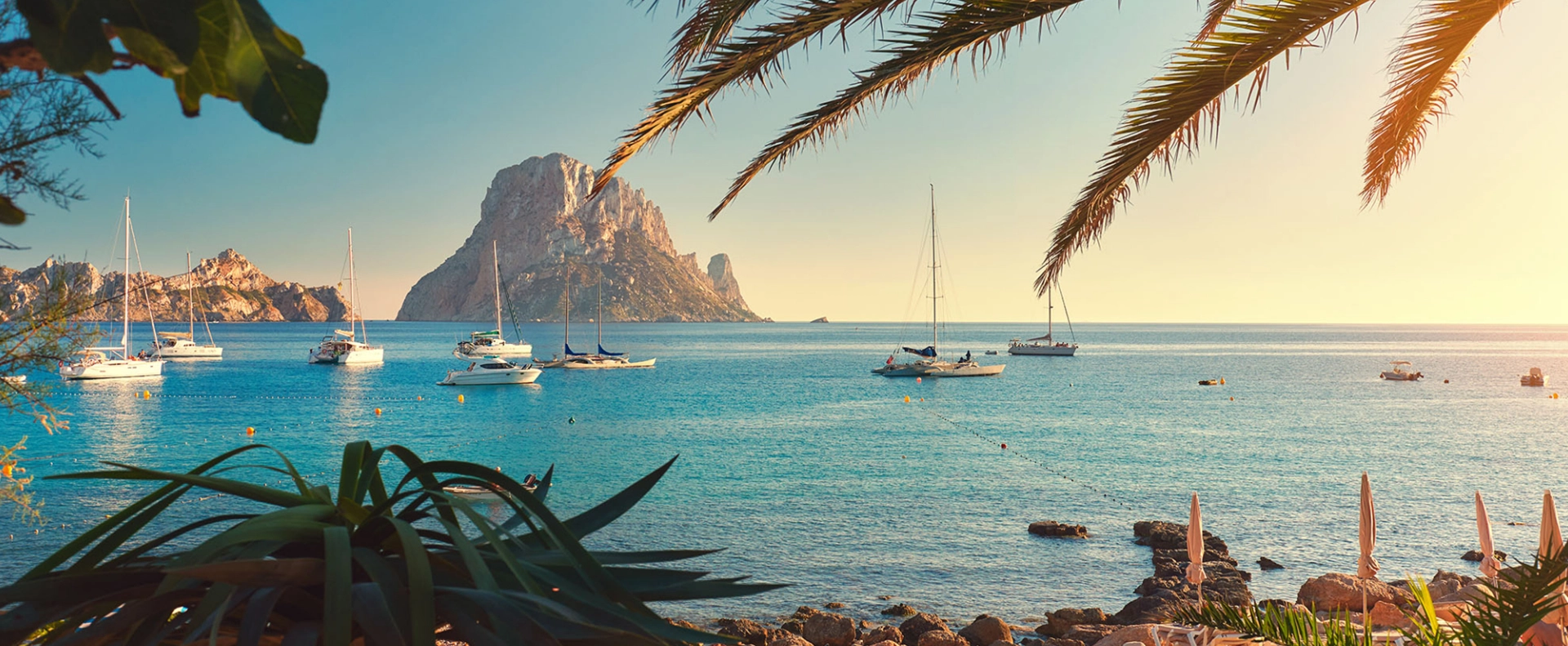
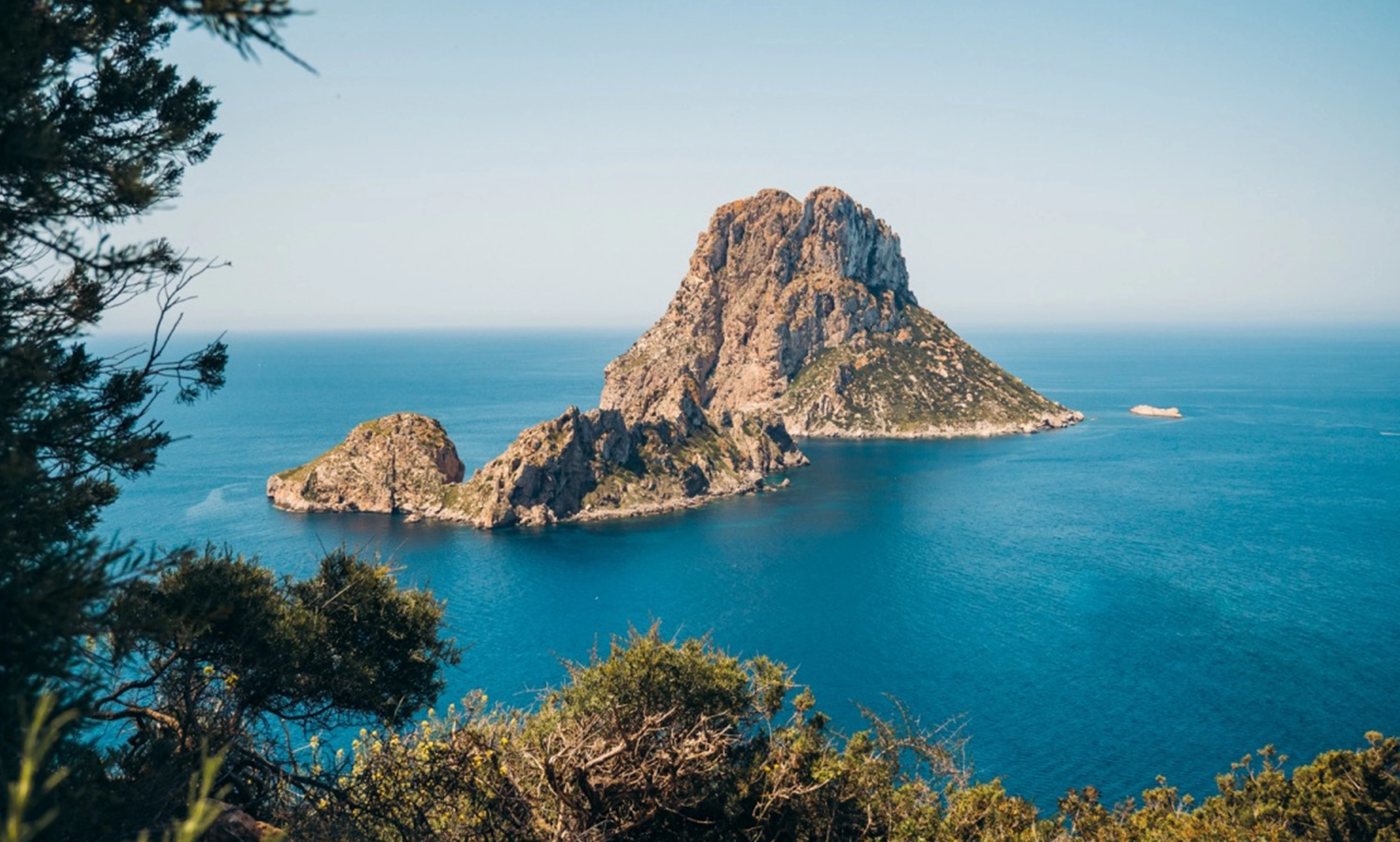
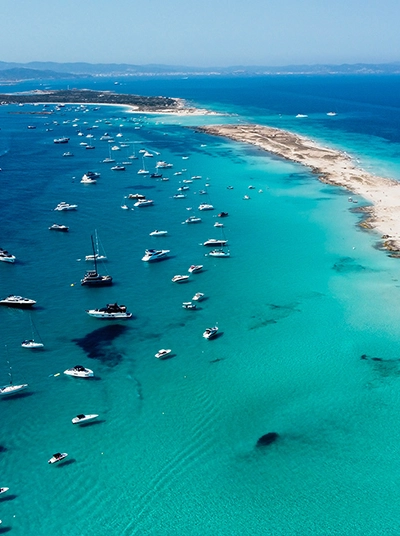
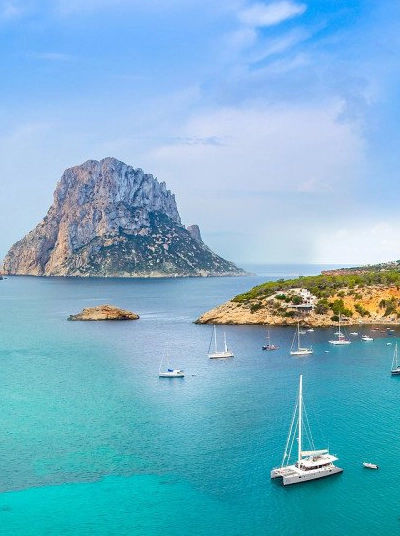
Ibiza is the world's most photographed island for sunset and the year-round centre of European electronic music. The west coast (Cala Vedella, Cala Tarida, Cala Salada) and the north (Portinatx) deliver quiet anchorages within an hour's sail of the resort hot-spots. The Es Vedrà rock — a 380-metre limestone needle off the southwest coast — is the iconic Ibiza anchorage; daytime swim only, no overnight. Formentera, 4 miles south of Ibiza, is the white-sand-and-turquoise-water island that direct competitors put up against Anguilla and the Grenadines. Anchoring at Espalmador and the Formentera north coast is regulated; the Posidonia seagrass beds are protected and require designated zones.
Ibiza vs Formentera — pick by your group profile
Ibiza is the right base for crews that want Pacha and Ushuaïa one or two evenings out of seven. Formentera is the right base for crews that want Caribbean-quality water and zero noise. Most informed clients combine: arrive Ibiza Saturday, sail across to Formentera Sunday morning, anchor at Espalmador for two nights, then back to Ibiza for the second half of the week. That sequence captures both the island calm and the Ibiza nightlife without one drowning the other.
What surprises every UK and German guest who comes to Formentera for the first time is the colour of the water at Espalmador and Ses Salines. People who have been to the Maldives, the Caribbean, the Maldives again — they take the picture and they don't believe it is the Mediterranean.
Menorca — the quiet UNESCO Biosphere
Menorca is the smallest, quietest and most conservation-focused of the four Balearic islands — a UNESCO Biosphere Reserve since 1993 with strict planning controls that keep large resort development off the coast. The cruising route loops the south coast (Cala Galdana, Cala en Bosch, Son Saura, Cala en Porter) where the calas are sand-bottomed, shallow, and most easily reached by boat. Mahón (Maó) on the east coast is the second-largest natural harbour in the Mediterranean after Pearl Harbour by water surface area. Ciutadella on the west has a smaller working fishing port. Menorca pairs well with a Mallorca week — sail east from Palma, two nights in Mahón, two nights along the south coast calas, then back.
Catalan mainland coast — Barcelona to Costa Brava
Barcelona, Sitges, Calella, Mataró, Blanes and the Costa Brava (Tossa, Sant Feliu, Palamós, Begur, Cadaqués, Roses) form the mainland Catalan cruising. Shorter legs than the Balearics (8-15 nm typical day), constant marina coverage, and the cultural payload of waterfront cities. Tramuntana wind (north-westerly off the Pyrenees) can blow 30+ knots in winter and shoulder seasons; in summer the prevailing wind is the Garbí (sea breeze from the south). Marina prices are mid-range — comparable to Croatian ACI marinas, less than Sardinian ports. Cadaqués (Salvador Dalí's home village, white-washed amphitheatre on the bay) and Roses (the largest Costa Brava marina) are the headline overnights.
When to charter Spain
Mid-April through mid-October. June and September are the sweet spots — water 22-24°C, reliable wind, prices 25-30% below July peak. May and early October are still feasible but the wind regime is less stable. July and August are peak — every Balearic cala is busy by 14:00, every marina is booked, prices are at maximum. The Mediterranean tradition of August holiday means Palma is at its loudest in the second half of August; book Cabrera and Formentera moorings 6 weeks ahead for that window.
Bareboat licensing — Spanish requirements
Spanish bareboat charter accepts the standard international skipper certificates: RYA Day Skipper or above (with required sea miles), ICC, IYT, ASA 104, or equivalent. The skipper also needs a separate VHF radio operator certificate (SRC, ROC, or equivalent). Originals or notarised copies must be presented at base check-in; photocopies are not accepted. For motor-yacht only charters Spain accepts the equivalent power-only skipper qualification. Europe Yachts confirms documentation acceptance pre-charter and arranges a paid skipper from any Spanish base if your group prefers to hand over the navigation.
Charter cost — what Spain actually costs in 2026
Bareboat catamarans in the Balearics run roughly €5,500-9,500 per week in May-June, €9,000-16,000 in July-August, and €6,000-11,000 in September. Monohulls run 30-40% less. Motor yachts and crewed luxury vessels are the wider range — a fully-crewed 50-metre yacht in Costa Smeralda August is €120,000+ per week, while a 12-metre motor yacht in Mallorca shoulder season can be €5,000. Cabrera Park mooring buoys are around €30 per night; ACI-equivalent marinas €70-110 per night for a 12-metre boat in peak. Final pricing depends on boat year, length and operator — request a tailored quote for available boats on your specific dates.
The most common mistake first-time guests make on Spain charter pricing is comparing only the boat fee. Marina costs in Mallorca peak July are double Croatia. Add Park entry, fuel, end-of-week clean — the all-in cost for a Balearic week is closer to €18,000-22,000 for a mid-range catamaran, not the €11,000 boat-fee headline.
Spain vs Croatia — which to charter first?
If you have one Mediterranean charter week in your life, the honest answer is Croatia for the variety, sheer marina density and the cultural payload of the towns; Spain for the water clarity (Cabrera, Formentera) and easier flight access from northern Europe. If your group has confident reefing experience, both regions deliver the same quality of sailing. If your crew is mixed (some experienced, some new to sailing), Croatia is the more forgiving cruising ground — sheltered channels, shorter legs, lower wind regime than the Balearics in peak Tramuntana periods.
Browse the full Spanish fleet, compare with the Croatia destination guide or send us your dates for a tailored quote with available boats — usually within a few hours.
175 catamarans based in Spain
Browse the live fleet — sailing catamarans, power catamarans, bareboat or fully crewed. Filter by dates and group size; we’ll quote within hours.
Live availability · 72 h free cancellation · No booking fees
Charter Spain FAQ
Plan your Spain week — we'll match the boat.
Send your dates, departure base and crew size. A broker replies with matching yachts and a route that fits — usually within the same business day.