Croatia or Italy for Your 2027 Charter? Value Coast vs Glamour Coast
Croatia vs Italy for your 2027 charter: short hops and value against Amalfi glamour and 22% VAT, with real cost deltas.
Read more
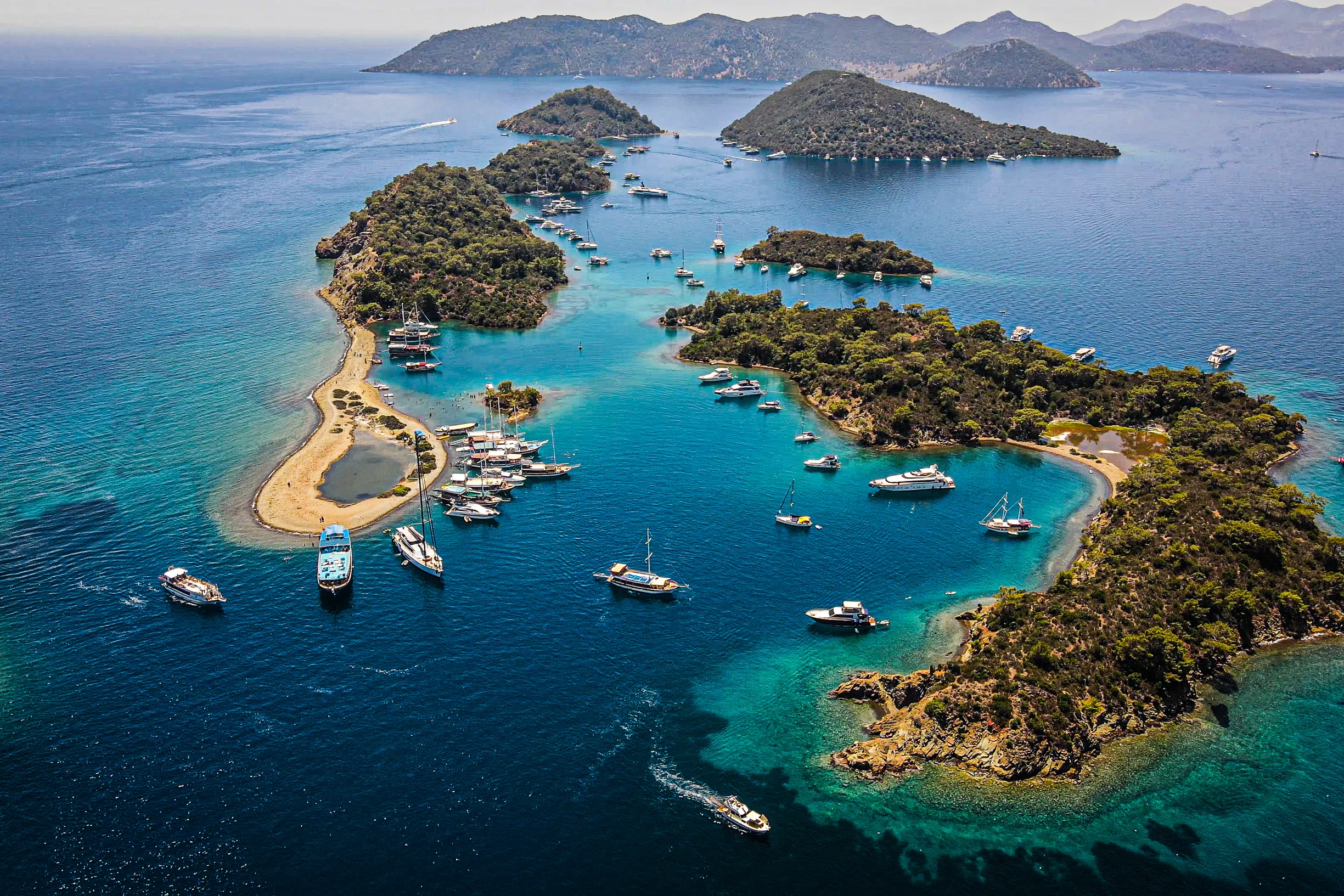
On a Turkish gulet, the food is not a side note — it’s half the reason people book. Gulet cruise food follows a steady daily rhythm of fresh, mostly home-style Turkish cooking, prepared by a cook in the boat’s galley and laid out on the aft deck while you swing at anchor in a pine-fringed bay.
So what actually lands on the table, and what’s included? Here’s the honest breakdown of meals, market stops and the drinks question, drawn from how the blue-cruise boats out of Fethiye and Göcek typically run.
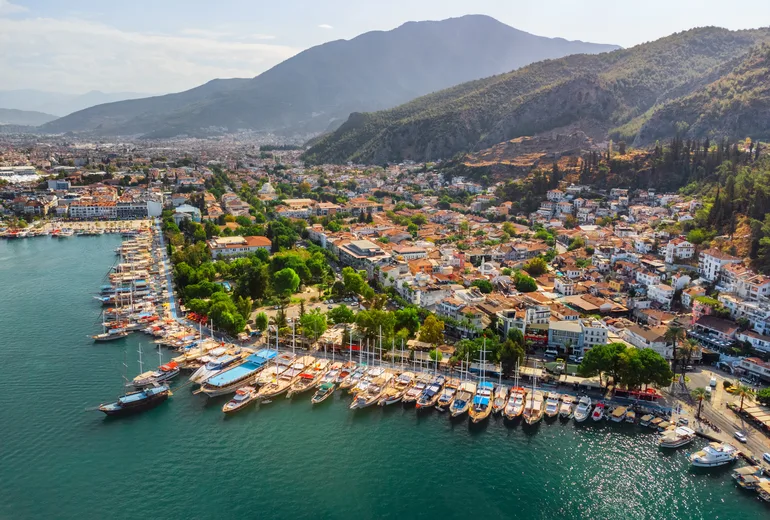
Most gulets serve three meals a day plus tea, and the schedule shapes the cruise more than the sailing does. Breakfast appears when people surface, lunch comes after the late-morning swim stop, and dinner is served at anchor as the light goes. Between meals there’s nearly always a pot of çay — Turkish black tea in tulip glasses — on the go.
The pace is deliberately slow. The cook shops at the start and tops up at market stops, so what you eat tracks the season and the day’s catch rather than a fixed printed menu. That seasonality is the whole charm of gulet cruise food: this is full-board crewed cruising, closer in spirit to a crewed charter than to self-catering a bareboat.
Turkish breakfast is famous, and on a gulet it’s done properly. Expect a spread rather than a plate: white cheese and aged kaşar, black and green olives, sliced tomato and cucumber, honey with clotted kaymak cream, simit sesame bread, butter, jam, and usually eggs cooked to order — often menemen, the soft scramble with tomato and green pepper.
It’s laid out family-style across the deck table and grazed over an hour or more with endless tea. On a calm morning at anchor, breakfast easily runs into the first swim of the day. Some cooks add fresh börek — flaky filled pastry — or a pan of sucuklu yumurta, eggs fried with spicy Turkish sausage, when the boat is near a town and the bakery is open early.
Coffee is usually instant or filter for the morning crowd, with proper Turkish coffee offered after meals if you ask. The point of the spread is that nobody leaves the table hungry, and the leftover cheese and olives often reappear at the lunch meze, so little goes to waste.
Lunch is lighter and built around meze — the small cold and warm dishes that define Turkish coastal cooking. A typical table might carry haydari (strained yoghurt with herbs), şakşuka (fried aubergine and pepper in tomato), stuffed vine leaves, white-bean piyaz, and a sharp shepherd’s salad. Bread is constant, often warm.
Add grilled fish or chicken, a pot of rice or bulgur, and seasonal fruit to finish — watermelon and figs in high summer. Because lunch is served after the swim stop, it tends to be relaxed and long, eaten in swimwear with the swim ladder still down. Portions are generous and the meze keeps coming, so it’s easy to eat more at lunch than you intend and then doze through the afternoon passage — which, frankly, is half the appeal of the whole format.
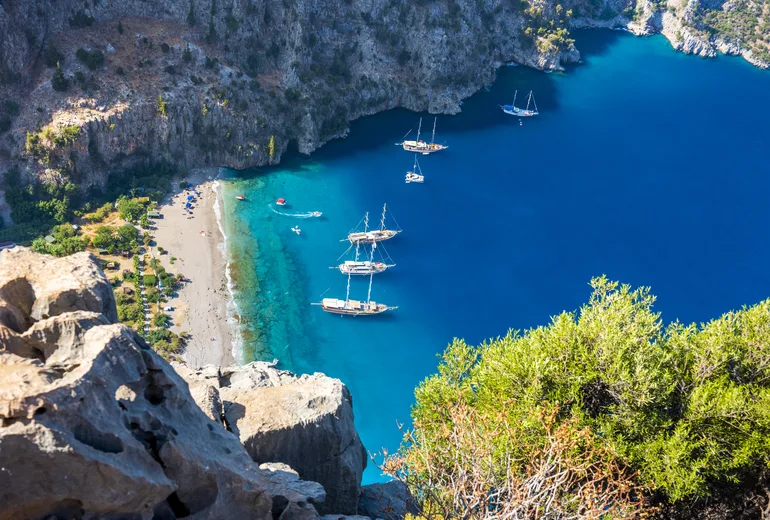
Dinner is the set piece. On many gulets the cook fires up a mangal — the charcoal grill — for fish bought that day, lamb chops, chicken şiş or köfte, served with more meze, salads and rice. If the boat stopped at a fishing village, the evening meal often features whatever came off the local boats: sea bream (çipura), sea bass (levrek), or calamari.
You eat at anchor under deck lights, usually in a quiet cove with one or two other boats for company. Dessert is typically fresh fruit or a simple semolina helva, and the tea comes out again afterwards. It’s home cooking at sea, not restaurant theatre — and that’s the point.
A handful of evenings, the boat ties up at a village quay or a bay with a shore restaurant — places like Kaş, Üçağız near the sunken Lycian ruins, or one of the Göcek coves with a pontoon taverna. On those nights some crews eat ashore for a change of scene and to give the cook an evening off, then return to the boat for a last tea on deck. Either way, dinner runs late and unhurried, and nobody’s checking a watch.
Part of the appeal is provisioning as you go. The Tuesday market in Fethiye is a classic mid-cruise stop — stalls of tomatoes, peppers, herbs, olives, dried fruit and spices where the cook restocks while you wander. Smaller villages along the route have bakeries for fresh bread and shops for the day’s basics.
If your boat anchors off a hamlet with a quay, you can often buy fish straight from a returning boat or order a few extras to be brought out. These stops are where the menu stays genuinely local rather than supermarket-uniform.
Floating vendors are part of the rhythm on the Turkish coast, too. In the busier bays around Göcek and Fethiye, small boats come alongside selling fresh gözleme — thin stuffed flatbread cooked on a griddle — along with ice cream, pancakes and sometimes just-picked figs and melon. They’re a cheerful interruption to a lazy afternoon at anchor, and a gözleme handed up over the rail with a glass of tea is one of the small pleasures people remember from a blue cruise.
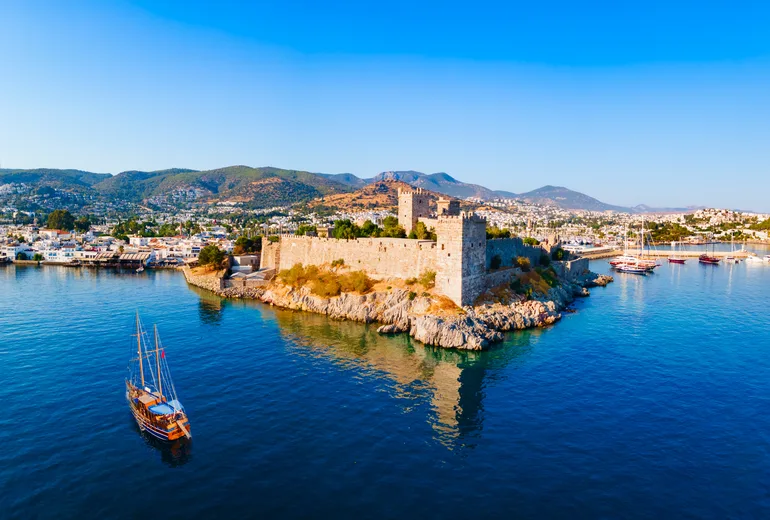
On most crewed gulet charters, all meals are included in the price, along with tea, coffee and water. The usual exception is alcohol and sometimes soft drinks: many boats run a paid bar, or let you bring your own with a small corkage-style arrangement. Clarify this before you book, because it’s the single most common surprise on the final bill.
Special diets — vegetarian, gluten-free, allergies — are normally handled well if you flag them in advance, since the cook is shopping fresh anyway. A few practical notes: tipping the crew at the end of the week is customary, and if you have strong food preferences, a short note to the cook on day one goes a long way. For the wider picture of what a blue cruise involves, our blue cruise guide to the Turquoise Coast sets the scene, and if you’re sailing the same coast in shoulder season, see our take on Türkiye in October.
On most crewed gulet charters, yes — three meals a day plus tea, coffee and water are part of the price, prepared by the boat’s cook. Alcohol and sometimes soft drinks are the usual exception, often sold from a paid bar or brought aboard by arrangement.
Home-style Turkish cooking: a generous breakfast spread, meze-based lunches, and grilled fish, lamb or chicken for dinner from the charcoal mangal. The menu follows the season and the day’s market and catch rather than a fixed card.
Usually, if you tell them in advance. Because the cook shops fresh along the route, vegetarian, gluten-free and allergy-friendly meals are normally straightforward to arrange. Flag any requirements when you book and again with the crew on day one.
Many do. The Tuesday market in Fethiye is a common mid-cruise stop, and smaller villages offer bakeries and fish straight off the boats. These stops keep the menu local and let you pick up extras and drinks.
Tempted by a week of meze at anchor? Explore the Turkish coast and our other charter destinations and the gulets and yachts available for your blue cruise.