Where Will Your 2027 Charter Start? Split, Athens, Palma, Naples and Bodrum Compared
Split, Athens, Palma, Naples and Bodrum compared on flights, fleet depth, first-night logistics and the cruising grounds each home port unlocks.
Read more
Nobody wants to get the tip wrong at the end of a wonderful week. The good news is that yacht charter crew tipping follows fairly settled norms across the Mediterranean, and once you know the range and the etiquette, it stops being awkward. The short version: budget 5 to 15 percent of the base charter fee for the crew, hand it over privately on the last evening, and adjust within that band for the service you received.
The detail is where it gets interesting, because the percentage, the cash-versus-card question and even who you hand the envelope to vary by country and by boat. Here is the cross-Med guide, with the numbers for Croatia, Greece, Italy and Türkiye in one place.
The widely accepted Mediterranean range for a crewed yacht is 5 to 15 percent of the base charter fee, not of the total including extras. Ten percent is the sensible default for good service, with the lower end for a single skipper and the upper end for an outstanding full crew who made the week. American charterers often tip toward the higher figure, reflecting US norms; European guests tend toward 5 to 10. Neither is wrong.
One useful framing: tip on the charter fee, not on the inflated total that includes the security deposit, fuel and provisioning. On a €20,000 week, 10 percent is €2,000, split among the crew. On a single-skipper bareboat-plus, the same percentage on a €6,000 week is €600 for one person, which is generous and appropriate for a hard-working captain.
For a skipper-only charter (you cook and crew, they navigate), 5 to 10 percent of the charter fee handed directly to the captain is the norm. For a full crew, captain, hostess, deckhand, sometimes a chef, the 10 to 15 percent pool is typically given to the captain to distribute, unless you prefer to hand individual envelopes. A standalone chef who cooked exceptionally is often recognised separately.
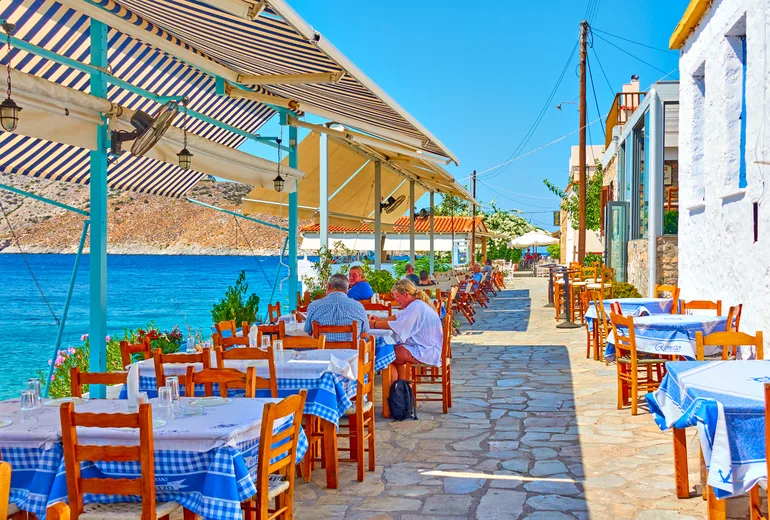
The base percentage holds across the Med, but local customs shade it. These are the practical expectations crews and brokers report in each country. If you are still weighing whether a crewed week is even for you, our breakdown of the difference between a bareboat and a crewed charter sets the scene.
Croatian crews expect 5 to 10 percent and are rarely surprised by either end. Cash in euros is standard and appreciated, since Croatia is in the eurozone now. On a typical Split-based crewed week the skipper and hostess split the pool, and a thoughtful extra for the hostess who handled provisioning and the galley well is common. Tipping is genuine appreciation here, not an obligation, so service quality really should drive the number.
Greece runs slightly higher in expectation, often 10 percent, partly because crewed cabin charters and larger crewed yachts are common and the crew’s income leans on the season. Euros in cash, handed to the captain on the final night, is the clean approach. On the bigger boats with a full crew, 10 to 15 percent distributed by the captain is standard.
Italian crewed charters, especially the higher-end boats around the Amalfi Coast and Sardinia, sit at the upper end, 10 to 15 percent, in line with the more luxury-oriented market. Cash in euros remains the preferred currency. The service on these boats is often exceptional, and the tip is expected to reflect that. A standalone chef on a Costa Smeralda week frequently earns separate recognition.
On Turkish gulets the crew, captain, cook and deckhands, typically receives 5 to 10 percent, and because the underlying charter cost is lower, the absolute euro figure is smaller than an equivalent Italian week. Euros or Turkish lira in cash both work; euros are widely welcomed. The gulet crew often functions as a tight family team, so a single pooled envelope to the captain is the cultural norm.

Cash is king for crew tips, full stop. Crews are paid a base wage and the tip is theirs directly; cash means it reaches them without delays, currency conversion losses or company accounting. Euros are accepted everywhere in the Med, including Türkiye, so a stack of euro notes is the simplest plan.
Some larger operators and luxury crewed yachts will add the tip to your final card payment if you ask, and pass it on. It is convenient but less ideal: the crew may wait for it, and you lose the personal moment of handing it over. If you go this route, confirm with the operator that 100 percent reaches the crew. For most charters, bring cash and skip the question.
Timing and manner matter as much as the amount. The convention is to tip on the final evening or the morning of disembarkation, once the week is clearly drawing to a close, not on day one and not in dribs and drabs.

Tipping is discretionary, and genuinely poor service warrants the bottom of the range or, in rare cases, a conversation with the operator instead of a tip. But “poor” should mean real failures, not a weather day that was nobody’s fault. If the crew worked hard against difficult conditions, that effort is exactly what the tip recognises. When in doubt, the captain who quietly fixed problems you never saw is the one who earned it.
Before the trip, set aside 10 percent of the base charter fee in cash and decide on the day whether to nudge it up for an exceptional crew or hold steady. Bring it in euro notes, in a couple of envelopes, and you are covered for any of the four countries above. The hostess who runs the galley and the cabins is often the unsung engine of a good week, so if you are splitting yourself, weight her envelope accordingly; our explainer on what a boat hostess actually does shows why.
If you are still deciding what a crewed week includes in the first place, the food is a good lens: see what a crewed charter chef cooks across a typical week, or read through a day in the life of a luxury yacht charter, to understand the level of service your tip is recognising.
Budget 5 to 15 percent of the base charter fee, with 10 percent the sensible default for good service. Use the lower end for a single skipper and the upper end for an outstanding full crew. Tip on the charter fee, not on the total including extras like fuel and the security deposit.
Cash, in euros, is strongly preferred so the money reaches the crew directly without delays or conversion losses. Euros work in all four main countries, including Türkiye. Some luxury operators can add the tip to your card and pass it on, but confirm it all reaches the crew if you go that way.
The norm is one envelope to the captain to distribute fairly among the crew. If a particular person, often the hostess or chef, went well beyond expectations, an extra individual envelope for them is a gracious touch alongside the main pool.
On the final evening or the morning of disembarkation, once the week is wrapping up. Hand it over privately, ideally in an envelope with a short thank-you note. Tipping at the start or in pieces through the week is not the convention.
Yes, though it is discretionary. For a skipper-only week, 5 to 10 percent of the charter fee handed directly to the captain is standard and appreciated, since that one person handled all the navigation and seamanship for your trip.
Planning a crewed week and want to see what is on offer? Browse our crewed yachts across the Mediterranean and book a boat with a crew worth tipping well.