Turkiye vs Greece vs Croatia: 2027 Charter Prices Compared With Real Numbers
3 Oct 2026·12 min read
The honest answer to the question everyone asks: yes, Türkiye is genuinely cheaper than Greece or Croatia for a yacht charter, often by 30 to 50 percent once you add up everything. But the Turkey vs Greece vs Croatia yacht charter cost comparison is not as simple as the base price, because marinas, fuel, extras and the type of boat all move the final number.
This is the three-way breakdown the search results rarely give you, built from like-for-like 2027 charter weeks: a comparable monohull, a catamaran and a crewed gulet, plus the real cost of marinas, fuel and the mandatory extras that decide what you actually pay. The headline €18K gulet versus €30K-plus Croatian charter math is real; here is where it comes from.
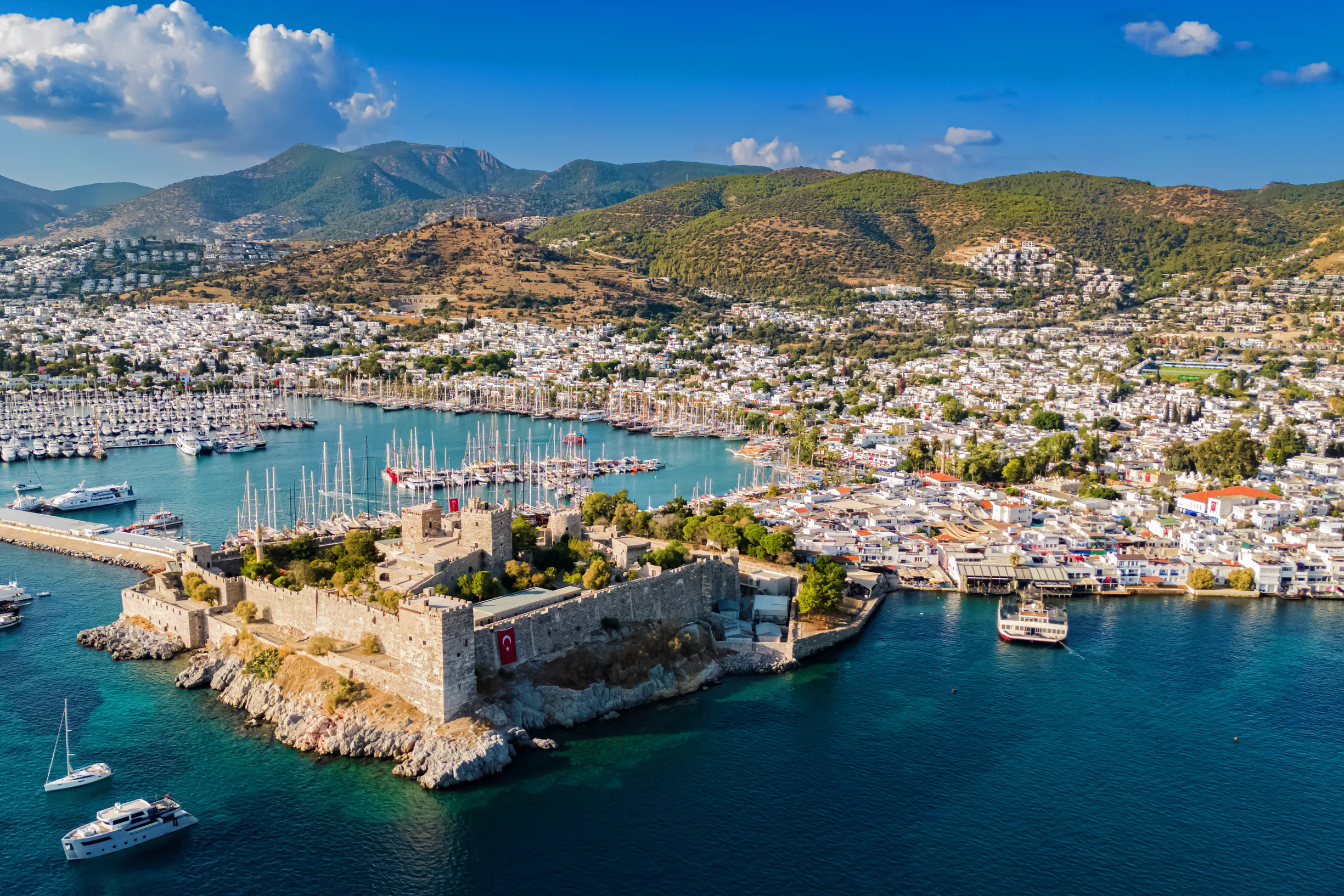
On the base charter fee alone, Turkiye starts 20 to 35 percent below Croatia.
The base charter fee: like-for-like boats
Start with the boat itself, a 45- to 50-foot monohull in peak July-August, the most common charter. Croatia sits at the top, Greece a notch below, and Türkiye clearly lowest. Rough 2027 peak-week ranges from live broker data:
Croatia: a well-equipped 47-foot monohull runs roughly €5,500 to €8,000 a week in peak season.
Greece: a comparable boat from Athens or Lefkada sits around €4,500 to €7,000.
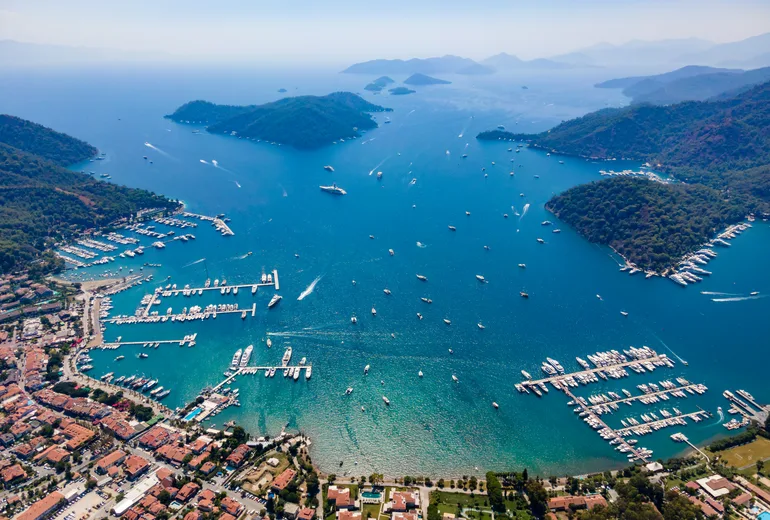
Türkiye: the same size out of Bodrum or Göcek comes in near €3,500 to €5,500.
On the base fee alone, Türkiye is already 20 to 35 percent below Croatia. The gap widens once the running costs come in, because that is where Croatia’s marina prices and Greece’s distances start to bite.
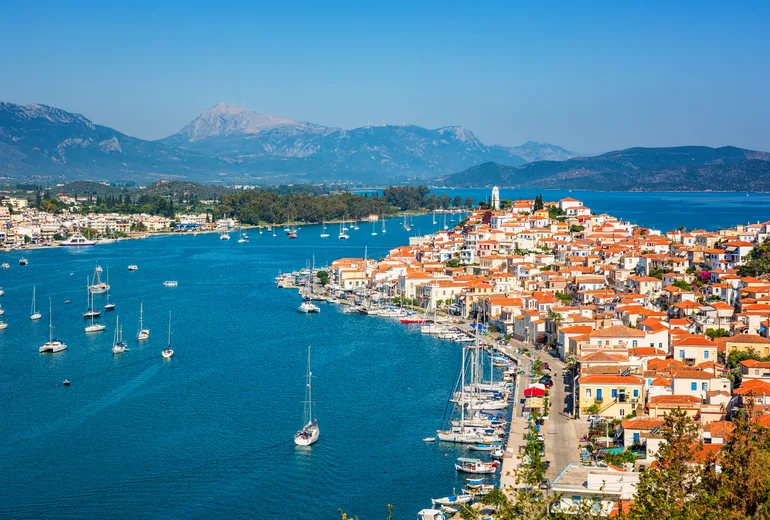
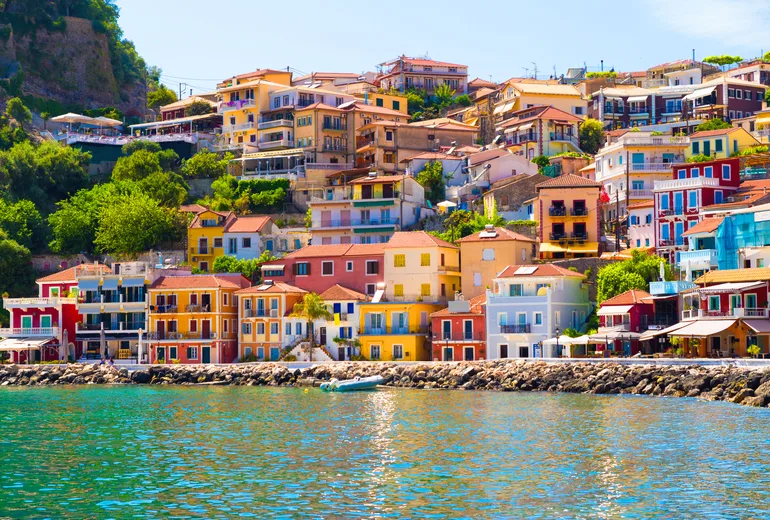
Greece offers the best balance of catamaran choice and price of the three.
Catamarans: a similar gap, bigger numbers
Catamarans amplify the differences because the absolute figures are larger. A 45-foot peak-season catamaran lands roughly like this: Croatia €9,000 to €14,000, Greece €8,000 to €12,000, Türkiye €6,500 to €9,500. The percentage gap holds, but in euros it is now a four-figure swing that can fund the rest of the trip.
Catamarans are most plentiful in Greece and Croatia; Türkiye’s catamaran fleet is smaller, with gulets dominating the crewed market. If a multihull is non-negotiable, Greece often gives the best balance of choice and price. If you are open to a crewed wooden boat, Türkiye changes the math entirely, which brings us to the gulet.
The gulet factor: where Türkiye really wins
The gulet is Türkiye’s trump card. A traditional crewed wooden yacht, captain, cook and deckhand included, for six to eight guests on a full-board basis, frequently comes in around €15,000 to €20,000 for a peak week, meals and crew included. That is the €18K figure you see quoted.
Compare that to a crewed monohull or catamaran of similar capacity in Croatia, where the boat alone can be €14,000-plus before you add the crew salaries, provisioning and full-board food, easily pushing past €30,000 for the equivalent crewed-and-catered week. For a group wanting hands-off luxury with all meals included, the gulet is in a different price universe. The trade-off is style: a gulet motors more than it sails and feels like a floating boutique hotel rather than a performance yacht.
It is worth being clear about what that headline number includes, because the comparison only holds when you are pricing the same thing. A gulet rate typically bundles the crew, the fuel for normal cruising and full-board meals; a Croatian or Greek crewed boat usually quotes the boat alone, with crew, an advance provisioning allowance and fuel layered on top. Strip those out and the gap narrows, but it rarely closes. For a fuller picture of what a charter actually costs once everything is counted, our guide to how much it costs to charter a yacht breaks down the components, and the often-overlooked line items are covered in our piece on the hidden fees to watch for when chartering.
What the price buys in each country
Money aside, the three weeks feel different. A Croatian charter is marina nights, lively quays in Hvar and Korcula, and short hops between islands with restaurants ashore every evening. A Greek week leans on anchorages and tavernas, with the Ionian gentle and the Cyclades a test of seamanship. A Turkish gulet is slow mornings in pine-fringed coves, long lunches the cook prepared on deck, and almost no marina time at all. You are not just buying boat-days; you are buying a rhythm.
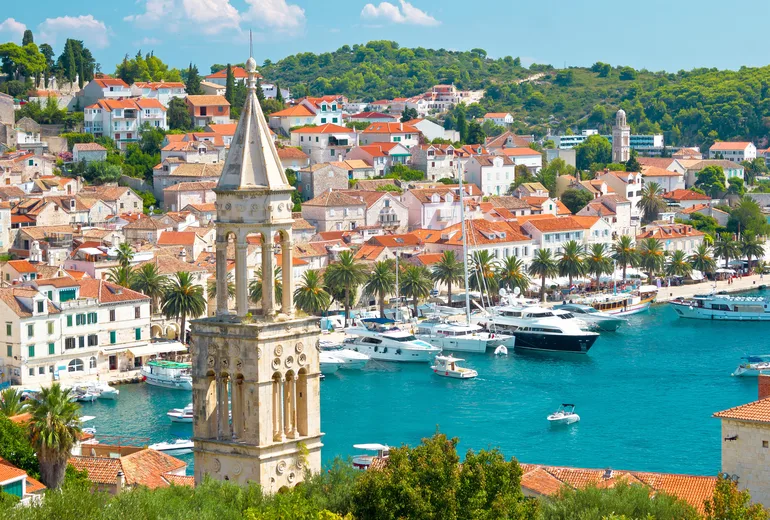
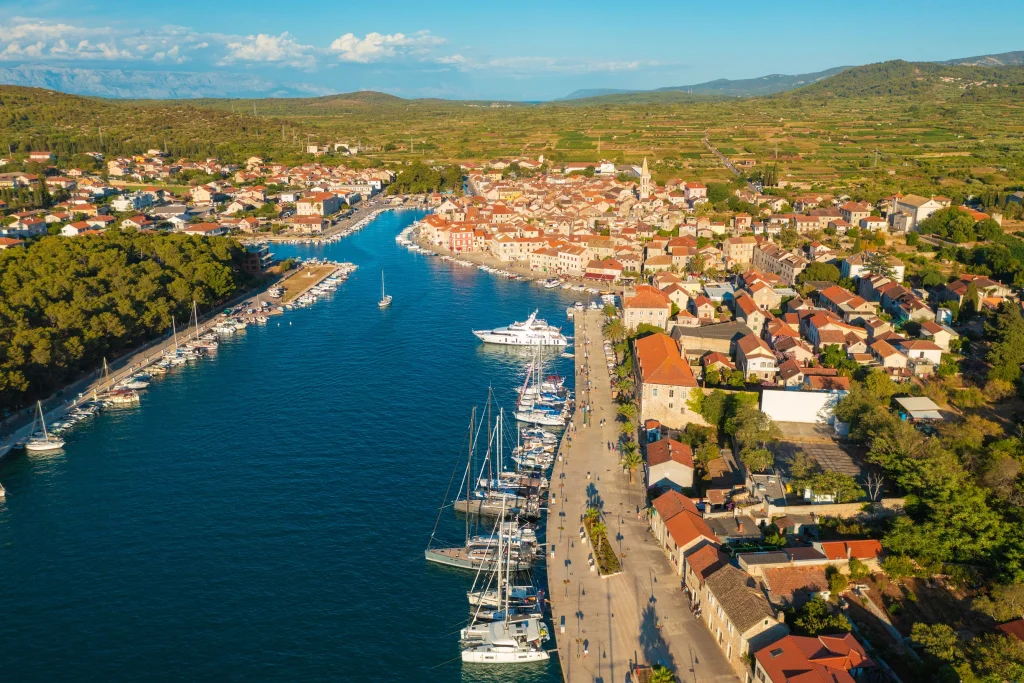
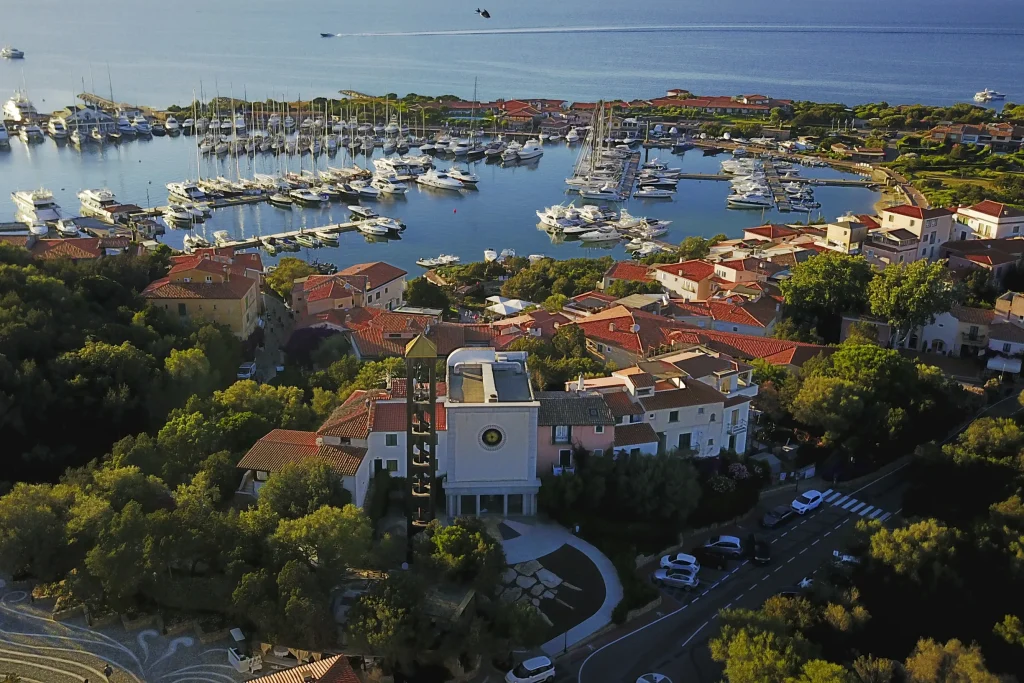
Croatia's marina-heavy style is where peak-season nights add up fast.
The hidden costs: marinas, fuel and extras
The base fee is only part of the story. The running costs are where charterers get surprised, and where the three countries diverge most.
Marina and mooring fees
Croatia is the expensive one. A peak-season night in ACI Marina or on the town quay in Hvar can run €100 to €250-plus for a 47-foot boat, and Croatia’s cruising style involves a lot of marina and town-quay nights. Greece is cheaper, with many free anchorages and modest harbour fees, though the popular Cyclades quays add up. Türkiye is cheapest of all: Gökova Gulf anchorages are largely free, and marina nights cost a fraction of Croatian prices.
Fuel
Türkiye holds a structural advantage on fuel cost, and gulets motor a lot, but the lower per-litre price and shorter distances in the Gökova Gulf keep the bill reasonable. Greece’s longer Cyclades crossings and meltemi-driven motoring can run up fuel; Croatia’s short hops keep consumption moderate but at EU pump prices.
Mandatory extras
All three charge end-cleaning, a transit log or equivalent, and tourist tax, but the amounts differ. Croatia’s extras (tourist tax, transit log, mandatory final cleaning) typically add several hundred euros. Greece is similar. Türkiye’s equivalent fees are generally lower, and on a gulet most of this is folded into the all-in price. Across the board, budget the extras separately, our comparison of typical charter costs in Croatia versus Greece digs into these line items in detail.
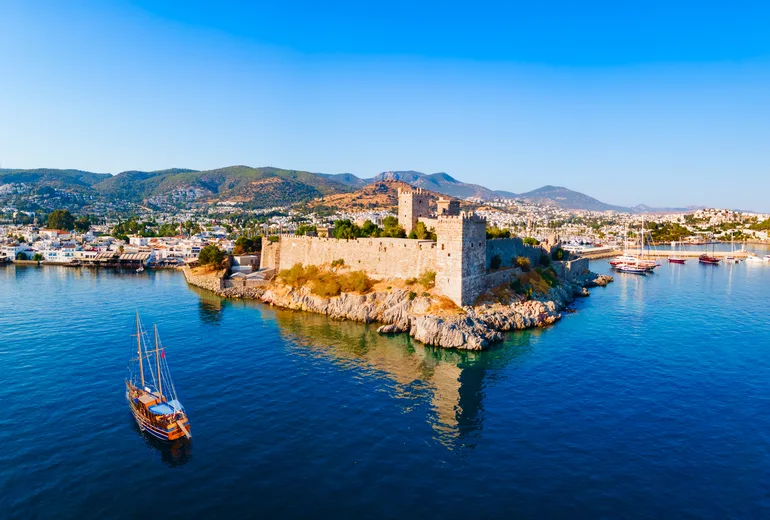
Gokova and Gocek anchorages are largely free, keeping the running costs low.
Putting it together: a real peak-week total
Take a group of eight on a peak-July week with a comparable crewed-or-catered boat. The rough all-in totals tell the story:
Türkiye (gulet, full board, crew included): roughly €18,000 to €22,000 all in.
Greece (crewed catamaran plus provisioning, marinas, extras): roughly €24,000 to €32,000.
Croatia (crewed catamaran plus marinas, provisioning, extras): roughly €30,000 to €40,000-plus.
The 30 to 50 percent gap is real, and it is widest at the crewed end where Croatia’s marina-heavy style and higher boat prices compound. For a bareboat monohull the gap is narrower but still meaningful, typically 20 to 35 percent in Türkiye’s favour.
Cheaper is not the whole question
Price is one axis; the holiday is another. Croatia gives you the most polished marinas, the easiest flights and the liveliest island towns, Hvar, Korcula, the Pakleni. Greece gives you the widest range of cruising grounds and the best catamaran fleet, from the gentle Ionian to the demanding Cyclades. Türkiye gives you value, quiet pine-fringed coves in the Gökova Gulf, and the gulet experience you cannot replicate elsewhere.
If your group prioritises all-in value and a hands-off crewed week, Türkiye wins on the numbers. If you want a self-sailed multihull with maximum route choice, Greece is the sweet spot. If marina comfort and easy logistics top the list, Croatia justifies its premium. For first-timers torn between the two big Adriatic-Aegean names, our head-to-head on Croatia vs Greece for a first charter is the natural next read. And timing matters whatever you choose: the 2027 early-booking deadlines decide how much of the headline price you actually pay.
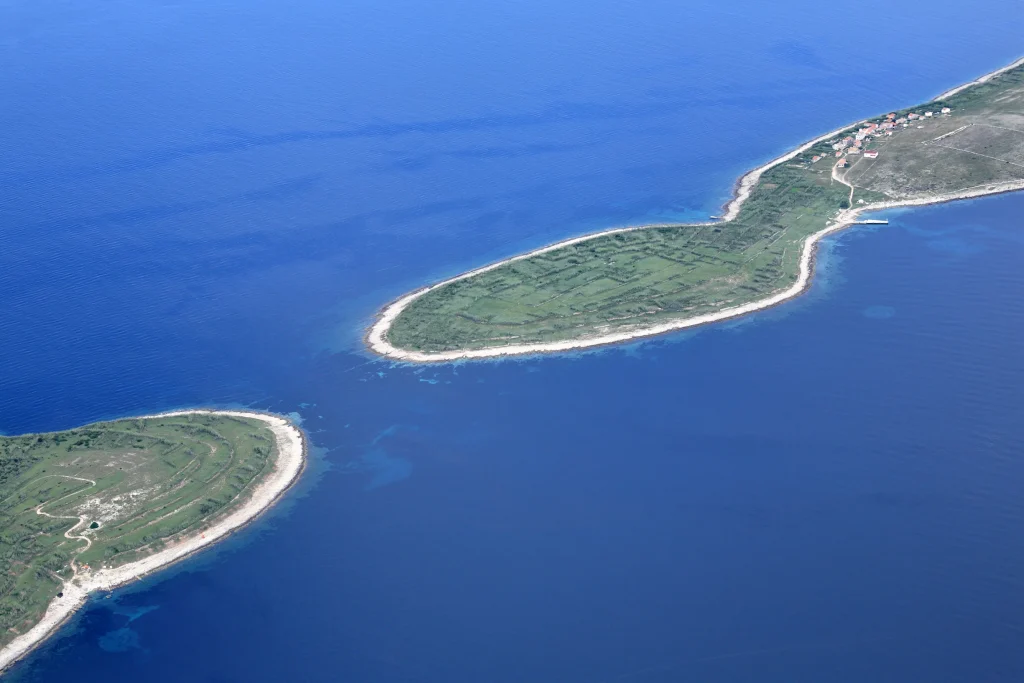
Cheaper is not the whole question; each country buys a different kind of week.
Frequently Asked Questions
Is Türkiye really 30 to 50 percent cheaper than Greece or Croatia?
At the crewed end, yes. A full-board gulet week in Türkiye around €18,000 to €22,000 compares with €30,000-plus for an equivalent crewed-and-catered boat in Croatia. For bareboat monohulls the gap is narrower, typically 20 to 35 percent, but Türkiye is consistently the cheapest of the three once marinas, fuel and extras are counted.
Why is Croatia the most expensive of the three?
Two reasons: higher base boat prices and a marina-heavy cruising style, where peak-season nights in Hvar or ACI marinas can run €100 to €250-plus. Add EU fuel prices and a full set of mandatory extras, and the all-in total climbs above Greece and well above Türkiye.
Which country is best for a catamaran?
Greece offers the best balance of catamaran choice and price, with Croatia a close and slightly pricier second. Türkiye’s catamaran fleet is smaller because gulets dominate its crewed market, so if a multihull is essential, Greece is usually the smartest pick.
What hidden costs should I budget beyond the charter fee?
End-cleaning, transit log or equivalent, tourist tax, fuel, and marina or mooring fees. Croatia’s marina nights are the biggest variable and can add a four-figure sum over a week; Greece and Türkiye are cheaper on mooring, and on a gulet most extras are bundled into the all-in price.
If price is not my main concern, which should I choose?
Croatia for polished marinas, easy flights and lively island towns; Greece for the widest cruising choice and the best catamarans; Türkiye for quiet coves and the gulet experience. All three are excellent; the right answer depends on whether you value comfort, route variety or value most.