Turkiye vs Greece vs Croatia: 2027 Charter Prices Compared With Real Numbers
The Turkey vs Greece vs Croatia yacht charter cost comparison with real 2027 numbers: base fees, catamarans, the gulet factor, marinas, fuel and extras.
Read more
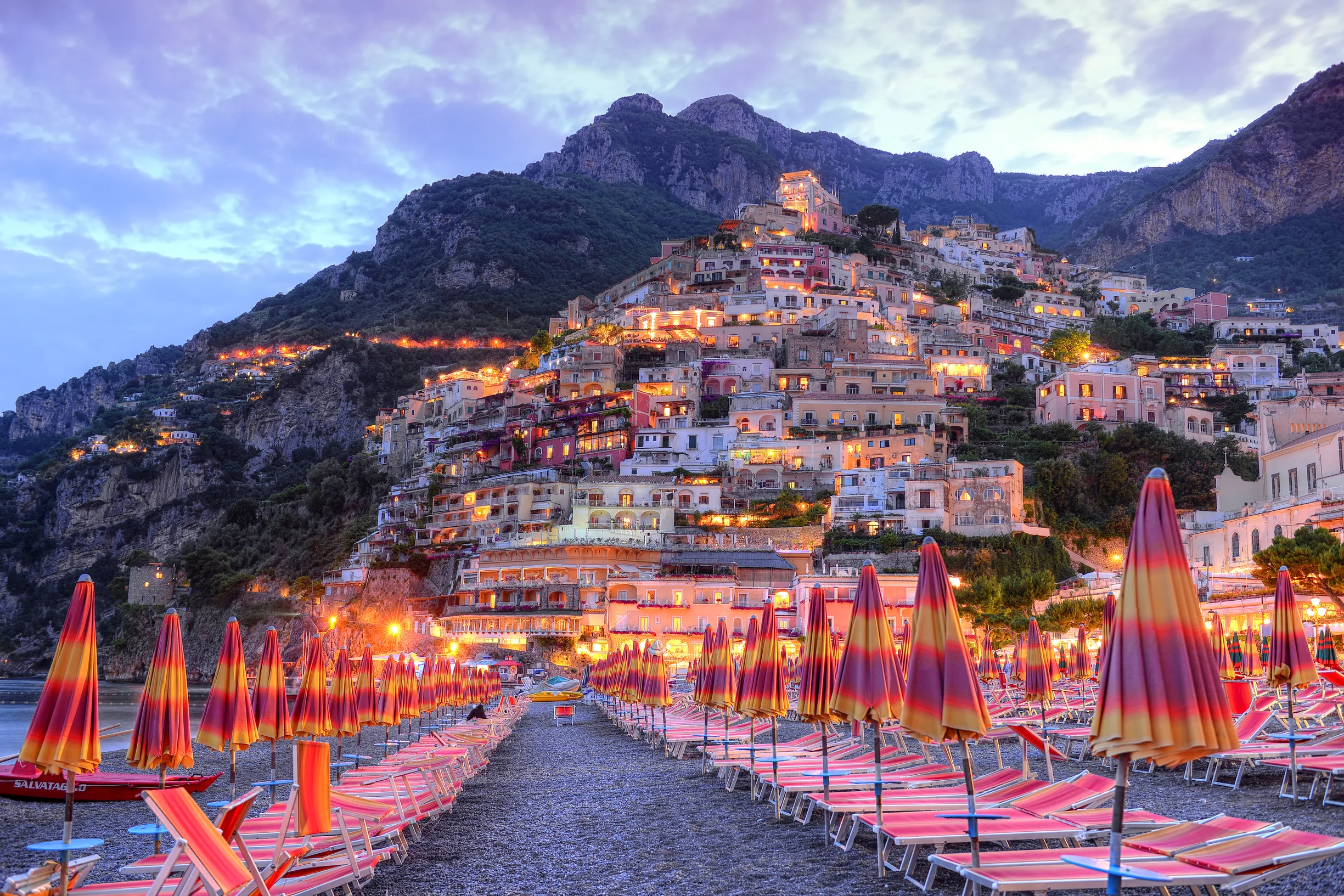
If you are weighing a Croatia vs Italy sailing holiday for 2027, the honest answer is that the two coasts solve different problems. Croatia gives you short hops between sheltered islands, a dense berth network and a bill that lands lower at the end of the week. Italy gives you the Amalfi Coast, Sardinia’s Costa Smeralda and a kind of scenery people travel a long way to see — at a price, and with a 22% VAT line you will not find next door.
This is the practical version of the Croatia or Italy charter decision: who should book which, what the cost difference actually looks like, and where each coast quietly wins. No marketing gloss, just the trade-offs we walk clients through every spring.
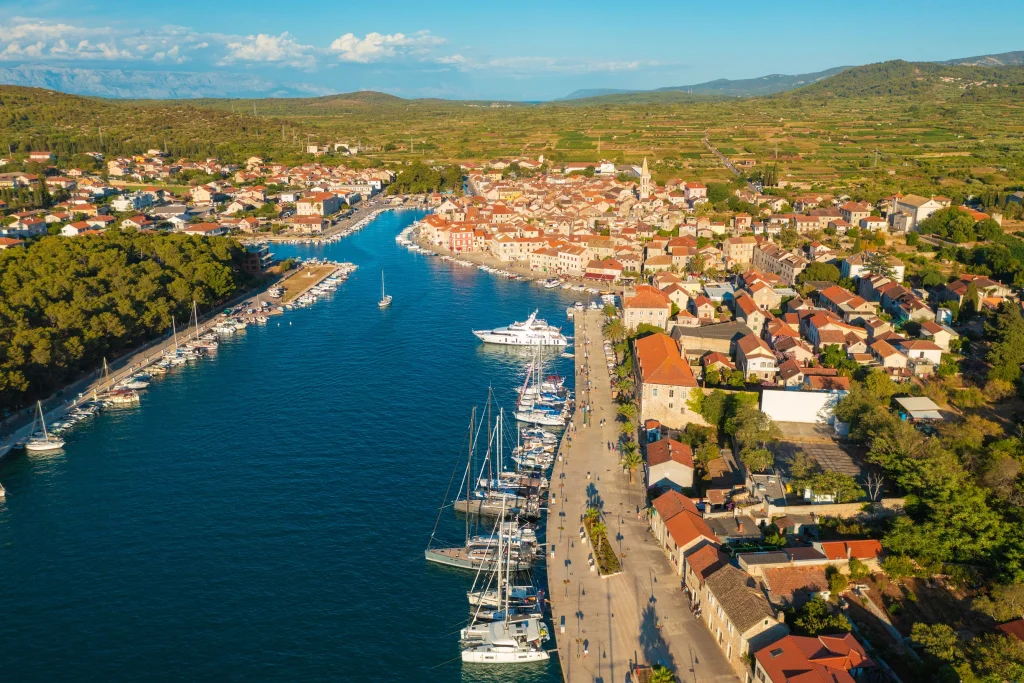
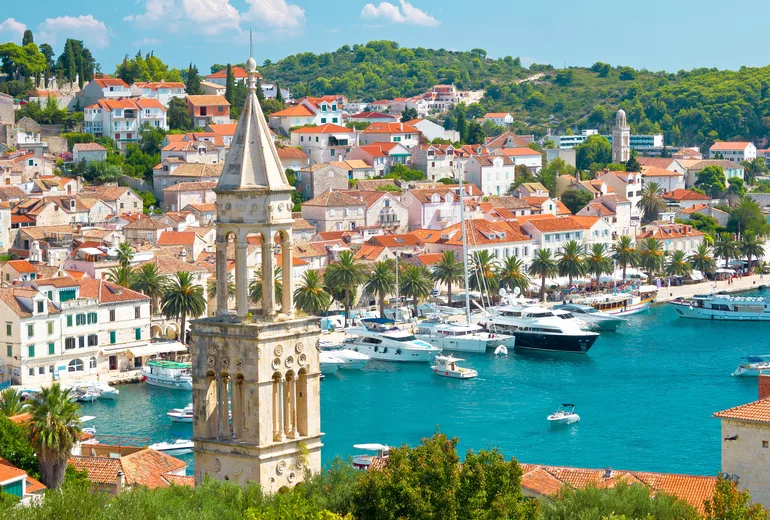
Croatia is a sailing area first and a sightseeing area second; Italy is the reverse. In Dalmatia you can string together Hvar, Vis, Korčula and the Pakleni islands with legs of 10 to 20 nautical miles, rarely sailing more than three hours before the next anchorage. The infrastructure was built for charter: ACI marinas roughly every 20 NM, fuel docks, provisioning, and crews who have seen every variation of the week you are about to have.
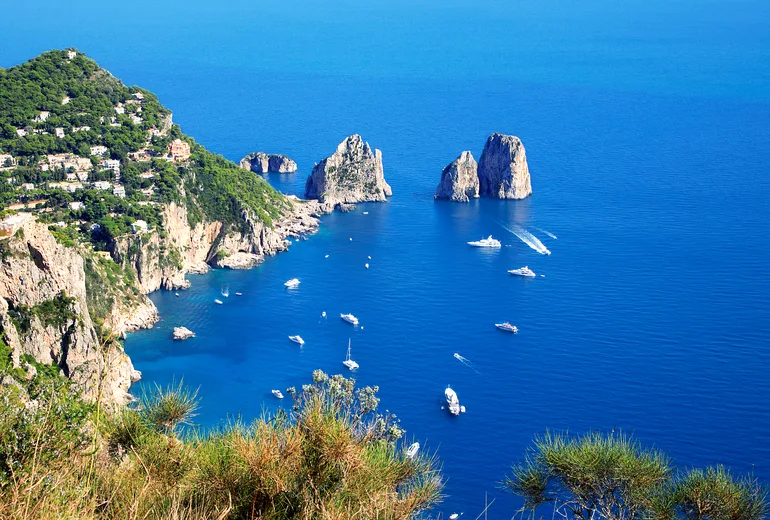
Italy asks more of you. The marquee stretches — Amalfi, Capri, the Aeolian Islands, the Maddalena archipelago off Sardinia — are spectacular, but the distances are longer, the berths fewer and dearer, and a fair few of the best anchorages are exposed to swell. You sail in Italy because you want Positano at dusk and a plate of spaghetti alle vongole in Cetara, not because the logistics are easy.
Start with the boat. A modern 45-foot monohull or a 45-foot catamaran in high season runs broadly similar base rates in both countries — think roughly €4,500–7,500 a week for the monohull and €7,000–12,000 for the cat, depending on age and exact dates. The gap opens up in everything that surrounds the boat.
Croatia charges 13% VAT on the charter fee. Italy charges 22%, though Italian charters can apply a partial exemption for time spent in international waters, which trims the effective rate on some itineraries. On a €9,000 catamaran week that headline difference is most of a thousand euros before you have bought a single coffee.
This is the real divergence. A night in an ACI marina in Croatia typically costs €60–110 for a 45-footer in season. A berth in Capri, Porto Cervo or Positano in August can run €200–500, and the marquee marinas in Sardinia’s Costa Smeralda push higher still. Multiply that across a week and Italy’s “small” extras become the largest swing in the whole comparison. Fuel is comparable per litre, but Italy’s longer legs mean you burn more of it.
If you want the deeper breakdown of how a week’s bill is built up — base rate, transit log, tourist tax, security deposit and the rest — our guide to what it actually costs to charter a yacht lays out every line. For Croatia specifically, the full guide to renting a yacht in Croatia covers the local quirks.
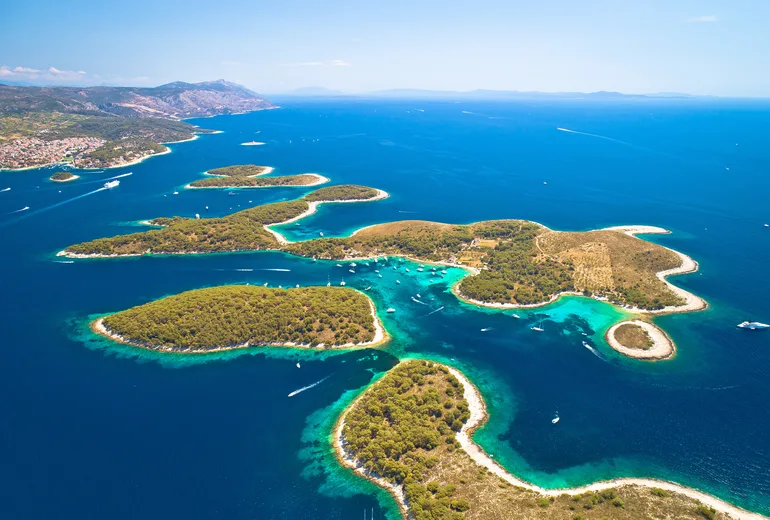
Dalmatia is forgiving water. The islands run in parallel chains, so there is almost always a lee shore to duck behind when the afternoon maestral fills in from the northwest at 12–18 knots. A first-timer with a skipper, or a confident bareboat crew, can build a week around Split, Brač, Hvar and Vis without ever feeling stretched. Distances are the whole story here: Split to Milna on Brač is about 12 NM, Milna to Hvar town another 13, and Hvar to Vis roughly 18 — none of it daunting, all of it scenic.
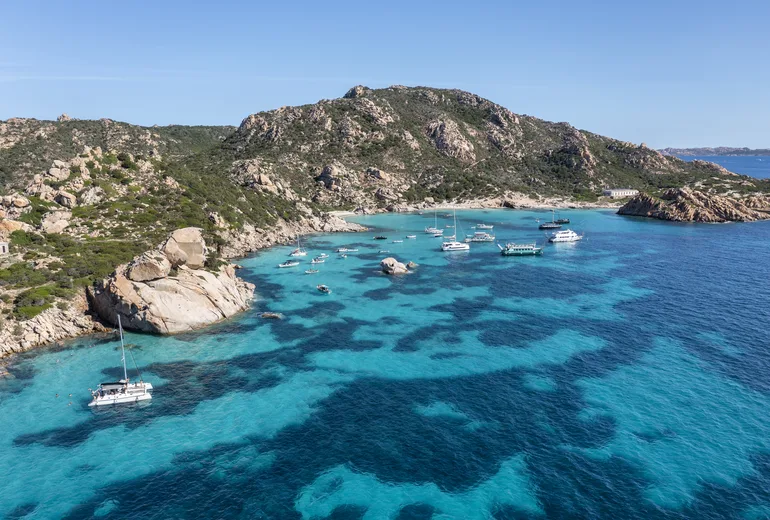
Italy rewards experience. The Bocche di Bonifacio between Sardinia and Corsica can turn nasty quickly; the Tyrrhenian off the Amalfi Coast picks up swell that makes some celebrated anchorages roll all night. The Maddalena archipelago — Spargi, Budelli, Caprera — is the closest Italy comes to easy Croatian-style island hopping, with granite coves and short legs, which is exactly why it is so heavily booked.
Families with mixed sailing confidence, groups watching the budget, anyone who wants a relaxed first bareboat week, and crews who would rather swim and eat than rack up miles. The density of safe anchorages means you can change plans daily without consequence.
Couples and small groups chasing a specific kind of glamour, experienced sailors who want a project, and travellers for whom the destination is the point — Capri’s Faraglioni, Ravello’s gardens, a sundowner in Porto Cervo. Many of these crews are happier with a skipper who knows the swell and the berth politics.
Both coasts eat brilliantly, in different registers. In Croatia you will eat peka — meat or octopus baked under an iron bell with embers heaped on top — in a konoba on Vis, drink Plavac Mali from the steep Dingač vineyards on Pelješac, and pay taverna prices. The seafood is excellent and unfussy.
Italy is where the bill climbs but the cooking reaches its peak. The Amalfi Coast gives you Cetara’s colatura di alici (an anchovy essence used like a secret), lemon everything, and gnocchi alla sorrentina. Sardinia means fregola with clams, bottarga grated over pasta, and a glass of Vermentino di Gallura. You pay Positano prices for a Positano view — that is the deal, openly stated.
July and August are peak everywhere, and that is when Italy’s berth scarcity bites hardest — the popular ports require booking ahead and turning up early to claim a spot. Both coasts are at their best in the shoulders — late May to mid-June, and September into early October — when the water is still warm, the wind is steadier and the marquee spots are breathable. The August heat on the Amalfi Coast also makes the steep hilltop towns harder work; spring and autumn are kinder to the legs as well as the wallet.
One booking note that applies to both: 2027 base boats are already moving. The genuinely good catamarans for Sardinia and the prime Hvar weeks tend to be gone by late autumn. Our rundown of 2027 early-booking discount deadlines is worth a look before you commit dates.
Take a representative week: a 45-foot catamaran, six guests, one-way feel, high-summer dates. In Croatia you might land around €9,000 base + 13% VAT + roughly €500–700 in berths + transit log and tourist tax, often totalling in the low-to-mid €11,000s before food. The same boat on a Sardinia–Maddalena loop starts from a similar base, adds 22% VAT, and then the berths alone can add €1,500–2,500 across the week — pushing the realistic all-in figure several thousand euros higher.
That is the value-coast versus glamour-coast split in numbers. Neither is wrong. You are buying different things. If the priority is mileage of relaxed sailing per euro, Croatia wins comfortably. If the priority is a handful of unrepeatable Italian evenings, the premium is the price of admission.
Sort of. There is no easy single-week route linking the two, but plenty of clients do back-to-back charters in consecutive years, or pair a Croatian week with a separate land trip to Italy. If Italy is calling and you want a cat-focused planning resource, our colleagues at a dedicated Italian catamaran charter site cover the Tyrrhenian and Sardinia in detail. For the broader picture of Italy beyond the boat, our essay on sailing Italy — the culture, the history, the food sets the scene.
In most realistic comparisons, yes. Base boat rates are similar, but Croatia’s 13% VAT versus Italy’s 22%, plus far cheaper marina berths, usually leaves a Croatian week several thousand euros lighter for an equivalent boat and crew. The gap is biggest in peak July and August.
Croatia, clearly. The short legs, dense network of sheltered anchorages and frequent marinas make it one of the most forgiving areas in the Mediterranean. Italy’s longer passages and exposed anchorages suit crews with more experience, or those who book a skipper.
Both accept recognised certificates such as the RYA Day Skipper or ICC, but the exact requirements differ, and Croatia is strict about a VHF radio operator’s certificate aboard. Check the specifics for your boat and area before you book, or simply hire a skipper and the licence question disappears.
Late May to mid-June and September are the sweet spots on both coasts — warm water, steadier wind and noticeably calmer marinas than the August peak. Prices in the shoulder season also sit below the summer high.
Still torn between the value coast and the glamour coast? Browse our Mediterranean charter destinations or tell us your dates and crew, and we will model both options side by side so the trade-off is concrete before you book.