Early-Booking Discounts for Summer 2027: Real Deadlines and What You Save
The real Dec 31 and Jan 31 early-booking deadlines for summer 2027 charters, the 5-15% discount tiers by country, and how much you actually save.
Read more
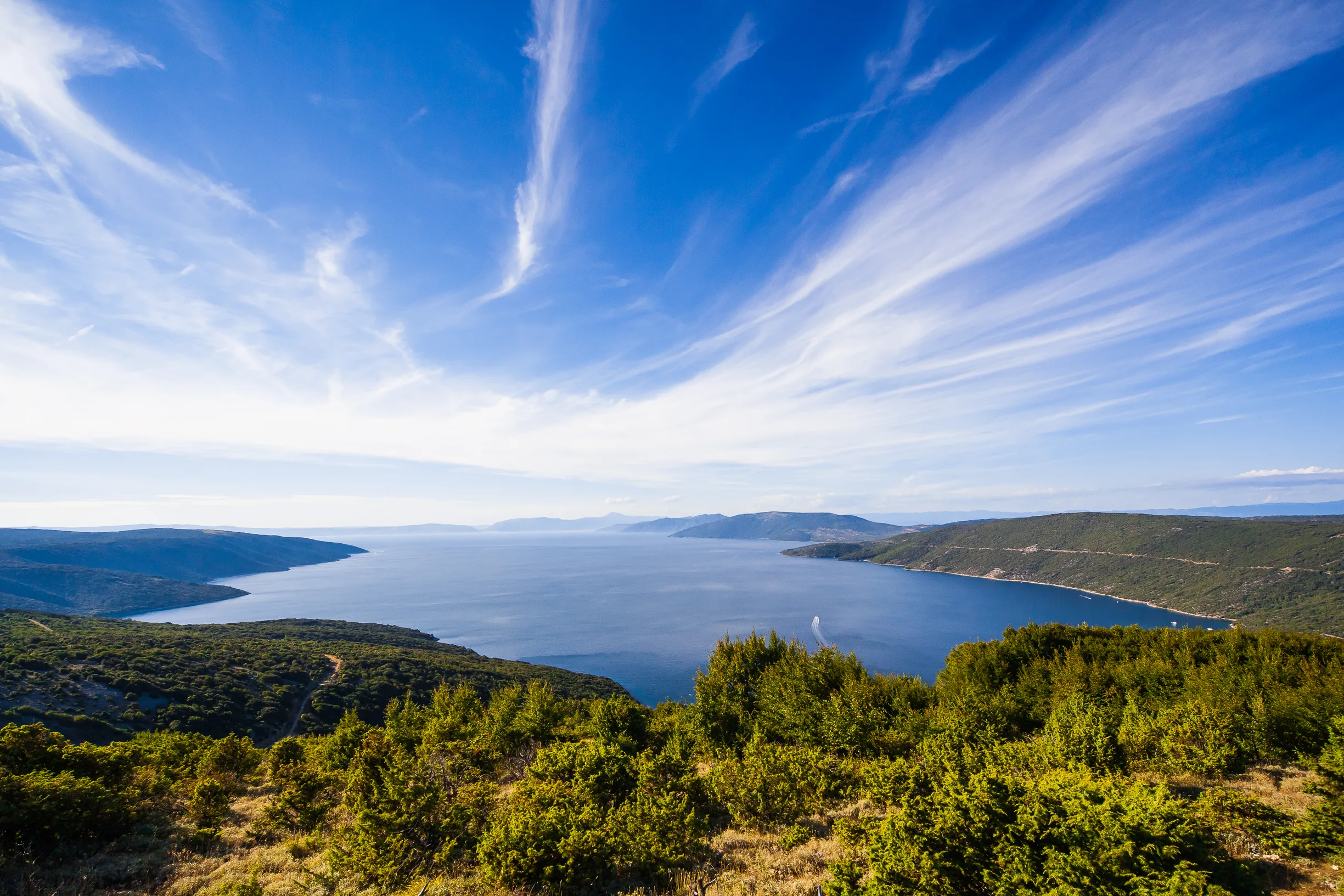
Yes, you can genuinely work from a charter yacht in the Mediterranean now, and the reason is one piece of kit: remote work from a boat with Starlink turns a quiet anchorage into a usable office. At anchor in calm water, a Starlink Mini or Flat High Performance dish commonly pulls 50 to 150 Mbps down, enough for video calls, large file transfers and a full day of normal work.
The trick is not the speed; it is the rhythm. A workation afloat works when you build the day around the connection and the weather, not the other way round. Here is what actually performs, where to point the boat, and why a shoulder-season crewed charter is the sweet spot.
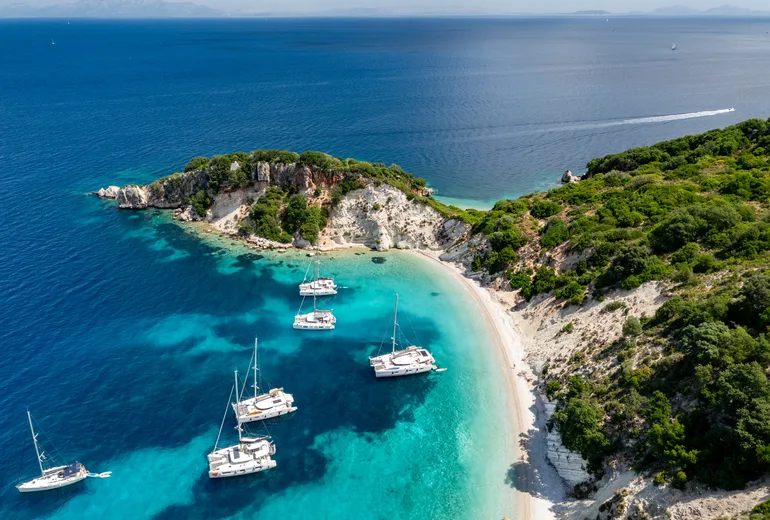
On a settled day in a sheltered bay, most crews report a steady 80 to 120 Mbps down and 10 to 20 up, with latency low enough for Zoom or Teams to behave. That is hotel-grade internet from the middle of a cove. The variables that matter are obstructions and motion: a clear view of the sky and a boat that is not pitching keep the link solid.
Underway it is patchier. The flat-mount dishes hold a connection while motoring in flat water, but heel and spray on a sailing leg will drop packets. In practice, schedule the calls for when the anchor is down. A couple of hours sailing between bays is your natural lunch-and-offline window.
Two setups dominate. The Starlink Mini is small, runs off the boat’s 12V system with an adapter and is easy to stow; it suits one or two people with moderate needs. The Flat High Performance dish is fixed-mounted, handles more devices and copes better with movement, and is what you will find on better-equipped crewed yachts. Either way, confirm with the operator whether the boat carries Starlink and whether data is included or billed separately.
Starlink draws real power, roughly 20 to 40 watts for the Mini and more for the larger dish. On a boat that means managing the battery bank and either running the engine, using solar, or topping up on shore power overnight in a marina. Plan one marina or mooring-buoy night every two or three days; it solves power, water and the occasional need for a rock-solid wired-feel connection in one stop.
The biggest mistake is treating a workation like a holiday charter with a laptop bolted on. It is the reverse: a short, deliberate cruising plan wrapped around your calendar. The pattern that works is short hops, long stays.
Twelve to fifteen nautical miles a day is plenty. That is two to three hours of sailing, which leaves the bulk of daylight for both work and the reason you came. If you are sketching the wider trip, our piece on the top reasons to choose a sailing vacation over a hotel stay makes the case for why the boat beats the desk.
A good workation anchorage has three things: shelter from the prevailing wind, holding that lets you relax instead of watching the anchor, and an open sky for the dish. A few examples across the Med that crews return to.
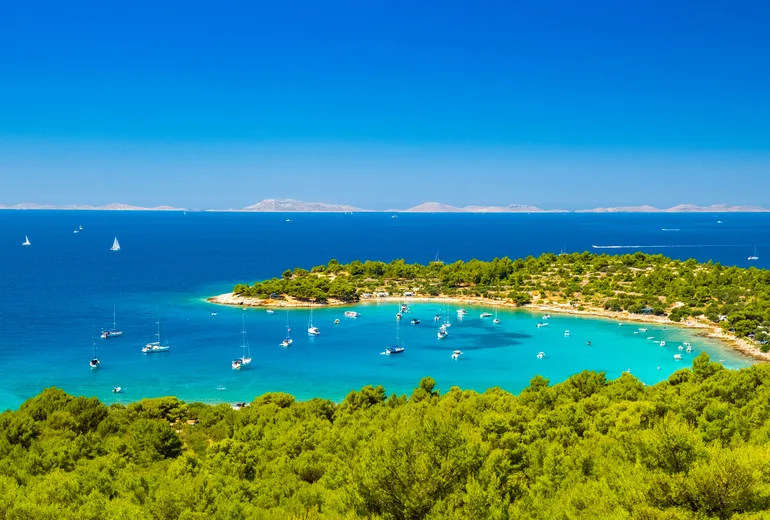
The Pakleni Islands off Hvar and the deep coves of the Kornati archipelago offer calm, wind-protected bays within easy reach of provisioning. Vinogradisce bay on Sveti Klement is a reliable settled-weather hold with a taverna ashore for the evening, and the morning bura tends to ease by mid-day, lining up nicely with a European afternoon of calls.
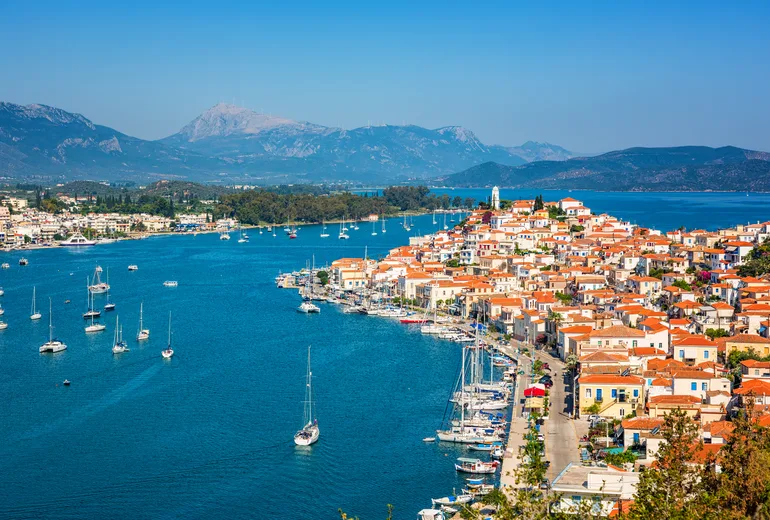
The Ionian is the easiest cruising in the Med for a workation. The afternoon maistro is predictable and light, the distances are short, and bays like Lakka on Paxos or the coves around Meganisi give you flat morning water for meetings. Provisioning in Lefkada or Fiskardo is straightforward, and a good souvlaki ashore costs €10 to €15.
Between Sardinia and Corsica, the La Maddalena archipelago strings together sheltered granite coves where the boat sits still and the sky is wide open. Anchor off Spargi or in the lee of Caprera for a calm working morning, then move a couple of miles for the swim. Provisioning runs through Palau or Cannigione.

June and September are the sweet spot. The water is warm, the meltemi and other peak-summer winds are milder, the anchorages are not jammed, and rates sit below the July-August peak. Quiet bays mean you are not anchoring three times to find space before a 9am call, and lighter winds mean steadier connections.
Time zones help too. A Mediterranean afternoon overlaps neatly with a European morning and a US East Coast start. You can swim and sail in the morning local time, then work the productive afternoon block while colleagues come online. The day stops feeling like a compromise.
If you are actually working, you do not also want to be the captain, the cook and the deckhand. A crewed charter hands the navigation, the anchoring, the provisioning and the meals to people who do it daily, which is the whole point when your attention belongs to a spreadsheet between two bays. The skipper picks the sheltered anchorage with the clear sky; you just open the laptop. The wider case for letting someone else run the boat is laid out in our look at the benefits of choosing a crewed yacht charter, and for a sense of how the days actually flow, see what a crewed charter chef cooks and what you eat on a typical week.
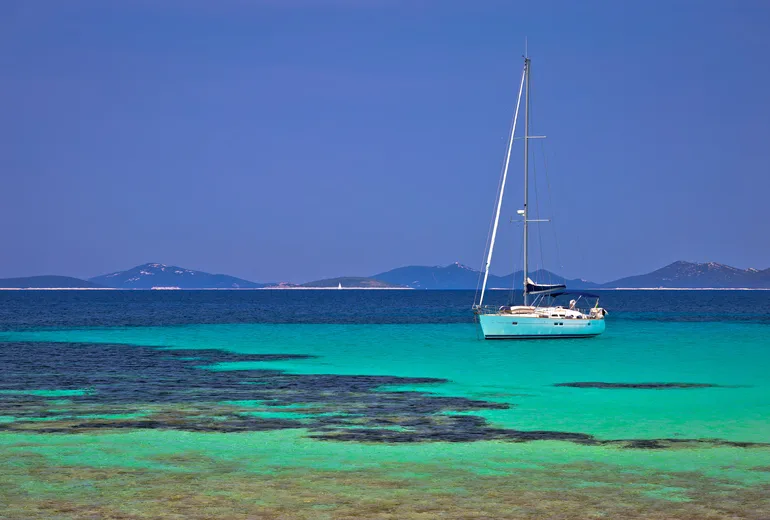
Picture a September Tuesday in the Ionian. Up at seven, coffee in the cockpit, a short motor-sail to a settled bay by half nine. Calls and focused work from ten to two with Starlink holding around 90 Mbps. Lunch the crew prepared, a swim off the stern, then a couple more hours of work as the light softens. Anchor up at six for a one-hour hop to the evening’s bay and a taverna ashore. It reads a lot like a day in the life of a luxury yacht charter, only with a productive block in the middle; it is not a fantasy, just a well-planned week.
At anchor in calm, unobstructed conditions, most crews see 50 to 150 Mbps down, commonly around 80 to 120, with low enough latency for video calls. Speeds drop while sailing in chop or with the sky partly blocked, so the reliable working window is when the anchor is down.
Increasingly yes on crewed and better-equipped yachts, but it varies. Some boats include it in the rate, others bill the data separately, and many bareboats still do not carry it. Always confirm with the operator whether Starlink is fitted and how the data is charged before you book a workation.
In flat water while motoring, often yes. On a sailing leg with heel and spray, expect dropouts. The practical approach is to schedule calls against settled anchorages and use the sailing time as your offline break.
Starlink and laptops draw real power, so plan to run the engine, use solar, or take a marina or mooring-buoy night every two to three days to recharge the battery bank and top up water. A crew handles this for you, which is one more reason crewed charters suit workations.
June and September. The water is warm, peak-summer winds are milder, anchorages are calmer and quieter, and rates are below the high-season peak, all of which make for steadier connections and easier days.
Thinking about trading the office for a cockpit? Explore crewed yacht charters across the Mediterranean and find a boat set up for a real workation.