Bareboat, Skippered, Crewed or Cabin Charter? The 2027 Decision Tree
By Europe Yachts Charter
·11 min read
Most charter guides hand you a binary: bareboat or crewed. In practice there are four routes onto the water, and the one most decision guides skip — cabin charter — is the cheapest way for two people to sail at all. Getting the bareboat vs skippered vs crewed charter choice right, and knowing when cabin charter beats all three, is the single decision that shapes both your budget and your stress level.
Here is the four-way chooser we actually use with clients, with per-person costs, licence requirements and the kind of crew each option suits. Work down it in order and you will usually land on the obvious answer.
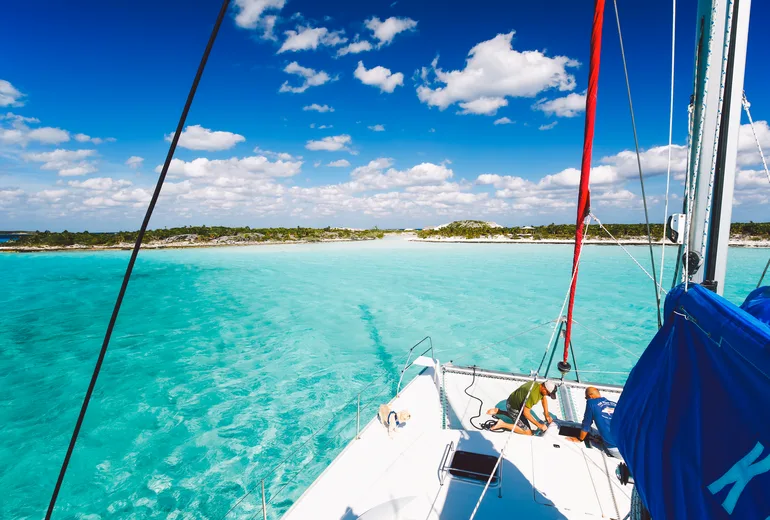
Bareboat means the whole crew runs the boat — freedom and responsibility together.
The four options, defined plainly
Before the decision tree, the definitions — because the labels get muddled.
Bareboat: you charter the boat alone and skipper it yourself. No crew, full freedom, full responsibility.
Skippered: you charter the boat and hire one professional skipper. They handle navigation and the boat; you and your group do everything else, including cooking.
Crewed: the boat comes with at least a skipper and usually a host or cook (often more on larger yachts). You are a guest.
Cabin charter: you book a single cabin on a boat shared with other guests and a crew, paying per person rather than for the whole vessel.
If the difference between the bareboat and crewed ends of that spectrum is what you are wrestling with, our deeper piece on the difference between bareboat and crewed charter goes further than there is room for here.
Step 1: Does anyone aboard hold a licence?
This is the gate. To charter bareboat in the Mediterranean you generally need a recognised certificate — RYA Day Skipper, ICC or an equivalent — and, in Croatia, a VHF radio operator’s certificate too. Charter companies will also expect a sailing CV and, sometimes, a short check-out sail before they hand over the keys.
If nobody in your group holds a valid certificate, bareboat is off the table and you are choosing between skippered, crewed and cabin. If someone does, and they are genuinely confident, bareboat opens up as the cheapest way to control your own week. The licence question for the most popular areas is covered in our guide to sailing-licence requirements.
A licence in the group unlocks bareboat; without one, skippered is the next step.
Step 2: How much do you want to do yourselves?
Be honest here, because it is the difference between a holiday and a job. A bareboat week means you plan the route, watch the weather, pick up the mooring under pressure with an audience, cook, clean and provision. Plenty of crews love exactly that. Others discover on day three that they came to relax, not to run a small ship.
Skippered: the most popular middle ground
Hiring a skipper for roughly €180–230 a day removes the navigation, the berthing stress and the local knowledge gap, while keeping the cost and the social feel of bareboat. The skipper sleeps aboard (usually in the forepeak or a saloon berth), eats with you or separately, and quietly makes your week safer. For many first-time groups this is the right call, and the question of how much crew you actually need usually resolves here.
Crewed: when you want to be a guest
Add a cook or host and the boat becomes a service. You wake to breakfast laid out, the boat is cleaned around you, and the only decision is which bay for lunch. This is the territory of larger catamarans and motor yachts, and of groups celebrating something. The case for it is laid out in our look at the benefits of a crewed charter.
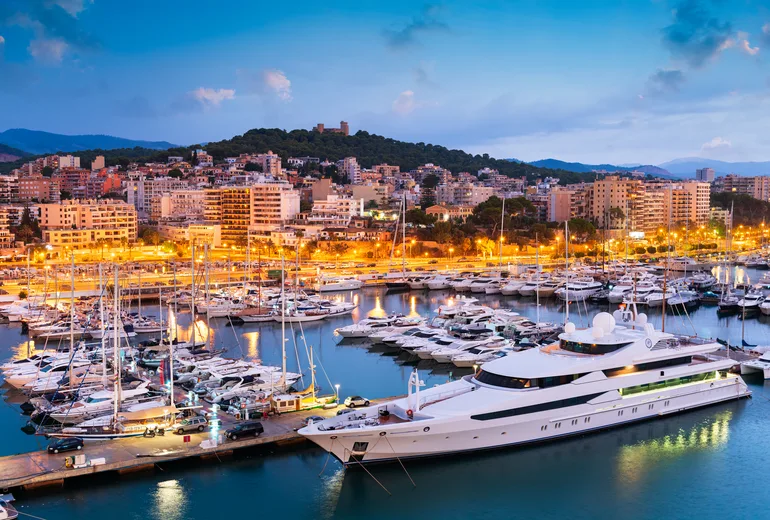
Crewed and cabin charters lean toward larger, fully serviced boats.
Step 3: How many of you are there?
Group size quietly decides the per-person economics.
The per-person cost ladder
Take a 45-foot boat at a representative €6,500 base week. Bareboat across eight guests is about €810 each for the boat, plus fuel, berths and food split between you — call it €1,100–1,400 all-in per person. Add a skipper and you are around €1,300–1,600 each. A fully crewed yacht with a cook climbs to roughly €1,800–2,800 per person depending on the boat and the service. None of these is “wrong” — they buy progressively more.
Where cabin charter wins
For one or two people, chartering a whole boat is wildly inefficient — you would be paying for six or eight berths to use two. Cabin charter solves this: you book one double cabin on a boat shared with other couples and a crew, typically €700–1,300 per person for a week including the skipper and often breakfast. You sail a real itinerary, meet other travellers, and pay only for your cabin. The trade-off is that you do not control the route and you share the boat with strangers — which suits some people perfectly and others not at all.
The decision tree, in one pass
Run it top to bottom:
Travelling as one or two people on a tight budget? Start with cabin charter.
Have a confident licensed skipper in your group and want full control? Go bareboat.
Want bareboat freedom and social feel but no licence or no appetite for the responsibility? Book skippered — the default for most groups.
Want to be looked after entirely, with meals and service included? Go crewed.
Most first-time charterers who are not solo couples end up skippered, and most are glad of it. The skipper pays for themselves in avoided mistakes and recovered relaxation.
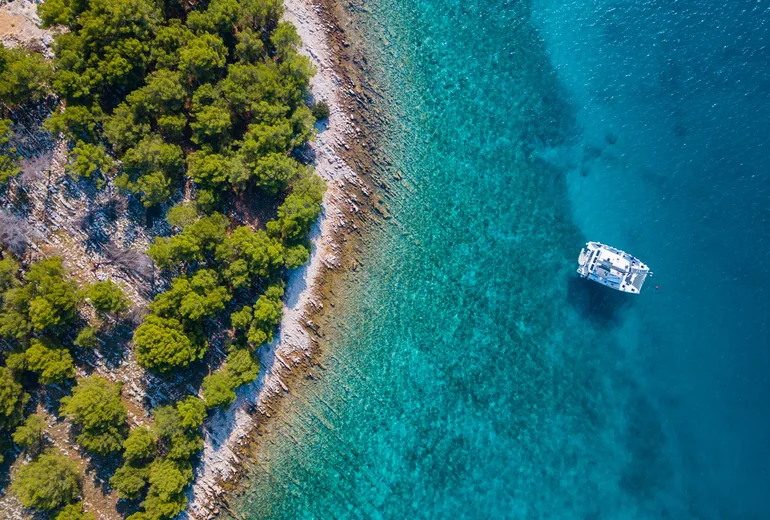
Whichever route you pick, the boat and the bays are the same — only the workload changes.
A few practical cautions
If you go bareboat, build a buffer day for weather and do not over-plan the mileage; the classic rookie error is treating the itinerary as a schedule rather than a wish list. Our bareboat charter travel hacks cover the small things that make a self-skippered week smoother. If you go skippered or crewed, agree expectations up front — meals, the skipper’s day off, tipping norms — so nobody is guessing on day one. And whichever you pick, the same security deposit and insurance logic applies, regardless of who is steering.
One regional note: the practicalities of taking a skippered charter in Croatia differ slightly from Greece or Türkiye, mainly around licensing and berth norms, so check the specifics for your chosen area.
How boat type plays into the choice
The four options interact with the kind of boat in ways worth flagging. Bareboat crews lean monohull or catamaran depending on experience — a 40-foot monohull is cheaper and more forgiving to handle, while a catamaran offers more space but a wider beam to dock. Skippered charters open up slightly larger boats, since the skipper absorbs the handling. Crewed and cabin charters tend to sit on bigger catamarans and motor yachts, where there is room for a cook and paying guests in separate cabins.
Group dynamics matter as much as the boat. A bareboat or skippered week works best when everyone pulls their weight on lines, dishes and the daily plan; if half your group expects a holiday and the other half ends up crewing, resentment builds by midweek. Crewed and cabin charters sidestep that entirely — nobody is on the hook for chores. Be realistic about the people, not just the budget.
A quick word on deposits and insurance
Bareboat and skippered charters carry a refundable security deposit (typically €1,500–4,000 depending on boat size), which you can often reduce with a damage-waiver product. On a fully crewed charter the deposit logic is lighter because the professional crew carry the responsibility. Either way, read what the deposit covers and whether the engine, sails and tender are included before you sign.
Frequently Asked Questions
What is the difference between skippered and crewed charter?
A skippered charter includes one professional skipper who handles the boat and navigation; you and your group do the cooking, cleaning and provisioning. A crewed charter adds at least a cook or host, so meals and housekeeping are taken care of and you are purely a guest.
Is cabin charter worth it for couples?
Often, yes. For one or two people, paying per cabin on a shared, crewed boat (typically €700–1,300 per person a week) is far cheaper than chartering a whole yacht. You give up route control and share the boat, which suits sociable travellers more than those wanting privacy.
Do I need a licence for a skippered or crewed charter?
No. Because a qualified skipper is aboard, no guest needs a sailing certificate for skippered or crewed charters. Only bareboat charter requires a recognised licence from someone in your group.
Which option is cheapest overall?
Per boat, bareboat is cheapest because there is no crew to pay. Per person, cabin charter is usually cheapest for one or two travellers. For a full group, bareboat split across everyone gives the lowest per-head cost — if you have the licence and the confidence to run the boat.
Still unsure which route fits your crew and budget? Tell us your group size, dates and experience and we will recommend bareboat, skippered, crewed or cabin — or explore the available charter yachts to see what each option looks like for your week.


 Boat Reviews