Gulet or Catamaran in Türkiye? Crew, Comfort and Cost Compared
Crewed-by-default gulets versus bareboat or skippered catamarans on the Turkish coast, with the per-person maths.
Read more
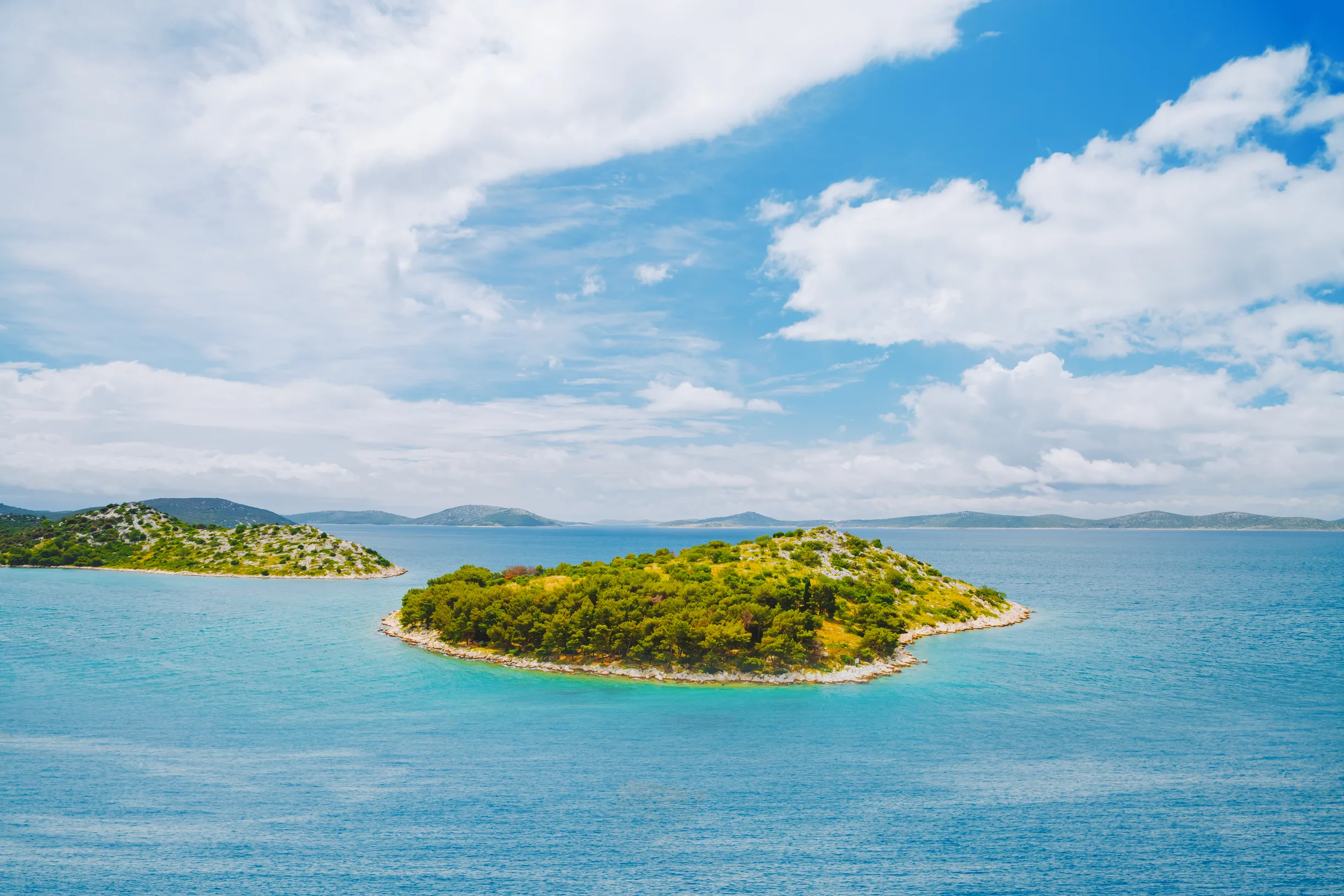
If you like the idea of a sailing holiday but don’t want the full weight of planning routes, reading every forecast, and mooring stern-to in a strange harbour alone, a flotilla is built for you. So what is a flotilla holiday? In short, it’s a group of charter yachts — usually 6 to 12 boats — sailing the same loose route together, with a professional lead crew running ahead to handle the hard parts.
You sail your own boat, set your own pace each day, and have backup on call. It’s the middle ground between a bareboat charter, where you’re on your own, and a fully crewed one, where someone else sails the boat for you.
Each morning starts with a briefing from the lead crew: the day’s destination, the recommended route, the wind to expect, and where to aim for that night’s harbour or anchorage. Then the boats set off independently — you’re not sailing in convoy, and you can stop for a swim, take a longer line, or arrive early, as you like.
The lead boat carries a skipper, often an engineer and a hostess, and they’re reachable by VHF all day. They typically arrive at the night’s port first to help everyone moor — the bit beginners worry about most — and they’re the people you call if something breaks or the weather turns. Several evenings a week the whole fleet eats together at a taverna the lead crew has arranged.
There are two broad styles worth knowing about. A full or “lead-crew” flotilla gives you the daily briefings and mooring help across the whole route. A “punt” or skippered flotilla, by contrast, puts a hired skipper on your own boat for the harder days and lets you sail solo on the easy ones — useful if your crew is short on miles. Most operators offer training en route too, so a flotilla doubles as a gentle way to log experience after a course.
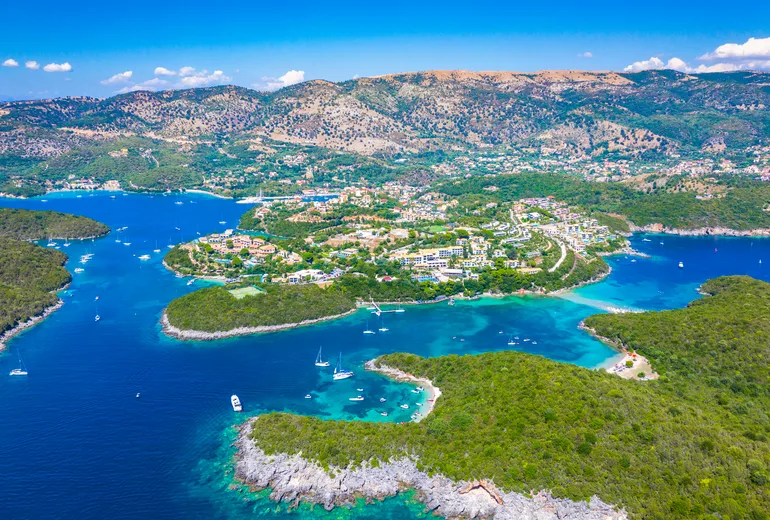
A flotilla package covers the yacht charter itself plus the lead-crew service: the daily briefings, mooring assistance, technical support and the social organising. What you pay separately is much the same as any bareboat — fuel, mooring and harbour fees, food and drink, and any extras like a paddleboard.
Crucially, you still need at least one qualified skipper aboard your boat, because you’re sailing it yourselves. The lead crew guides and supports; they don’t take the helm of your yacht. If you’re weighing the formats, our explainer on the difference between bareboat and crewed charter sets the two extremes that a flotilla sits between.
Three groups get the most from this format. First-timers and newly qualified skippers who want to build confidence with help nearby. Families, who like the ready-made social scene and other kids in the fleet. And groups of friends who want company at the evening taverna without committing to sailing as one big party. Our notes on a sailing holiday with friends pair well with the flotilla idea.
It suits people who value reassurance over total independence. If you’d rather have no schedule and no one else around, a straight bareboat charter is the better fit — but for everyone climbing the learning curve, the safety net is the whole appeal.
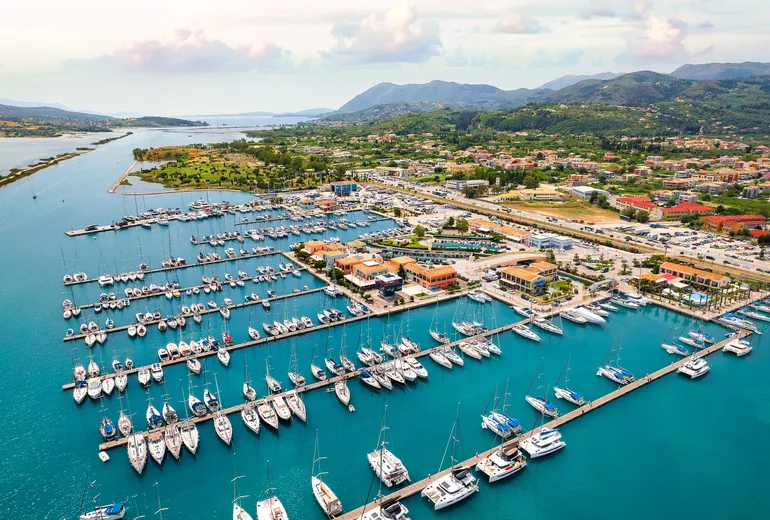
Greece’s Ionian Sea is the classic flotilla nursery, and for good reason. The islands sit close together, the distances between stops are short — often 10 to 20 NM — and the summer wind is the gentle afternoon Maïstro that builds and fades on a predictable schedule, rarely much above a comfortable Force 4, which makes for forgiving sailing day after day.
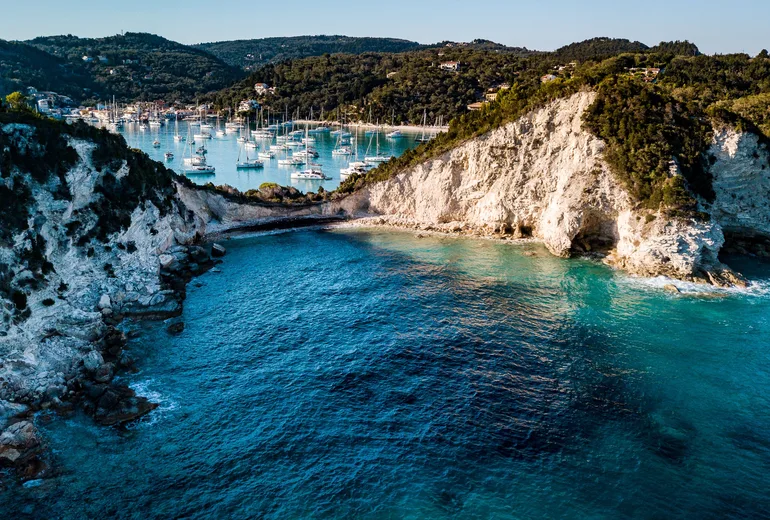
A typical Ionian flotilla loops between Lefkada, Meganisi, Kefalonia, Ithaca and the little harbours of Sivota, Fiskardo, Kioni and Vathy, often reaching Paxos and Antipaxos to the north. Croatia’s Dalmatian islands and parts of the Saronic also run flotillas, but the Ionian remains the gentlest introduction. For the full route detail, see our ultimate Ionian yacht charter guide and the rundown of the best places to visit in the Ionian islands.
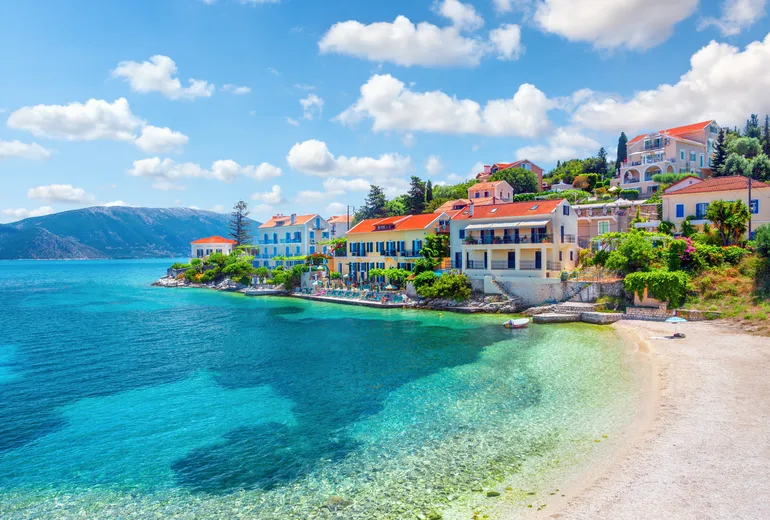
The rhythm is relaxed. Coffee and the morning briefing, then a leisurely departure with maybe a swim stop in a quiet bay. Lunch at anchor, an afternoon sail in the building breeze, and arrival at the night’s harbour where the lead crew waves you onto the quay and takes your lines. Then showers, drinks, and either a fleet dinner ashore or your own table — the choice is yours most nights.
Because the legs are short and the help is constant, the sailing rarely feels like work. That’s the trade flotillas make: a little less independence for a lot less stress.
One thing newcomers underestimate is the social side. By the third evening you tend to know the other crews, the kids have found each other, and the fleet dinners turn into the part people remember most. If you’d rather keep to yourselves, that’s fine too — nobody forces the group activities, and plenty of crews dip in and out depending on the night.
A flotilla usually costs a bit more than the equivalent bareboat charter, reflecting the lead-crew service — though the gap is smaller than you’d expect, and on a per-person basis over a week it’s modest. What you’re really buying is the briefings, the mooring help and the peace of mind.
Flotilla places for the following summer often open in autumn with early-bird pricing, so booking ahead saves money and secures the popular Ionian dates. School-holiday weeks in July and August sell out first, so families in particular benefit from committing early. If you’ve sailed a flotilla or two and feel ready to go it alone, stepping up to a bareboat is the natural next move — and our bareboat charter travel hacks smooth that transition.
One last point on value: because the legs are short and the briefings cover the day’s weather and pilotage, a flotilla quietly saves you the cost of mistakes — a fouled anchor, a misjudged harbour entry, a wrong-bay overnight in a blow. For a first sailing holiday, that backstop is worth as much as the social dinners, and it’s the reason so many crews who start on a flotilla come back to charter on their own the following year.
It’s a group of charter yachts sailing the same loose route together, supported by a professional lead crew who run daily briefings, help with mooring, and provide technical backup. You sail your own boat at your own pace, with help close at hand throughout the day.
Yes — at least one person aboard each boat needs a recognised skipper qualification, because you sail the yacht yourselves. The lead crew guides and supports the fleet but does not take the helm of your boat.
It’s one of the best ways in. Newly qualified skippers get a safety net for the tricky parts like mooring, and families enjoy the ready-made social scene and other children in the fleet. Short, gentle legs in areas like the Ionian make it forgiving.
A flotilla typically costs a little more than the same bareboat charter to cover the lead-crew service, but the per-person difference over a week is modest. Booking early, often in autumn for the next summer, secures the best dates and pricing.
Thinking a flotilla might be your first step afloat? Browse Ionian and other charter destinations and the yachts available to find a boat and a base for the season ahead.