Where Will Your 2027 Charter Start? Split, Athens, Palma, Naples and Bodrum Compared
Split, Athens, Palma, Naples and Bodrum compared on flights, fleet depth, first-night logistics and the cruising grounds each home port unlocks.
Weiterlesen
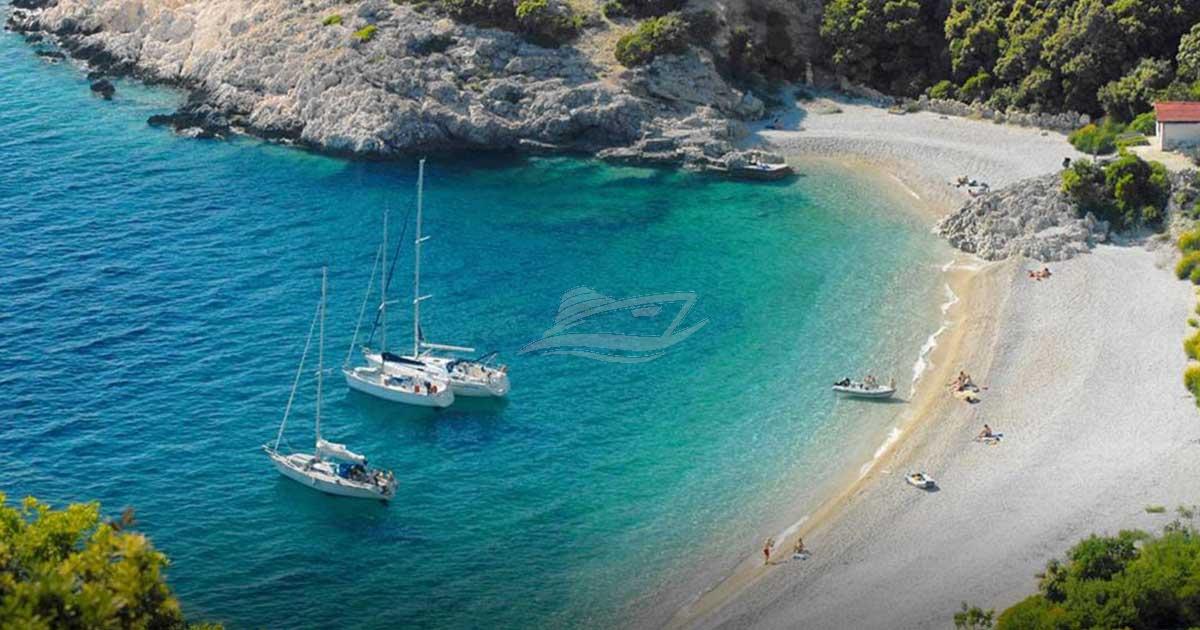
Croatia’s coast holds roughly 1,200 named beaches across 1,200+ islands. Most are pebble, shingle or rock-slab swimming spots — the country has only a small number of true sand beaches. For catamaran charterers, the operational question isn’t “is this beach beautiful” but “can I anchor off it, what’s the holding, what’s the wind exposure, and is it the kind of stop that earns the detour.” This guide walks 10 of the country’s standout beaches with the practical detail a charter operator actually plans around — surface, swim approach, anchorage notes, exposure, and the kind of crew that suits each one.
The famous shingle spit on the south coast of Brač near Bol. The tip of the 500-metre spit actually shifts left or right depending on the prevailing current and wind — charterers who’ve been before sometimes don’t recognise it the next year. Surface is pebble and shingle, no sand. Anchor off the eastern side in 6-10 m on sand-and-weed mix; holding is variable so set the anchor properly. The cove fills with day-tripper boats from Split and Hvar by 11:00 in season. Best window 07:30-10:30 (early) or 17:00-19:00 (late). ACI Marina Milna 18 nm west or Bol’s small town quay 1 nm east are the overnight options. Surfing/kitesurfing scene if the maestral kicks in strong; beach-bar and beach-restaurant cluster along the path from Bol town.
Stiniva is the cliff-walled pebble cove that won “Europe’s most photographed beach” titles around 2016 and has been busy ever since. The cove entrance is a 12-metre gap between two limestone cliffs; the inner beach is roughly 60 metres long, pebble. Anchor outside the cliffs in 15-30 m or take one of the 12 mooring buoys in the inner channel (book through the park ranger app, €25-45/night). Day-tripper boats from Komiža and Hvar fill the cove between 10:00 and 16:00 — arrive before 10:00 or after 17:00 if you want pictures without crowds. No services at the beach itself; restaurant Stiniva sits at the cliff top, walk up via a steep path.
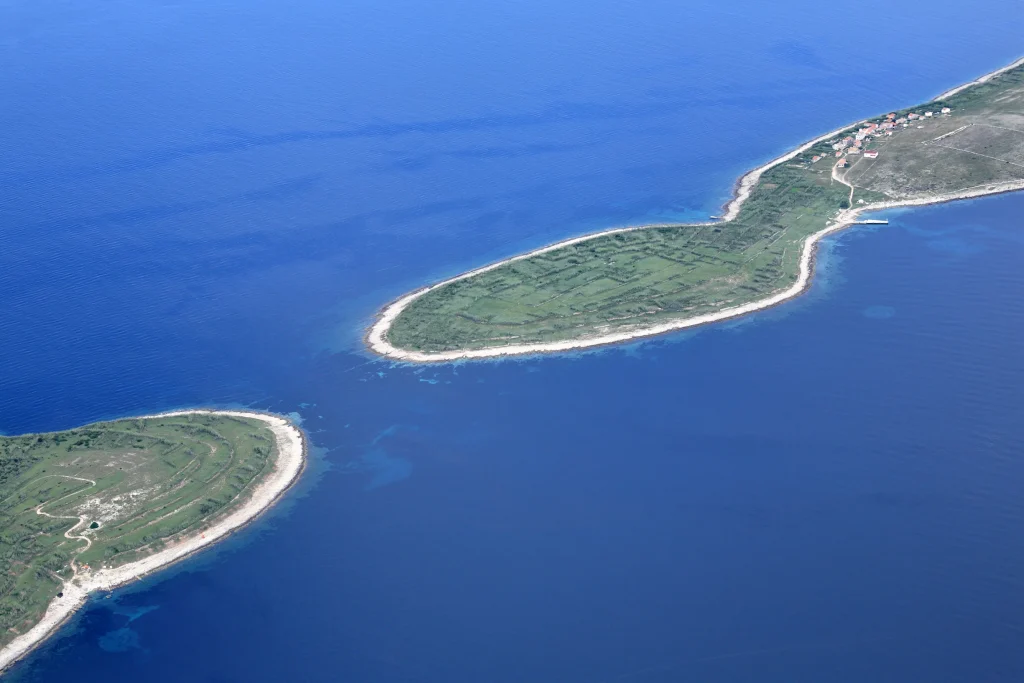
Sahara is one of Croatia’s three true sand beaches (the other two on this list are Sakarun and Lopar’s). Susak is the only sand island in the country — the entire 3.8 km² landmass is wind-built dunes over limestone bedrock. The Sahara beach is on the south side of the island, accessible by a 20-minute walk from the village harbour. Anchor in Susak village bay in 6-12 m (sand, good holding); the village quay has 8-10 stern-to berths. North-coast exposure means jugo days can produce significant swell at the village; in calm conditions the swimming is exceptional. The whole island has roughly 150 permanent residents — quiet by definition.
The country’s most-cited sand beach. 800 metres long, white sand bottom that gives the water its turquoise colour, depths 1-3 m for the first 100 metres out. Anchor off in 6-15 m on sand; the holding is the best of any major Croatian anchorage. Exposed to north and northwest swell — check the wind window before committing for the night. ACI Marina Veli Iž (15 nm east) or Sali harbour on Dugi Otok (16 nm south) are the overnight alternatives if Sakarun isn’t safe. Two beach bars at the eastern end; restaurant Sakarun walking distance from the beach. Best timing: arrive 09:00-10:00, claim a parking spot before the day-trip boats from Zadar fill the anchorage.
Pasjača sits at the base of a 100-metre limestone cliff in the Konavle region south of Dubrovnik, accessed by a tunnel cut through the rock face from the village of Popovići (a 40-minute drive from Dubrovnik). For a charterer, the beach is dinghy-only — anchor in Konavle channel offshore in 15-25 m and tender in. The beach itself is pebble and small-rock with a sand patch; the cliff backdrop is the visual that earns the detour. Exposure is significant — only safe to land in flat-calm conditions. Best on a day when the maestral hasn’t built up swell along the southern coast. Day-trip alternative: drive from Dubrovnik rather than anchor.
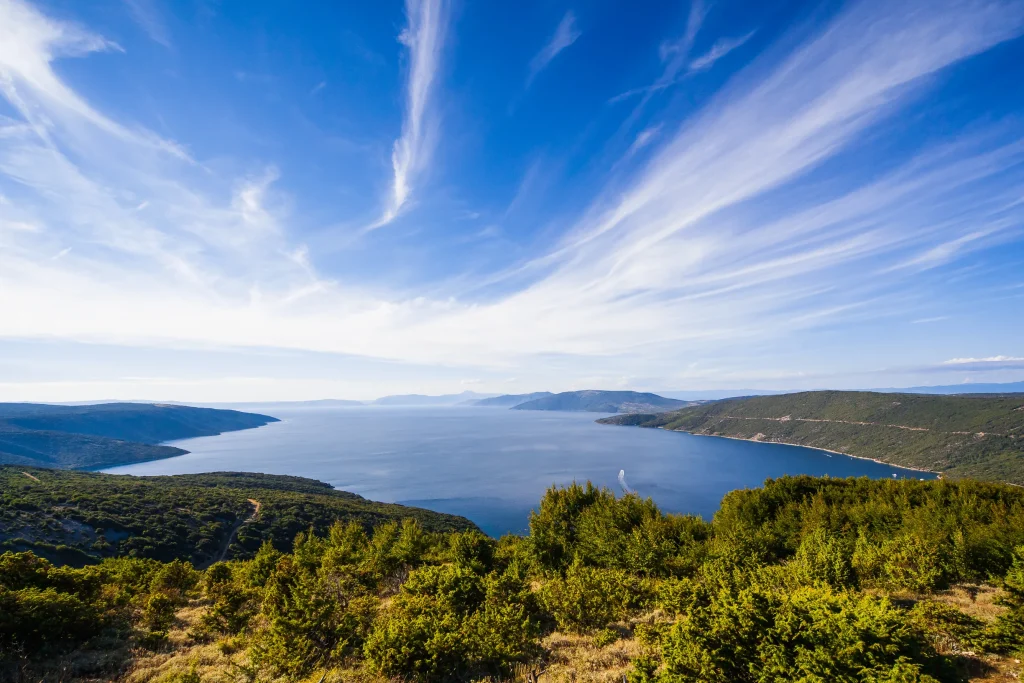
Lubenice village sits 378 m above the sea on a clifftop on the west coast of Cres. The beach below the village is a 40-minute walk on a steep path (carry water and shoes) or a sea approach to the cove at the base. Anchor in 8-15 m on sand; the cove is small (60-80 m wide) and fills quickly with sailboats. Surface is white pebble, water is clear and deep close to shore. Exposure is to west and southwest — calm-day approach only. The village itself is 30 buildings, two konobas, and one of the country’s quietest summer overnights if you can get a place to land your dinghy.
The famous mainland beach 25 nm southeast of Split. Pine trees grow to the waterline, the surface is fine white pebble, the water shelves to swimmable depth quickly. Anchor off in 10-20 m on weed-and-sand mix; holding can be patchy so check the set. The mainland coast here has limited overnight charter options — the closest reasonable marina is Brač’s Bol or Milna across the Makarska channel. Punta Rata works better as a lunch stop than an overnight. The famous “Brela rock” (Kamen Brela) is the pyramid-shaped islet just off the beach — the visual landmark in every Croatian tourism photo of the riviera.
Lovrečina is one of Brač’s few sand-bottomed coves — a 50-metre crescent of sand backed by pine and the ruins of a 6th-century early-Christian basilica. Anchor in 6-10 m on sand-and-weed; holding is decent but exposed to NE-E (bura). The bay closes early on bura days. Sail access from Pučišća (3 nm west) or Počarišče (the small harbour 1 nm east). No services at the beach — bring lunch from the boat. The contrast with Zlatni Rat 12 nm south is the appeal: Zlatni Rat is busy and famous, Lovrečina is quiet and historical.
One of the country’s three true sand beaches. The bay holds 1.5 km of sand from Rajska Plaža (“Paradise Beach”) around the cape to several smaller beaches — the longest sand stretch in Croatia. Anchor in 6-12 m off the eastern end of the cape on sand (excellent holding). Exposure: north and northwest, so the maestral can build chop in the afternoon. Lopar’s town quay has 20 stern-to berths for overnight; the larger Rab town quay is 12 nm south on the island’s east coast. Beach families come in numbers in July-August — book the Rab town overnight rather than the Lopar quay if you want quieter evenings. The shallow approach is good for kids 5+ who can wade out without depth issues.
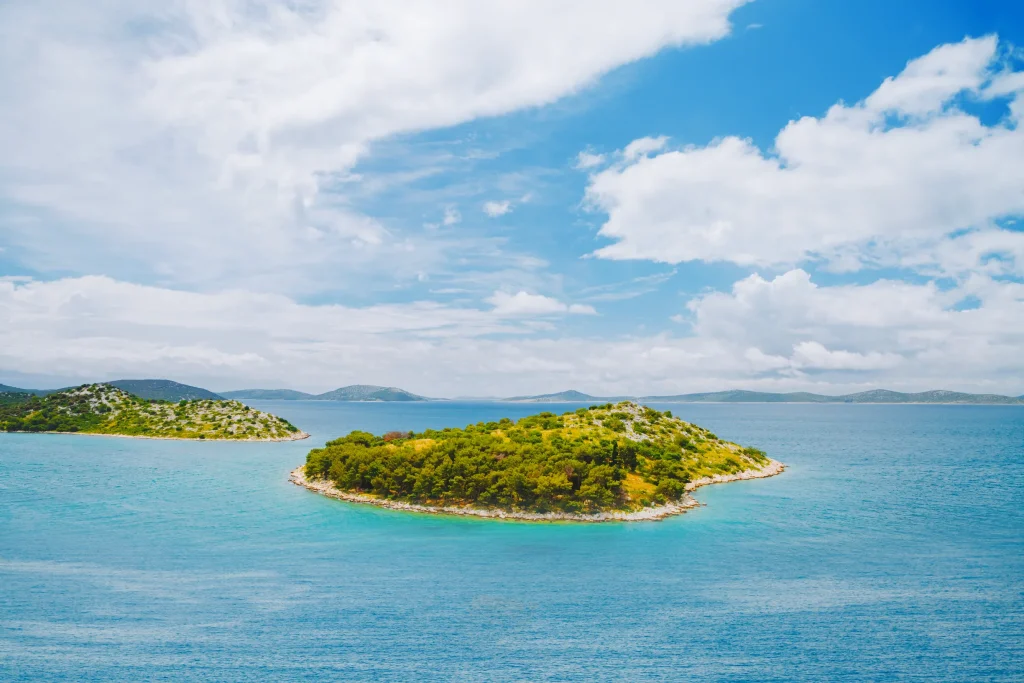
A lesser-known anchorage on the south side of Pašman island in the channel between Pašman and the mainland. Pebble beach, small-stone bottom, depths 4-7 m close in. Anchorage in 6-10 m on weed-and-sand. Exposure: minimal — the Pašman channel sits sheltered from the open Adriatic by the long Pašman-Ugljan landmass. Useful as a quieter alternative to the headline anchorages of Kornati 15 nm west; many Šibenik-based charter crews tuck into Staričev Porat for the last night before the return-leg to Mandalina.
Three principles that show up in every Croatian beach-day brief:
1. Anchor early. Most of these spots fill with day-tripper boats from 10:00 onwards. Charter crews who arrive before 09:30 get the best anchoring position; those who arrive at 12:00 take what’s left or move on.
2. Check holding before lunch. Even on a calm forecast, set your anchor and back down hard. Croatian beaches with weed-and-sand bottoms (Zlatni Rat, Punta Rata, Lovrečina) can produce false-positive sets that drag when the maestral builds in the early afternoon.
3. Plan for the exposure direction. Croatian summer weather is dominated by the northwest maestral (8-22 knots from 11:00 onwards). Beaches with western or northern exposure (Sakarun, Lopar, Lubenice) are afternoon-swell candidates; beaches with southern and eastern exposure (Zlatni Rat, Stiniva, Lovrečina) are afternoon-calm. Adjust your route to match.
Three commonly-cited Croatian beaches that we deliberately skipped:
— Bani & Lapad area, Dubrovnik: city beaches, no anchoring relevant.
— Nin lagoon (north of Zadar): shallow-mud, kid-friendly, but charter access is poor (the lagoon has a draft limit of around 0.8 m).
— Bačvice (Split): famous for picigin (Croatian beach paddle ball) but charter boats don’t anchor there — right next to the ferry port.
For our 2026 Croatian catamaran fleet and beach-focused route quotes, contact us via the site. The most popular beach circuit week is Central Dalmatia from Split with stops at Zlatni Rat, Stiniva, Lovrečina and a few of the smaller bays the day-tripper boats skip.