Where Will Your 2027 Charter Start? Split, Athens, Palma, Naples and Bodrum Compared
Split, Athens, Palma, Naples and Bodrum compared on flights, fleet depth, first-night logistics and the cruising grounds each home port unlocks.
Ler mais
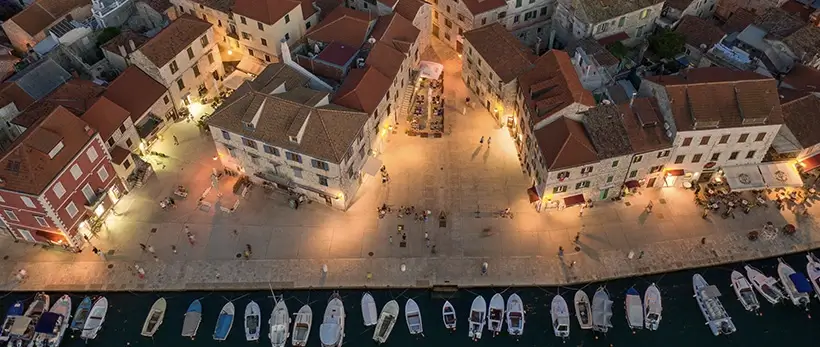
Hvar gets called “the queen of the islands” by Croatian charter brochures because it’s the country’s longest, sunniest and most-visited island. For a catamaran charterer, it earns the reputation for more concrete reasons — a tight cluster of catamaran-friendly anchorages off the south coast, a working ACI marina at the main town, a half-day delivery sail from Split or Trogir, and good onward connections to Vis, Korčula and Brač. This piece walks 12 reasons a charter operator actually cites when planning a Central Dalmatia week, with the numbers that matter (depths, distances, mooring fees, marina capacity).
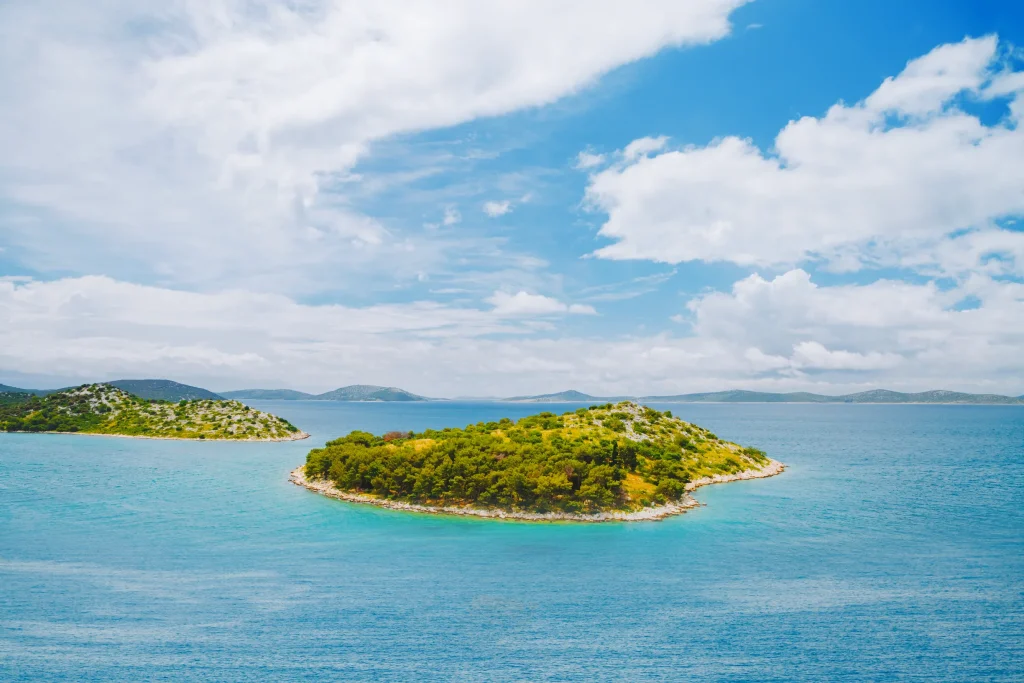
The Pakleni archipelago sits a 2-3 nautical-mile dinghy hop south of Hvar town. The water is clear, the bottoms are mostly sand and weedy patches, and the depths in the inner bays run 4-10 metres — comfortable catamaran territory.
Vinogradišće on Sveti Klement is the standard lunch stop. Mud-and-sand bottom, holding is good, 4-6 m in the inner part where most cats anchor, exposed to the south so swap to the north side of the island when the jugo blows. Restaurant moorings €25-40 per night with dinner-included arrangements at Toto’s or Dion. Palmižana ACI marina on the same island has roughly 180 berths plus a smaller boutique marina above, charging €70-150 a night for a 50ft cat in season. Stipánska is the smaller swim-only cove opposite Hvar town; Mlini on Marinkovac fills first in July-August because the path to the Laganini beach club lands here. Vela Garška on the north of Sveti Klement is the bad-weather alternative when the southerly is up.
Hvar town’s stone quay holds roughly 18 stern-to berths for visiting boats (the rest is local ferries and harbour-master traffic). Quay fees in season are €120-220 for a 50ft cat per night, payable to the harbour master. The catch is the timing: berths fill by 4-5 PM in July-August. ACI Marina Hvar (Krivodol bay, a 10-minute dinghy ride from town) has 197 berths and runs through the ACI app and booking system — €80-150/night for a 50ft cat, dependable booking 4-8 weeks ahead in peak. Most charter operators recommend the ACI berth for arrival night and the town quay only if you can grab a slot before mid-afternoon.
The Hvar lavender harvest runs from the last week of June through the first half of July. The plateau between Stari Grad and Brusje is the field that shows up in every Croatian tourism photo. Most charterers won’t have time for the inland drive, but the smell carries to anchored boats on the north side of the island in late June — particularly at Vrboska and Jelsa. Lavender essential oil is the main commercial product; small shops at Stari Grad, Vrboska and Hvar town sell distilled oil and dried bundles in the €5-15 range. The harvest peak coincides with the high-shoulder charter weeks (last week of June through first week of July) when boat rates are roughly 15-20% below peak July-August.
Olive harvest is later (October-November); the same plateau holds Hvar’s olive groves. Wine harvest follows similarly — mid-September for the white grapes (Vugava, Bogdanuša), early October for Plavac Mali. If your charter falls in the late-September shoulder, the Tomić tasting room at Jelsa hosts harvest-tasting visits with a different program than the standard summer one.
Hvar has the densest concentration of small-production wineries in Croatia. Four worth knowing about by name:
— Tomić Plavac Mali (Jelsa-based) — the island’s marquee red producer. Tasting room walking-distance from Jelsa harbour; book 24 hours ahead through the Tomić website.
— Plančić (Vrboska-based) — family winery with a tasting room a 10-minute walk from Vrboska harbour. The Vugava (a Hvar-native white grape) is the bottle to try.
— Carić (Svirče) — mid-island producer; visits typically by pre-arranged transfer rather than walking from the harbour.
— Zlatan Otok (Sveta Nedjelja, south coast) — the south-coast option, accessible by dinghy from a calm-weather anchor in the bay below.
The full Hvar wine circuit takes a relaxed half day. Most crews pick one or two producers and pair with a Jelsa or Vrboska overnight.
Stari Grad (“old town”) sits 14 nautical miles west of Hvar town on the island’s deep north-facing inlet. Greek colonists from Paros founded Faros here in 384 BC; the grid pattern of agricultural plots on the surrounding plain (the chora) is the oldest preserved Greek land division in the Mediterranean and a UNESCO World Heritage site. The Stari Grad town quay handles 30-40 stern-to berths, fees in the €70-130 range for a 50ft cat. The deep inlet means easy sailing entry in maestral conditions; bura down the channel can produce gust acceleration around the western point. A useful alternative base when Hvar town’s quay is full and the ACI marina is over budget.
Vrboska sits in a 2-km-long inlet on the north coast, 6 nm by sea from Hvar town. The town goes by “Little Venice” because the village wraps a narrow channel with stone bridges, but for charterers the point is the 65-berth ACI Marina Vrboska plus the quieter town quay across the inlet. Fees run €70-130/night for a 50ft cat. The inlet’s geography — long, narrow, north-facing — means the marina rarely sees swell, and the town shuts down around 23:00 (where Hvar runs to 03:00). For families and charterers who want the Hvar island without the Hvar town nightlife, Vrboska is the right pick.
Jelsa sits 4 nm east of Vrboska on the same north coast. Bigger fishing-town feel than Vrboska, with 40+ stern-to berths at the town quay and a small marina. Fees €60-110/night for a 50ft cat. Tomić’s tasting room is here. Sveta Nedjelja on the south coast (under the highest peak on the island, Sveti Nikola at 626 m) is harder to reach by sea but worth the detour for the Zlatan Otok winery and the swim from the cliffs below the village. The anchorage off the village is exposed; a calm forecast is essential.
Four konobas charter crews actually book through their captains rather than walking in:
— Konoba Menego (Hvar town, old quarter) — minimal English menu, family-run, peka and grilled fish; reservations 24-48 hours ahead in season.
— Konoba Macondo (Hvar town) — the local seafood standard; the gregada (Adriatic fish stew with potatoes) is the trip-defining order.
— Black Pepper (Hvar town) — younger, more international menu but still solid; easier to walk in than Menego.
— Toto’s (Vinogradišće, Pakleni) — dinghy in from your anchor; pre-book the peka 4-5 hours ahead because it cooks under coals.
For Vrboska, Konoba Bonaca on the channel. For Stari Grad, Stari Grad Hotel restaurant or Konoba Hektorović. For Jelsa, Konoba Nono or Konoba Tri Pršuta.
Hvar town to Komiža (Vis west coast) is roughly 16 nm of mostly downwind sailing in a typical maestral afternoon. Komiža’s harbour is small — 30 stern-to berths at the town quay, fees €40-90 for a 50ft cat. The other Vis stop is Stiniva, the cliff-walled pebble cove on the south coast, 8 nm southeast of Komiža. Stiniva has 12 mooring buoys (book through the park ranger app), arrive before 10:00 to beat day-tripper crowds. Vis town on the north coast has a 28-berth town quay and ACI marina (€90-160/night for a 50ft cat). The Hvar-Vis combination is the classic two-island week of a Central Dalmatia charter.
Hvar town to Korčula town is 24 nautical miles southeast — a 4-5 hour sail in mid-maestral, often with a Pakleni lunch stop or a Ščedro anchorage halfway. Korčula’s walled old town and the ACI Marina Korčula (159 berths, €120-200/night for a 50ft cat) are the marquee dinner of the trip. Don’t miss the moreška sword dance on Mondays and Thursdays in summer if your route allows. Marko Polo’s house is open as a museum on the main street — quick visit, 15 minutes is enough.
The under-stated practical reason Hvar dominates Central Dalmatia charters: the half-day delivery sail. Marina Kaštela (Trogir region) to Hvar town is 28 nm; ACI Split is 22 nm; Marina Baotić is 25 nm. For a Saturday-to-Saturday charter that means you can leave the base Sunday morning and be anchored in the Pakleni for lunch the same day. The competing destinations — Lastovo (50 nm south of Hvar), Vis (16 nm), Lavrion-area Greek charters (entirely different country) — all require longer deliveries. Hvar is the closest big-name island stop to the country’s biggest charter fleet.
The honest reasons to skip or trim the Hvar leg of a Central Dalmatia week:
— Jugo (SE, 20-35 kn): the Hvar channel and most Pakleni anchorages are exposed. Vrboska’s inlet is fine; the Pakleni inner bays are not. When the jugo is forecast for 36+ hours, plan around the south side and overnight on the north coast instead.
— Bura (NE, 20-50 kn katabatic gusts): less of a problem on Hvar than on the mainland coast, but the channel between Hvar and Brač can carry significant chop. Stari Grad’s deep north-facing inlet is the safest harbour in bura weather.
— Maestral peak (NW, 15-22 kn afternoon): the standard summer wind. Boats coming from Split and Trogir get pushed downwind onto Hvar comfortably; the return-leg upwind sail can be lively. Plan return crossings for morning when the maestral hasn’t kicked in.
— Late July/August party-traffic: Hvar town fills with tourists from the Korkyra ferry connection, charter parties, and luxury yachts. ACI Marina sells out 4-8 weeks ahead. If quiet anchorages matter to you, plan Hvar for late May/early June or September instead.
A few additional facts a charter operator builds into Hvar-leg planning:
— Fuel: Hvar town and ACI Marina Hvar both have fuel docks. Pump opens 07:00-19:00 in season, prices match the Croatian retail diesel rate plus a small marina markup. The Vrboska and Stari Grad fuel docks have shorter hours (typically 08:00-16:00).
— Water tanks: free at ACI marinas; €0.30-0.50 per litre at the smaller town quays. Vrboska’s water hookups are at the marina-side pontoons only.
— Provisioning: Konzum and Tommy supermarkets in Hvar town within walking distance of the harbour. Stari Grad’s Studenac is a smaller-format option for mid-week top-ups. Vrboska has only a village shop — plan to top up at Jelsa (4 nm) if you’ll be in the Vrboska area more than 2 days.
— Ferry traffic: the main Split-Hvar ferry route runs into Stari Grad (not Hvar town), so Stari Grad sees more ferry wash than you’d expect for a small inlet. Hvar town’s traffic is exclusively passenger ferries from Split (which dock at the eastern pier) and catamaran day-trippers from Split, Trogir and Bol.
For our 2026 Central Dalmatia catamaran fleet and Hvar-route quotes, contact us via the site. Most operators recommend a 7-day Saturday-to-Saturday week from Split or Trogir with two nights at Hvar town or ACI Marina, two nights at Vrboska or Stari Grad, and onward to Vis or Korčula.